How to Teach Kids Independence: Indian Mom's Guide
Learn how to teach kids independence using Montessori games & Indian chores. Master life skills for kids with our age-wise guide to raising confident children.
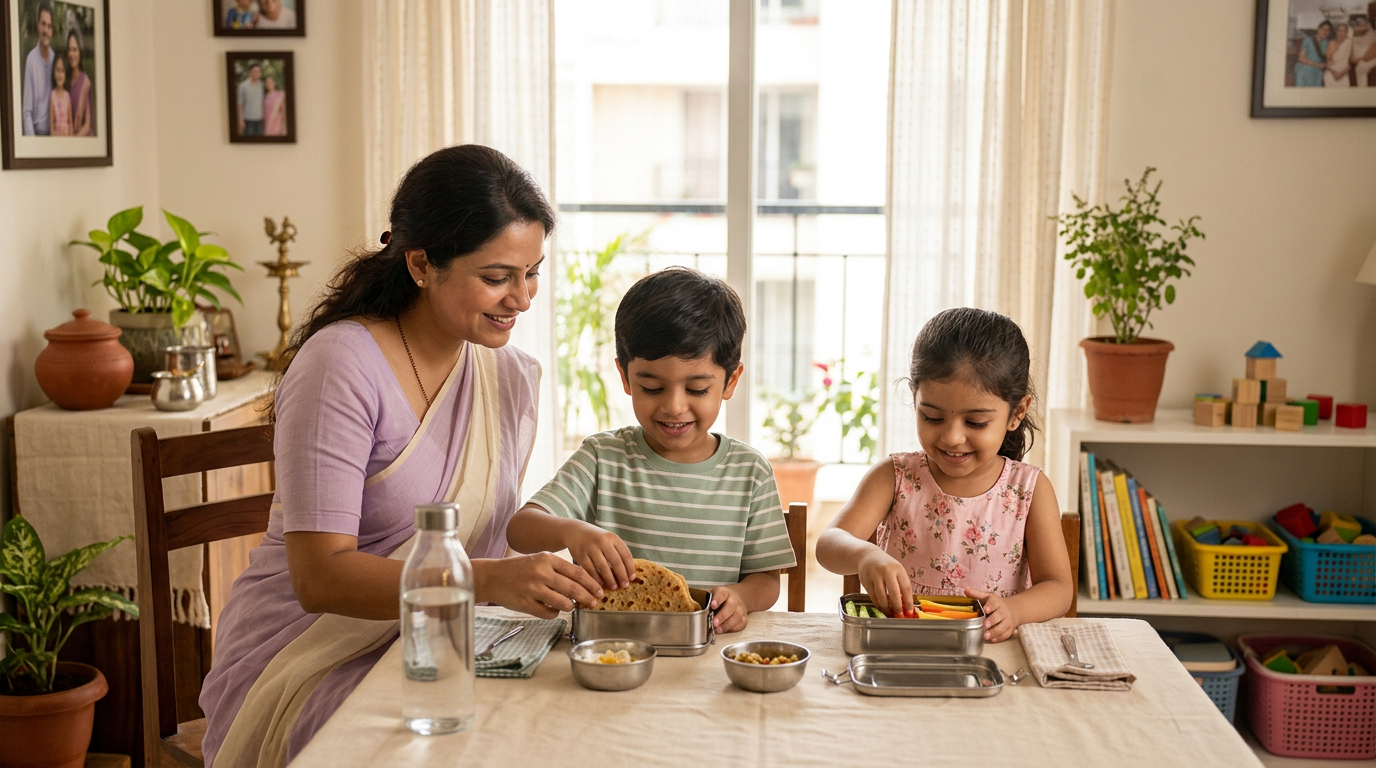
Knowing how to teach kids independence in an Indian household is a delicate balancing act. Between a doting dadi who wants to hand-feed every morsel of khichdi and the societal pressure to have a 'perfectly behaved' child, we often accidentally stifle our children's autonomy. True independence isn't about leaving a toddler to fend for themselves; it is about equipping them with the life skills for kids they need to navigate their world with confidence, one small task at a time.
Why We Struggle to Let Go in Indian Families
In our culture, care is often synonymous with doing everything for the child. We carry their school bags, tie their laces until they are ten, and clean up their Lego sets long after they’ve gone to sleep. However, research from the Indian Academy of Paediatrics (IAP) suggests that early mastery of self-care tasks significantly boosts a child’s executive function and self-worth.
Teaching independence isn't a one-time lesson; it is a series of life skills activities integrated into daily life. When you stop doing for a child what they can do for themselves, you aren't being a 'lazy' mom; you are being an empowering one.
The Montessori "Practical Life" Approach, Desi Style
The Montessori method emphasizes 'Practical Life' skills. For an Indian mom, this translates beautifully into everyday chores. Instead of seeing chores as work, frame them as age appropriate chores for kids that make them feel like a contributing member of the family.
1. The 'Kitchen Helper' Strategy (Ages 2-4)
Start with tasks that involve sensory play but result in a real contribution.
Sorting the Dal: Give your child two bowls and a mix of Rajma and Moong Dal*. Ask them to separate them. This builds fine motor skills and concentration.
Washing Vegetables: Let them stand on a sturdy stool and wash the bhindi* or tomatoes under running water.
* Tearing Curry Leaves: It’s a great way to develop the 'pincer grasp' needed for writing later.
2. Wardrobe Wonders (Ages 3-5)
Instead of picking out their clothes, let them choose between two options. This is the first step in how to teach kids independence regarding personal choices.
The Dupatta Fold: Use old cotton dupattas to teach the basics of folding. They are large, easy to handle, and satisfy the child’s urge to mimic Mummy*.
* Shoe Management: Move from Velcro to laces by age 5. Use the "Bunny Ears" method, which is widely recommended by developmental experts.
How to Teach Kids Independence Through Games
Games are the secret sauce to teaching life skills for children without the power struggles.
The Kirana Shop Game: Set up a mock shop at home. Use empty milk packets, biscuit wrappers, and pretend ₹10 and ₹20 notes. This teaches money sense—a vital life skill. In a real kirana* store, let your 6-year-old hand over the cash and wait for the change.
The 'Safety Script' Roleplay: Roleplay what to do if they get lost at a mall or a mela*. Teach them their full name, your phone number, and how to identify a 'safe adult' (like a store manager or a mother with other children).
Restaurant Ordering: Next time you are out for Dosa*, let your child tell the waiter what they want. It builds communication and confidence.
Age-Appropriate Chores: A Quick Guide
| Age Group | Tasks to Encourage Independence | Skill Developed |
| :--- | :--- | :--- |
| 2-3 Years | Putting toys in the bin, fetching a diaper, wiping spills. | Motor control & Responsibility |
| 4-5 Years | Setting the table, watering plants, dressing self. | Routine & Self-care |
| 6-7 Years | Packing the school bag, basic sandwich making, tidying the bed. | Planning & Organization |
If your child is still a baby, you can start tracking their progress using a baby milestones tracker to ensure their gross and fine motor skills are on track for these tasks.
Managing the "Mess" Phase
The biggest hurdle in how to teach kids independence is the mess. When a 3-year-old tries to pour their own milk, it will spill. When they try to put on their own chappals, they will likely be on the wrong feet.
The Golden Rule: Budget an extra 15 minutes. If you are leaving for a party at 5 PM, start the dressing process at 4:30 PM. This removes the stress that leads to us snapping and saying, "Just let me do it!"
Real Talk from Indian Moms
"I used to feel guilty letting my 4-year-old wash his own plastic plate after lunch. My MIL thought I was being harsh. But now, Kabir feels so proud of his 'clean plate' that he actually eats better!" — Ridhima, Bengaluru, Mom to 4yo Kabir.
"We started 'Sunday Sock Search.' I dump all the clean socks on the bed, and my twins have to find the pairs. It’s a game to them, but it’s one less chore for me. It’s a win-win for their life skills for kids training." — Ananya, Pune, Mom to 5yo twins.
"Independence in my house started with the water bottle. My daughter knows where her bottle is and that she is responsible for drinking from it. No more 'Mummy, paani!' every ten minutes." — Sana, Hyderabad, Mom to 3yo Zoya.
When to Call Your Paediatrician
While every child develops at their own pace, some delays might need professional evaluation. Consult your doctor if:
* Your child is 3 and cannot hold a spoon or attempt to feed themselves.
* Your child shows an extreme lack of interest in any self-care activities (dressing, washing).
* There is a sudden loss of previously mastered skills (regression).
* Fine motor skills seem significantly behind (unable to pick up small objects by age 2).
* If you notice physical coordination issues that prevent them from performing simple age appropriate chores for kids.
As you focus on your child's growth, don't forget your own. If you are in the postnatal period and feeling overwhelmed by the demands of parenting, consider a postnatal wellness assessment to check in on your mental health.
Frequently Asked Questions
How to teach kids independence without being too strict?
The key is "Scaffolding." Break the task into tiny steps. Instead of saying "Clean your room," say "Put the blocks in this red box." Offer choices (Blue shirt or Green?) so they feel in control without the chaos.
What are the best life skills for kids to learn early?
Basic hygiene (brushing, hand-washing), self-feeding, and tidying up after play are the foundations. As they grow, move toward safety skills (knowing phone numbers) and basic food prep.
Are there specific life skills activities for toddlers?
Yes! Activities like pouring water from a small jug to a cup, using a child-safe knife to cut a banana, and matching socks are excellent for toddlers. These are often called 'Practical Life' activities in Montessori.
Why are life skills for children important in the long run?
Children who master life skills early tend to have higher self-esteem, better problem-solving abilities, and less anxiety when faced with new situations. It prepares them for the real world beyond the home.
What are some age appropriate chores for kids in an Indian flat?
Sorting the laundry (separating whites and colours), helping dry the steel plates with a soft cloth, filling water bottles (with supervision), and keeping their shoes on the rack are all great starting points.
Teaching your child independence is the greatest gift you can give them. It is the transition from "I need you to do this" to "I can do this myself." Start small, stay patient, and remember that every spilled glass of water is a lesson in progress.
You are raising a capable human being, one small step at a time.
Author: Dr. Anjali Mehta, MBBS, DCH (Paediatrics)
Reviewed by: TheMamaCircle Editorial Team
Sources:
Sources & further reading
- Indian Academy of Paediatrics (IAP) - Child Development
- WHO - Early Child Development
- National Health Portal India - Positive Parenting
Written by Dr. Anjali Mehta, MBBS, DCH (Paediatrics)
TheMamaCircle Editorial Team
Last updated: 22 September 2026
This article is for general information only and is not a substitute for personalised medical advice. Always consult your paediatrician or obstetrician for your specific situation.