Indian Academy of Pediatrics Growth Chart by Month Guide
Track your baby's progress with the Indian Academy of Pediatrics growth chart by month. Learn about weight chart for kids and red flags from IAP experts.
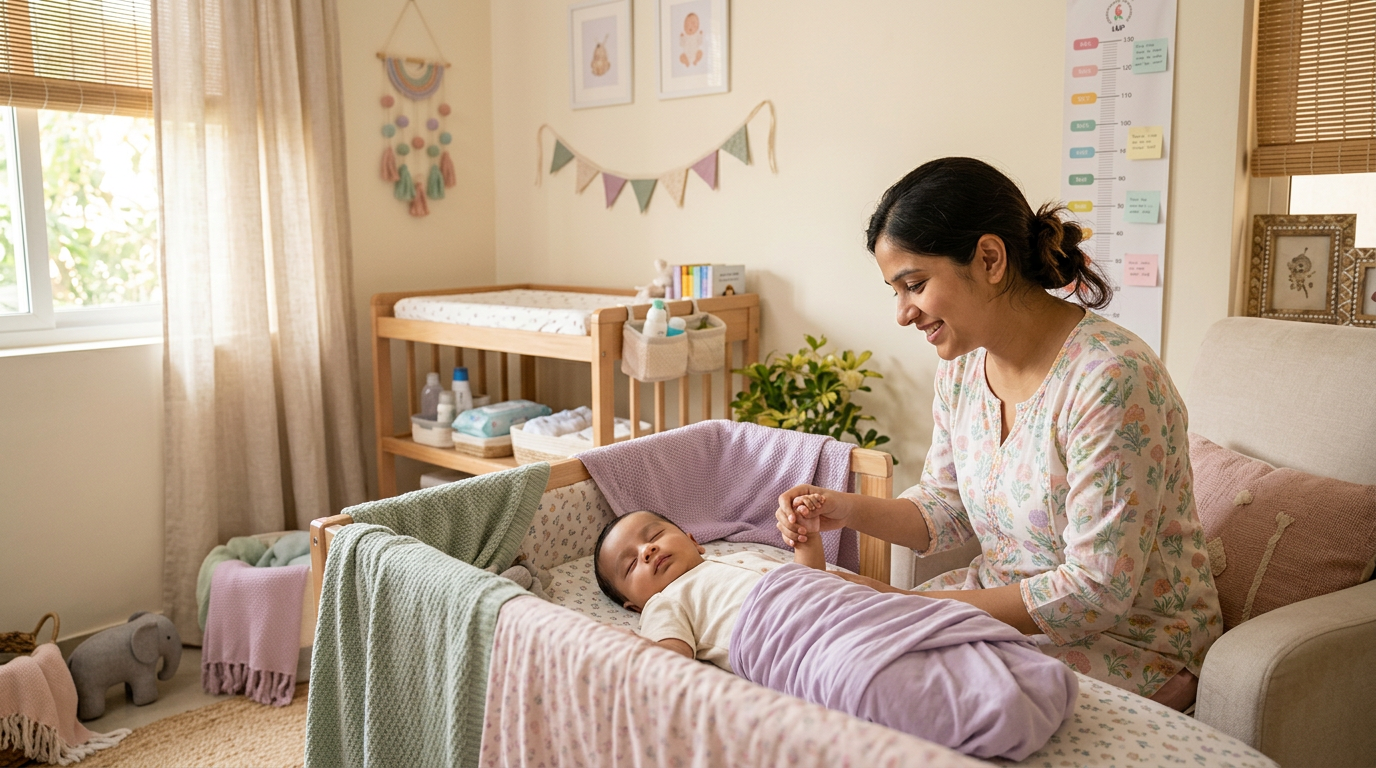
Checking your baby’s weight is the national pastime of every Indian household. From the nosy neighbor asking if the baby is 'kamzor' (weak) to your Sasu Maa comparing the baby’s rolls to a cousin’s child, the pressure is real. However, the only metric that matters is the indian academy of pediatrics growth chart by month. This clinical tool tracks whether your baby is following their own curve, ensuring they get the right nutrition during the critical first 1,000 days of life.
Why the Indian Academy of Pediatrics Growth Chart by Month Matters
Most apps and international websites use the US CDC charts, which are based on formula-fed Caucasian babies. Indian babies have different genetic potentials and growth trajectories. Using a generic baby growth chart often leads to unnecessary panic for Indian parents. The Indian Academy of Pediatrics (IAP) adapted the WHO MGRS (Multicentre Growth Reference Study) standards specifically for our population.
This chart doesn't just look at a single point in time; it looks at the velocity of growth. Whether you are tracking a 3 month baby weight or a toddler's height, the IAP charts help identify "growth faltering" or "rapid weight gain" (a precursor to childhood obesity) early on. During your postnatal checkups, your paediatrician will plot these points on a graph with "percentile" lines (3rd, 15th, 50th, 85th, and 97th).
Understanding the Weight Chart for Kids: Boys vs. Girls
Biologically, boys and girls grow at slightly different rates. The IAP provides separate colour-coded charts (usually Blue for boys and Pink for girls). If your child is on the 50th percentile, it simply means 50% of healthy Indian children their age weigh more, and 50% weigh less. It is the "average," but being on the 15th or 85th percentile is also perfectly normal as long as the growth curve is steady.
Indian Academy of Pediatrics Growth Chart by Month (Average Weight Reference)
| Age (Months) | Boys Avg Weight (kg) | Girls Avg Weight (kg) |
| :--- | :--- | :--- |
| Birth | 2.8 – 3.5 | 2.7 – 3.3 |
| 1 Month | 4.0 – 4.8 | 3.6 – 4.5 |
| 2 Months | 4.9 – 5.9 | 4.5 – 5.4 |
| 3 Months | 5.7 – 6.8 | 5.2 – 6.2 |
| 6 Months | 7.1 – 8.7 | 6.5 – 8.1 |
| 9 Months | 8.2 – 10.1 | 7.5 – 9.4 |
| 12 Months | 8.9 – 11.2 | 8.3 – 10.6 |
Data adapted from WHO/IAP standards for breastfed Indian infants.
Factors Influencing Baby Weight Chart India Trends
In India, we face a "double burden" of malnutrition—undernutrition in some pockets and rising obesity in urban centres. Several factors influence where your baby sits on the indian academy of pediatrics growth chart by month:
* Birth Weight: A baby born at 2.5kg (common in India) will have a different trajectory than a 4kg baby. We look for "catch-up growth" in the first six months.
Feeding Patterns: Exclusive stanpaan* (breastfeeding) for the first six months is the gold standard. Breastfed babies often gain weight rapidly in the first 3 months and then slim down compared to formula-fed babies.
* Genetics: If both parents are lean and short, the baby is unlikely to be at the 97th percentile.
* Gestational Age: Preterm babies need "corrected age" charts until they are two years old.
If you are concerned about your baby's growth during your own postnatal recovery, you might find our postnatal wellness assessment helpful to ensure you are physically and mentally equipped to handle the demands of early motherhood.
The Role of Nutrition in Maintaining the Growth Curve
Once you hit the six-month mark, the introduction of uppar ka khana (complementary foods) is crucial. To keep your baby on a healthy weight chart for kids, focus on nutrient density rather than just filling their stomach with watery dal or rice water.
* Iron-rich foods: Ragi (nachni) porridge, mashed liver, or egg yolk.
* Healthy fats: Adding a spoon of homemade desi ghee or white butter to their khichdi.
* Protein: Pureed moong dal, curd, or finely mashed chicken.
* Avoid: High-sugar biscuits (like Marie or Parle-G) and processed fruit juices which cause "empty" weight gain.
For mothers who are still in their early weeks of motherhood, monitoring your own health is just as important as monitoring the baby's. If you are experiencing heavy bleeding, use our lochia analyzer to check if your recovery is on track.
Real Talk from Indian Moms
"I used to cry every time we went to the clinic because my daughter was always on the 10th percentile. My mother-in-law kept saying my milk wasn't enough. But my doctor showed me the indian academy of pediatrics growth chart by month and explained that as long as she was active and hitting milestones, the 10th percentile was her normal."
— Sunita R., Bengaluru, Mom to 8-month-old
"In my Punjabi family, a 'healthy' baby means a chubby baby. When I started weaning, I was pressured to give heavy malai and sugar. Sticking to the baby weight chart india guidelines helped me stand my ground and focus on protein instead of just fat."
— Preeti K., Chandigarh, Mom to 14-month-old
When to Call Your Paediatrician (Red Flags)
While minor fluctuations are normal (especially during teething or a bout of common cold), these signs require a consultation:
* Crossing Percentiles Downward: If your baby was on the 50th percentile and drops to the 10th percentile over two consecutive readings.
* Static Weight: No weight gain for two months in a row in the first year.
* Weight Loss: Any actual loss of weight (not just slowing down) is a red flag.
* Lethargy: The baby is gaining weight but is too weak to reach for toys or meet baby milestones tracker.
* Oedema: Swelling in the feet or face, which could indicate protein deficiency.
Frequently Asked Questions
What is the normal indian academy of pediatrics growth chart by month for a newborn?
A healthy Indian newborn typically weighs between 2.5kg and 3.5kg. The IAP chart tracks the baby’s progress from birth, expecting them to regain their birth weight by day 10 and double it by the 5th month.
How often should I check the baby growth chart?
In the first six months, weight is usually checked during vaccination visits (6, 10, and 14 weeks). After six months, a monthly check-up or a check every two months is sufficient unless there are health concerns.
My child is very thin; does the weight chart for kids show they are malnourished?
Not necessarily. The baby weight chart must be read alongside the height chart. A child who is thin but tall may be perfectly healthy. We look for "wasting" (low weight-for-height) to diagnose malnutrition.
Why is my 3 month baby weight not increasing as fast as the first month?
Growth velocity naturally tapers off. Babies gain the most weight in the first 4-8 weeks. By the time they hit the 3-month mark, the rate of gain slows down as they become more active, moving their arms and legs more vigorously.
Does the baby weight chart india account for formula feeding?
The IAP and WHO charts are based on the "Standard" of a breastfed baby. Formula-fed babies may gain weight faster in the second half of the first year, but doctors still use the same chart to ensure they don't cross into the overweight (97th percentile) category too quickly.
Checking the indian academy of pediatrics growth chart by month is about seeing the big picture, not winning a race. Your baby is a tiny human, not a data point. Focus on the maalish, the giggles, and the nutritious home-cooked meals, and the numbers will usually take care of themselves.
You are doing a great job, Ma, and your baby’s curve is just one part of their beautiful story.
Sources & further reading
- Indian Academy of Pediatrics (IAP) Growth Charts
- WHO Child Growth Standards
- AIIMS Paediatrics Growth Monitoring Guidelines
- National Health Portal of India - Infant Nutrition
Written by Dr. Anjali Mehta, MBBS, DCH (Paediatrics)
Reviewed by TheMamaCircle Editorial Team
Last updated: 16 August 2026
This article is for general information only and is not a substitute for personalised medical advice. Always consult your paediatrician or obstetrician for your specific situation.