Indoor Activities for Toddlers: Easy Indian Home Play Guide
Bored at home? Discover easy indoor activities for toddlers using Indian kitchen staples like atta and steel dabbas. Boost sensory play & brain development today!
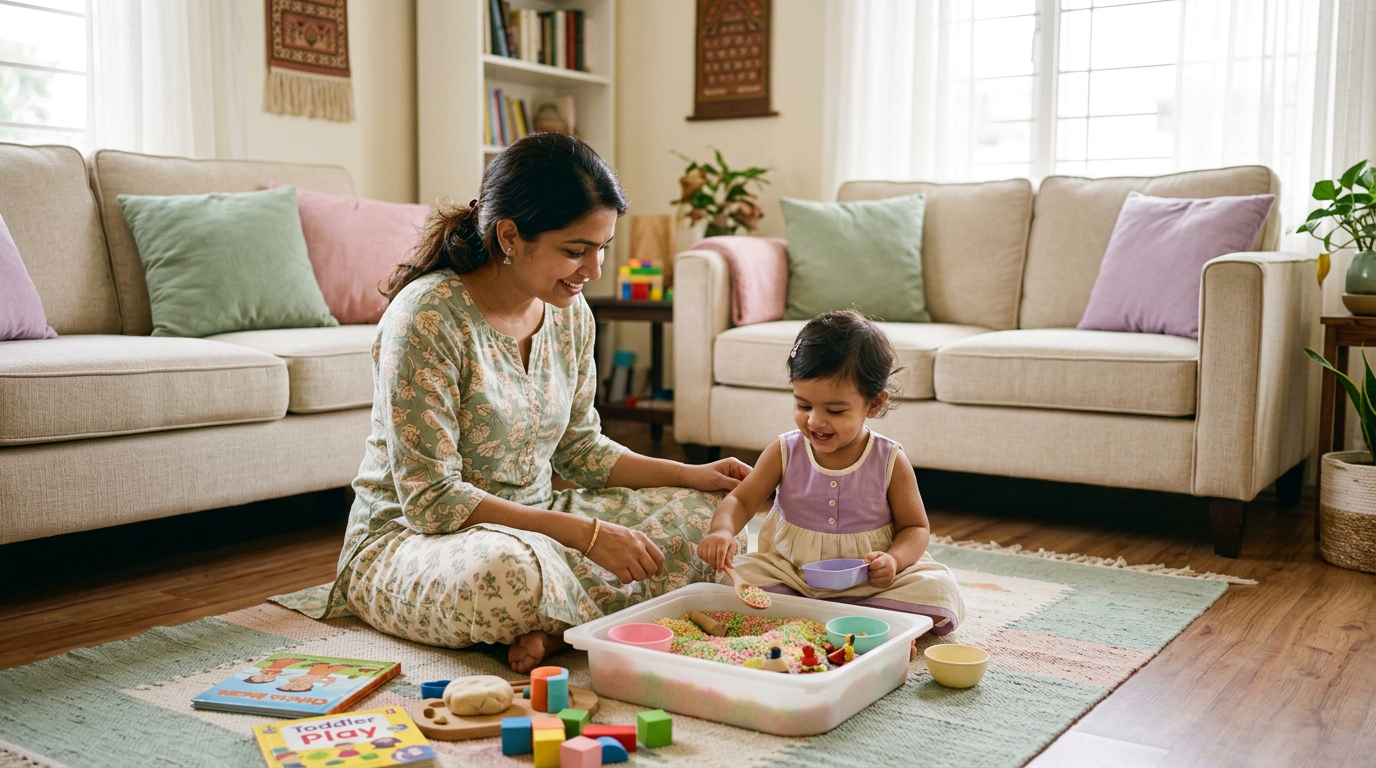
Finding ways to burn off that boundless energy when you’re stuck inside during a monsoon downpour or a Delhi heatwave is a survival skill. The best indoor activities for toddlers don’t require expensive imported toys; they rely on common Indian household items like atta, steel dabbas, and old dupattas. These activities are designed to stimulate brain development while respecting the space constraints of a typical 2BHK apartment.
Why Sensory Play and Indoor Activities for Toddlers Matter
Between ages 1 and 3, a toddler’s brain is a sponge. Every time they squish something cold or hear a metallic clang, neural pathways fire. Engaging in indoor activities for toddlers is less about "keeping them busy" and more about honing their fine motor skills, hand-eye coordination, and cognitive processing. This is also a critical time for brain development activities for babies as they transition into the toddler phase.
1. The "Kitchen Orchestra" (Auditory Play)
Indian kitchens are a goldmine for sensory exploration. You don’t need a drum kit when you have a set of stainless steel patilas and wooden belans.
* The Setup: Place 3-4 different sized steel containers upside down on a mat. Give your toddler a wooden ladle and a plastic spoon.
* The Lesson: They learn about "cause and effect" and volume. The difference in sound between metal-on-metal and wood-on-metal is a basic physics lesson.
* Safety Tip: Ensure the vessels don’t have sharp edges and are heavy enough not to flip easily.
2. Edible "Atta" Playdough (Tactile Development)
Forget the store-bought neon dough that smells like chemicals. Use the atta (whole wheat flour) you already have in your dabba.
The Setup: Mix 1 cup of atta, a little water, a spoonful of oil, and a pinch of haldi* (turmeric) for a safe yellow colour.
* The Activity: Let them poke, roll, and "make rotis." This strengthens the small muscles in their hands—essential for later writing skills.
Sensory Plus: Add a drop of elaichi (cardamom) essence or crushed ajwain* for a scent-based sensory play for babies and toddlers experience.
3. The Dupatta Tunnel (Gross Motor Skills)
If your toddler is climbing the sofa like a mountain goat, they need a gross motor outlet.
The Setup: Tie the ends of 2-3 long dupattas* to chairs to create a low-hanging tunnel or a "tent."
* The Activity: Encourage them to crawl through. You can hide their favourite stuffed animal at the end.
* The Skill: Crawling helps with bilateral coordination (using both sides of the body together).
What are the best brain development activities for babies and toddlers at home?
When parents ask about brain development activities for babies during clinic visits, I always point to "loose parts play." This means giving a child objects that can be used in multiple ways.
Sorting the Veggie Basket: Give them a bowl of bhindi* (okra) and a bowl of lemons. Ask them to put the "greens" in one pile and "yellows" in another.
Sieve and Poha: Give them a large sieve and some dry poha (flattened rice) or sabudana*. Let them shake it over a tray. The visual and auditory feedback of the grains hitting the metal is mesmerising for a 15-month-old.
Water Pouring: Sit them in the bathroom or on a balcony with a bucket of water and various small katoris* and plastic mugs. Transferring water is a foundational Montessori task that builds incredible focus.
To track if your child is hitting their cognitive and physical goals during these plays, you can use our baby milestones tracker.
Low-Cost Sensory Bins with an Indian Twist
Sensory bins are a global favourite, but we can make them very "Desi." For toddlers, a sensory bin is a large plastic tub filled with a base material and hidden objects.
* The Rice Bin: Use 2kg of raw rice. Hide small toy animals or even large coins inside.
The Flower Bin: Use marigold (genda) petals left over from a puja*. They are soft, fragrant, and safe if accidentally tasted.
The Daal Sort: Mix large rajma beans with small moong dal*. Give them an empty ice-tray to sort them into.
Note: Always supervise closely to prevent choking.
The Importance of "Vertical Play"
Don't just play on the floor. Use your walls or glass doors.
Real talk from Indian moms
> "On rainy days in Mumbai, my 2-year-old and I do 'Rani's Laundry.' I give her a bucket of soapy water and her small socks. She 'washes' them and we hang them on a low string. It keeps her busy for 40 minutes!" — Sonia R., Mumbai, Mom to 24-month-old
> "We do 'Transfer the Rajma' using a spoon and two bowls. It’s the only way I can get 15 minutes to finish my chai. It’s cheap, effective, and she’s finally learning how to hold a spoon properly." — Ananya V., Bengaluru, Mom to 18-month-old
Safety and Standards in Play
When choosing toys for indoor activities for toddlers, look for the ISI mark (IS 9873) which ensures the toy meets Indian safety standards for toxicity and physical hazards. While DIY is great, ensure any small objects used (like rajma or beads) are larger than the diameter of a cardboard toilet paper roll to avoid choking risks. If you are concerned about your baby's physical growth while they engage in these active plays, consult a baby growth chart to see where they stand.
When to call your paediatrician
While every child develops at their own pace, keep an eye out for these red flags during play:
* The child consistently uses only one side of their body to reach or crawl.
* They don't make eye contact when you engage in "peek-a-boo" or joint play.
Extreme sensitivity to textures (e.g., screaming when touching atta* or wet grass).
* Frequent loss of balance that seems more than just "toddler clumsiness."
* No attempt to mimic your actions (like clapping or banging a spoon).
Frequently Asked Questions
What are some easy indoor activities for toddlers?
Easy activities include "The Floor is Lava" (using cushions as safe spots), sorting colourful clothes from the laundry basket, and "painting" the floor with a wet paintbrush (water only).
How do I start activities for babies who are just starting to sit?
For younger infants, start with activities for babies like "Sticky Surface Play." Tape a piece of contact paper (sticky side out) to the floor and let them touch it. This is a great precursor to more complex sensory play for babies.
Are brain development activities for babies different from toddler play?
Yes. Brain development activities for babies often focus on high-contrast visuals and simple reach-and-grasp, whereas toddler activities focus on problem-solving and refining motor control.
What are the best tummy time activities for older babies?
Even as they get older, tummy time activities remain important. Placing a shallow tray of water with floating plastic lids in front of them encourages them to stay on their tummies and reach out, strengthening their core.
Can I use food for sensory play?
In many Indian households, playing with food is frowned upon. If you prefer not to use grains, use "nature finds" like dried leaves, pebbles (large ones), or coconut husks to create your sensory bins.
Setting up play at home shouldn't feel like a chore for you. Whether it is a simple game of Chhupa Chhupi (Hide and Seek) behind the curtains or letting them "help" you dust the furniture with a clean cloth, your presence is the best toy they have.
Remember: Today, I am giving my child the space to explore, and that is enough.
Sources & further reading
- Indian Academy of Pediatrics (IAP) Growth Charts
- National Health Portal - Early Childhood Development
- WHO Standards for Child Growth and Development
- Bureau of Indian Standards (BIS) Toy Safety (IS 9873)
Written by Dr. Anjali Mehta, MBBS, DCH (Paediatrics)
Reviewed by TheMamaCircle Editorial Team
Last updated: 15 September 2026
This article is for general information only and is not a substitute for personalised medical advice. Always consult your paediatrician or obstetrician for your specific situation.