Postnatal bleeding duration: Your guide to postnatal
Learn the normal postnatal bleeding duration for Indian moms. From lochia stages to postnatal hair loss, here is your expert guide to 6 weeks of recovery.
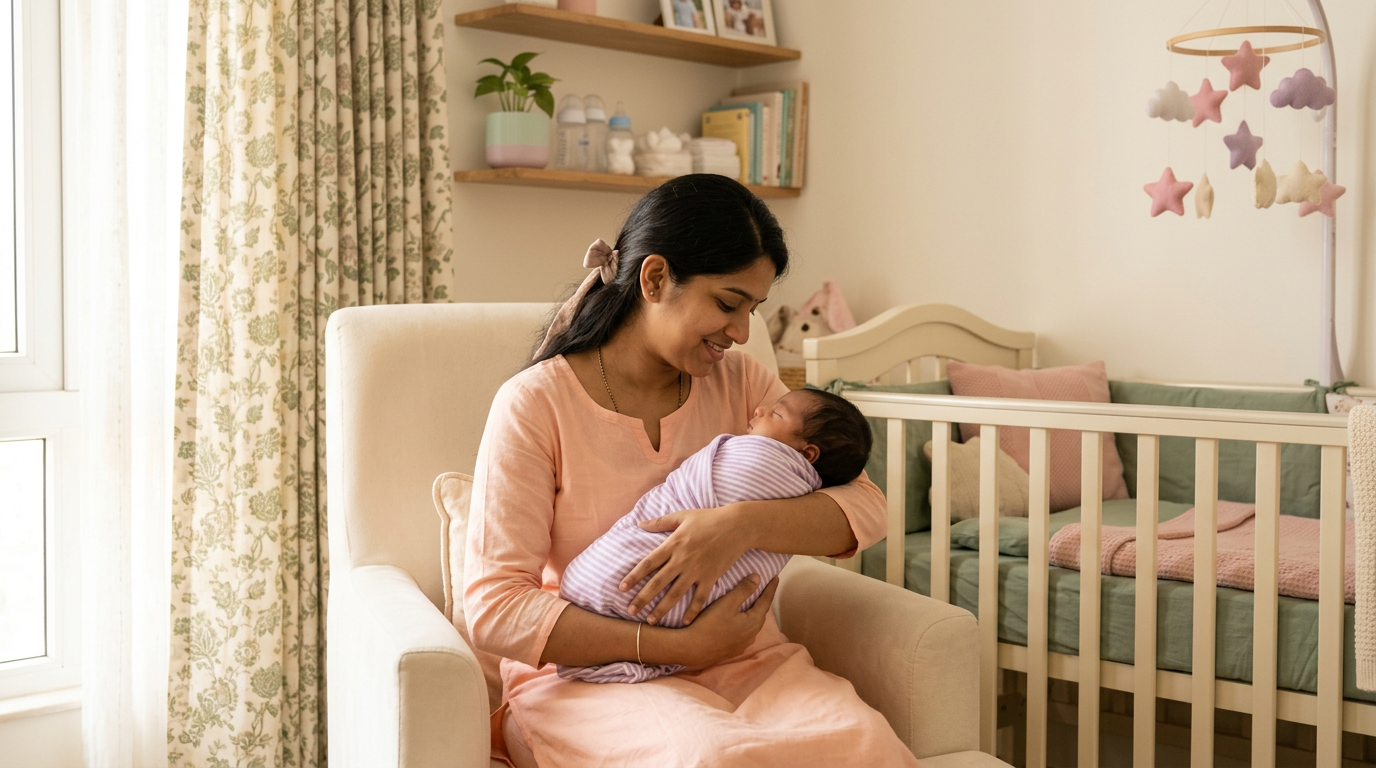
The typical postnatal (postnatal) bleeding duration ranges from 4 to 6 weeks, beginning with a heavy, bright red flow and gradually tapering off to a yellowish-white discharge. In medical terms, this discharge is called lochia. Whether you had a vaginal delivery or a C-section, your body must shed the uterine lining, blood, and mucus accumulated during pregnancy. While the first few days feel like a very heavy period, the intensity should decrease week by week.
Understanding the Stages of Postnatal Bleeding
In India, we often call the first 40 days Sawa Mahina, a sacred window for recovery. Scientifically, your postnatal bleeding duration follows a specific timeline that helps you track your healing. If you are worried about the volume of flow, you can use our lochia analyzer to see if your recovery is on track.
1. Lochia Rubra (Days 1–4)
This is the heaviest phase. The discharge is dark red and may contain small clots (no larger than a 5-rupee coin). You will likely go through a heavy-duty maternity pad every few hours. This is the stage where the uterus is contracting back to its pre-pregnancy size, a process called involution.
2. Lochia Serosa (Days 5–10)
The colour shifts from bright red to a pinkish-brown or watery discharge. The flow is much lighter now. If you find the bleeding suddenly turns bright red again during this phase, it is often a sign from your body to slow down on the household chores or maalish sessions.
3. Lochia Alba (Weeks 2–6)
The final stage is a creamy white or yellowish discharge. It shouldn't have a foul smell. By the end of six weeks, most Indian women find their postnatal body changes beginning to stabilise as the uterus fully heals.
Why Postnatal Bleeding Duration Varies Between Moms
While 6 weeks is the average, your individual experience depends on several factors.
* Breastfeeding (Stanpaan): Nursing your baby releases oxytocin, which causes the uterus to contract. You might feel a "gush" of blood while breastfeeding. While this makes the initial bleeding feel intense, it actually helps shorten the overall postnatal bleeding duration by helping the uterus shrink faster.
* Activity Levels: If you start climbing stairs or lifting heavy buckets of water too soon, you may notice an increase in spotting.
* Mode of Delivery: Interestingly, C-section moms often have slightly less lochia than those who had a vaginal birth, as the surgeon manually clears some of the uterine lining during the procedure. However, the scar analyzer is a better tool to monitor your C-section recovery specifically.
Managing the "Sawa Mahina" Recovery at Home
The Indian tradition of Jaapa or Pathyam isn't just about old wives' tales; many practices support physical healing.
Dietary Support:
Incorporating Gond ke Laddoo, Methi (fenugreek) water, and Dalia helps with lactation and provides the energy needed for tissue repair. The ICMR (Indian Council of Medical Research) recommends an additional 600 kcal/day for lactating mothers in the first six months.
Hygiene and Comfort:
* Maternity Pads: Use high-absorbency maternity pads (brands like Whisper Koala or Rael are popular). Avoid tampons or menstrual cups for the first 6 weeks to prevent infection.
* Peri-Bottle: Use lukewarm water to clean the vaginal area after using the washroom.
Rest: This is not the time to be a superwoman. If your Sasu Maa* tells you to lie down, listen to her.
Beyond Bleeding: Other Postnatal Body Changes
As your bleeding tapers off, you might notice other shifts. Two of the most common concerns I hear in my clinic are postnatal hair loss and the appearance of postnatal stretch marks.
The "4-month shed" is real. Around the time your bleeding is a distant memory, you might see clumps of hair in the drain. This is due to falling oestrogen levels. Similarly, while stretch marks (Striae Gravidarum) are a badge of motherhood, keeping the skin hydrated with coconut oil or specialized creams can help the fading process.
Real Talk from Indian Moms
> "I panicked when the bleeding stopped on Day 10 and then came back on Day 15. My doctor told me I was doing too much kitchen work. Once I rested, it settled into a light yellow flow by Week 5." — Ananya, Mumbai (Baby aged 3 months)
> "With my C-section, I thought I wouldn't bleed much. It was light but lasted a full 45 days. The maalish-wali insisted on a tight tummy wrap, but my OB-GYN said to wait until the bleeding stopped completely." — Preeti, Bengaluru (Baby aged 6 months)
When to Call Your Doctor
While lochia is normal, certain symptoms require immediate medical attention (Postpartum Haemorrhage is a leading cause of maternal morbidity in India). Contact your hospital if:
* You soak through one or more pads in an hour.
* You pass blood clots larger than a lemon.
* The discharge has a foul, fishy odour (potential sign of postpartum endometritis).
* You have a fever or chills.
* You experience severe abdominal pain that doesn't go away with basic paracetamol.
When to Call Your Paediatrician
While you are recovering, keep an eye on your little one. Call the paediatrician if:
* The baby has a fever over 100.4°F (38°C).
* The baby is excessively lethargic or difficult to wake for feeds.
* You notice yellowing of the skin or eyes (Jaundice).
* The umbilical cord stump looks red, swollen, or smells bad.
* The baby has fewer than 6 wet nappies in 24 hours.
Frequently Asked Questions
What is the normal postnatal bleeding duration?
Most women experience bleeding for 4 to 6 weeks. It starts heavy and red (Lochia Rubra) and transitions to a lighter, pale discharge (Lochia Alba).
Can I use a traditional belly wrap during this time?
In many Indian households, Sutika Paricharya involves belly binding. However, you should wait until your doctor clears you, especially after a C-section. Ensure it isn't so tight that it increases pelvic floor pressure.
How do I manage postnatal hair loss during recovery?
postnatal hair loss usually peaks at 3-4 months. Focus on an iron-rich diet (spinach, beetroot, pomegranate) and continue your prenatal vitamins as advised by FOGSI guidelines.Is there a specific postnatal hair loss treatment that works?
Most postnatal hair loss treatment involves patience and nutrition. Avoid harsh chemical treatments or tight hairstyles (like high buns) that pull on the roots while your hormones are rebalancing.
When will my first period return?
If you are exclusively breastfeeding, your period might not return for 6 months or more (Lactational Amenorrhea). If you are formula feeding, it could return as early as 6-8 weeks postnatal.
Can I start exercise while still bleeding?
Stick to gentle walking. Avoid high-impact exercises until your 6-week check-up. You can use our free diastasis recti self-check to see if your abdominal muscles have healed before starting core workouts.
Healing is not a race, and your body has just performed the miracle of Garbh Sanskar and birth. Be patient with the process.
"My body is healing, my strength is returning, and I am doing enough for my baby and myself."
Sources & further reading
- FOGSI Postpartum Care Guidelines
- ICMR Nutrient Requirements for Indians
- WHO Postnatal Care Recommendations
- National Health Portal India - Postnatal Care
Written by Dr. Ritu Sharma, MD (Obstetrics & Gynaecology)
Reviewed by TheMamaCircle Editorial Team
Last updated: 8 August 2026
This article is for general information only and is not a substitute for personalised medical advice. Always consult your paediatrician or obstetrician for your specific situation.