Postpartum Stretch Marks: Indian Mom's Guide to Skin
Postpartum stretch marks are a map of your motherhood journey. Learn how to treat them, manage postpartum hair fall, and embrace your new body with MD-backed tips.
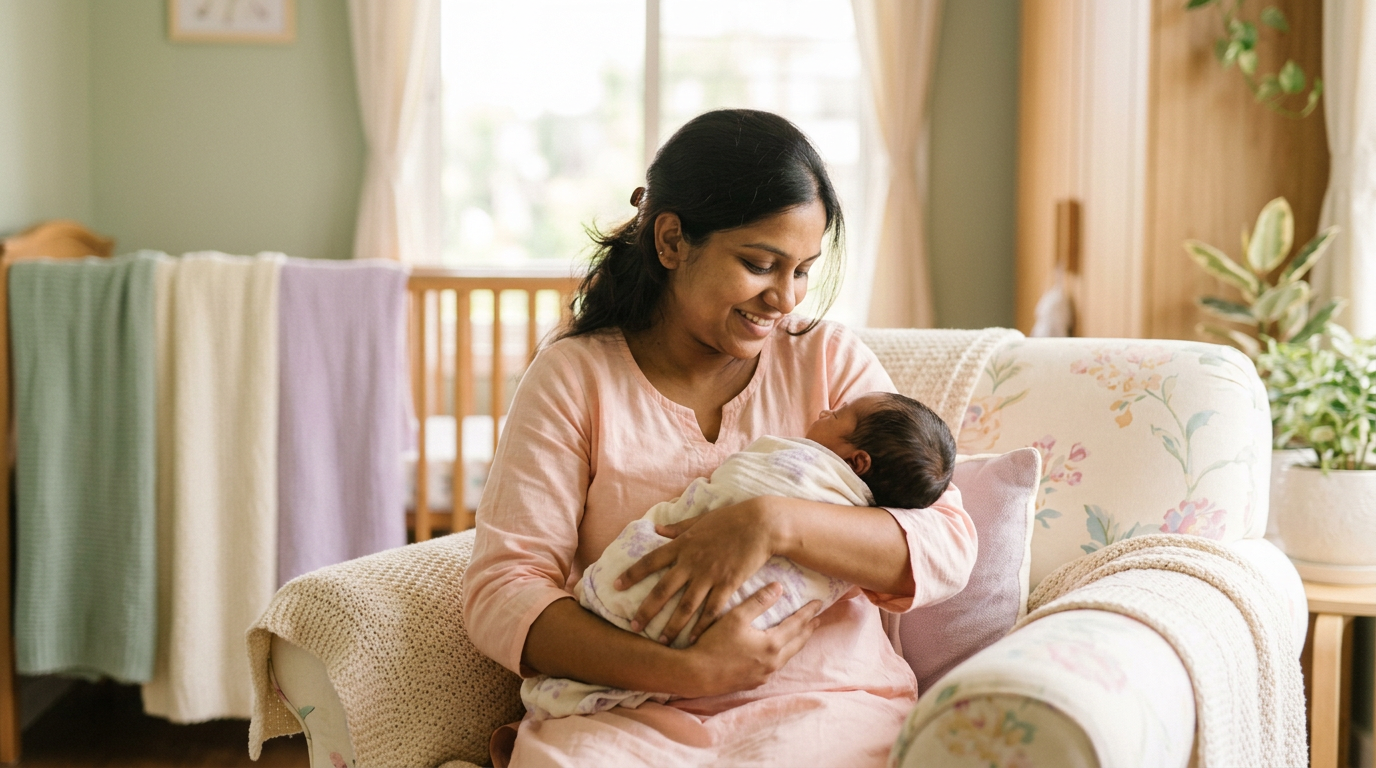
Postpartum stretch marks (striae gravidarum) are a completely normal side effect of the incredible way your skin expands to accommodate your growing baby. After delivery, these marks typically transition from a bright pink or purple hue to a silvery-white or flesh-toned appearance. While you cannot "erase" them completely, consistent hydration, clinical dermatological treatments, and time will significantly fade them. They aren't a sign of poor skin health; they are a map of your journey through motherhood.
Why do postpartum stretch marks appear on Indian skin?
The science is simple: your skin’s middle layer (the dermis) doesn't have enough elasticity to keep up with the rapid growth of pregnancy. This causes the collagen and elastin fibres to tear. In India, our skin tones have higher melanin content, which means our marks might look darker (hyperpigmented) initially.
Genetics play a huge role. If your nani or sasu maa had them, you likely will too. Hormonal shifts during pregnancy also soften the skin’s support fibres, making them easier to snap. It’s part of the broader postpartum body changes that every new mother experiences as her "garbh" (womb) returns to its pre-pregnancy size.
Can you actually get rid of stretch marks after delivery?
Let’s be honest: no cream from a chemist shop will make them vanish overnight. However, you can dramatically improve the texture and colour.
1. Medical-Grade Topicals
Look for a postpartum stretch marks cream that contains specific active ingredients:
Retinoids: Tretinoin (prescribed by a dermatologist) helps rebuild collagen. Note: Do not use retinoids if you are currently breastfeeding.*
* Hyaluronic Acid: Keeps the skin hydrated and plump, making the "valleys" of the marks less deep.
* Centella Asiatica: A herbal oil that helps stimulate cells that make collagen.
2. Traditional Indian Maalish
While a dai maa might promise that her proprietary mustard oil blend will rub the marks away, use it for the blood circulation rather than the "cure." A daily maalish with Sweet Almond Oil (Badam Rogan) or Coconut Oil (Nariyal Tel) keeps the skin supple.
3. Clinical Procedures
If topical creams aren't cutting it, consult a dermatologist for:
* Fractional CO2 Laser: This creates micro-injuries in the skin to force new collagen production. (Costs in India: ₹5,000–₹15,000 per session).
* Microneedling: Uses tiny needles to break down old scar tissue.
* Chemical Peels: Removes the top layer to reveal smoother skin underneath.
Postpartum body changes: Beyond the skin
Stretch marks are often just the tip of the iceberg. Many Indian women find that around the 3-to-4-month mark, they start losing clumps of hair. This is known as postpartum hair loss and it happens because your oestrogen levels crash, forcing all those "resting" hairs to fall out at once. It’s a shock to see so much hair in the drain, but like your skin, your scalp will eventually recover.
Diet for skin elasticity and recovery
What you put inside your body matters as much as what you rub on it. The Indian Council of Medical Research (ICMR) and the National Institute of Nutrition (NIN) suggest increased protein and vitamin intake for lactating mothers.
* Vitamin C: Essential for collagen synthesis. Eat amla (Indian gooseberry), oranges, and guavas.
* Protein: Lean meats, paneer, and dals provide the amino acids needed for tissue repair.
* Zinc: Found in pumpkin seeds and chickpeas, it helps with skin healing.
* Ghee: While often demonised, moderate amounts of A2 ghee help with internal lubrication and skin radiance.
Real talk from Indian moms
"I used to hate my belly after Kabir was born. It looked like a deflated balloon with silver lines. But my mom told me, 'These are your tiger stripes.' Now, 18 months later, they are barely visible unless I’m under bright light."
— Amrita S., Delhi (Mom to an 18-month-old)
"I focused so much on my stomach that I didn't see the postpartum hair fall coming! Between the marks and the thinning hair, I felt like a stranger. Once I started my Biotin and Iron supplements, things looked up."
— Deepika R., Bengaluru (Mom to a 7-month-old)
When to call your doctor
While stretch marks and hair thinning are cosmetic, some postpartum symptoms require immediate medical attention from your OB-GYN or your baby's paediatrician.
* Fever over 100.4°F (38°C): This could indicate a uterine or breast infection (Mastitis).
* Heavy Vaginal Bleeding: If you are soaking more than one pad an hour or passing clots larger than a lemon.
* Severe Leg Pain or Swelling: This could be a sign of DVT (Deep Vein Thrombosis).
* Baby's Health: If your baby has a yellowish tint to the skin (jaundice), isn't passing urine at least 6 times a day, or has an unhealed umbilical cord stump that smells or oozes.
Frequently Asked Questions
Can postpartum stretch marks be prevented during pregnancy?
While you can’t fully prevent them if you are genetically predisposed, keeping your skin hydrated with bio-oils or shea butter can help the skin stretch more gracefully. Focus on slow, steady weight gain rather than rapid spikes.
Is there a specific postpartum hair loss treatment that works?
The best postpartum hair loss treatment is patience and nutrition. Ensure you continue your prenatal vitamins (iron, calcium, and folic acid) for at least six months after birth or as long as you are breastfeeding.
How long does it take for postpartum hair fall to stop?
Usually, the shedding peaks at 4 months and should settle by the time your baby turns one. If you see bald patches or the shedding continues after 12 months, consult a doctor to check your thyroid levels (TSH).
Which is the best postpartum stretch marks cream in India?
Look for brands that are dermatologically tested and free from parabens and phthalates. Popular effective options in the Indian market include Mamaearth, The Moms Co, and Palmer's Cocoa Butter, but a prescription retinoid from your doctor will always be more potent.
Do stretch marks itch after delivery?
Yes, as the skin shrinks back and the scars heal, they can become very itchy. Avoid scratching as it can lead to micro-tears and infection. Use a soothing aloe vera gel or a heavy moisturiser instead.
Will losing weight make my stretch marks disappear?
Actually, rapid weight loss can sometimes make the marks look more prominent because the skin becomes "loose." Slow weight loss combined with strength training to tone the underlying muscle is a better approach.
Your body performed a miracle by growing a human being, and these marks are the evidence of that power. Be kind to yourself, keep your katori of almonds nearby, and remember that your worth is not measured in the smoothness of your skin. You are a mother now, and your body is a testament to your strength.
Mama Mantra: My body is a story of growth, and I choose to love every chapter.
Sources & further reading
- Federation of Obstetric and Gynaecological Societies of India (FOGSI)
- National Health Portal (NHP) India - Postnatal Care
- ICMR - Dietary Guidelines for Indians
Written by Dr. Ritu Sharma, MD (Obstetrics & Gynaecology)
TheMamaCircle Editorial Team
Last updated: 12 July 2026
This article is for general information only and is not a substitute for personalised medical advice. Always consult your paediatrician or obstetrician for your specific situation.