Postnatal Lochia Discharge: Indian Mom's Guide to Healing
Understanding postnatal lochia discharge is key to postnatal recovery. Learn the stages of bleeding, hair loss tips, and when to see an Indian doctor.
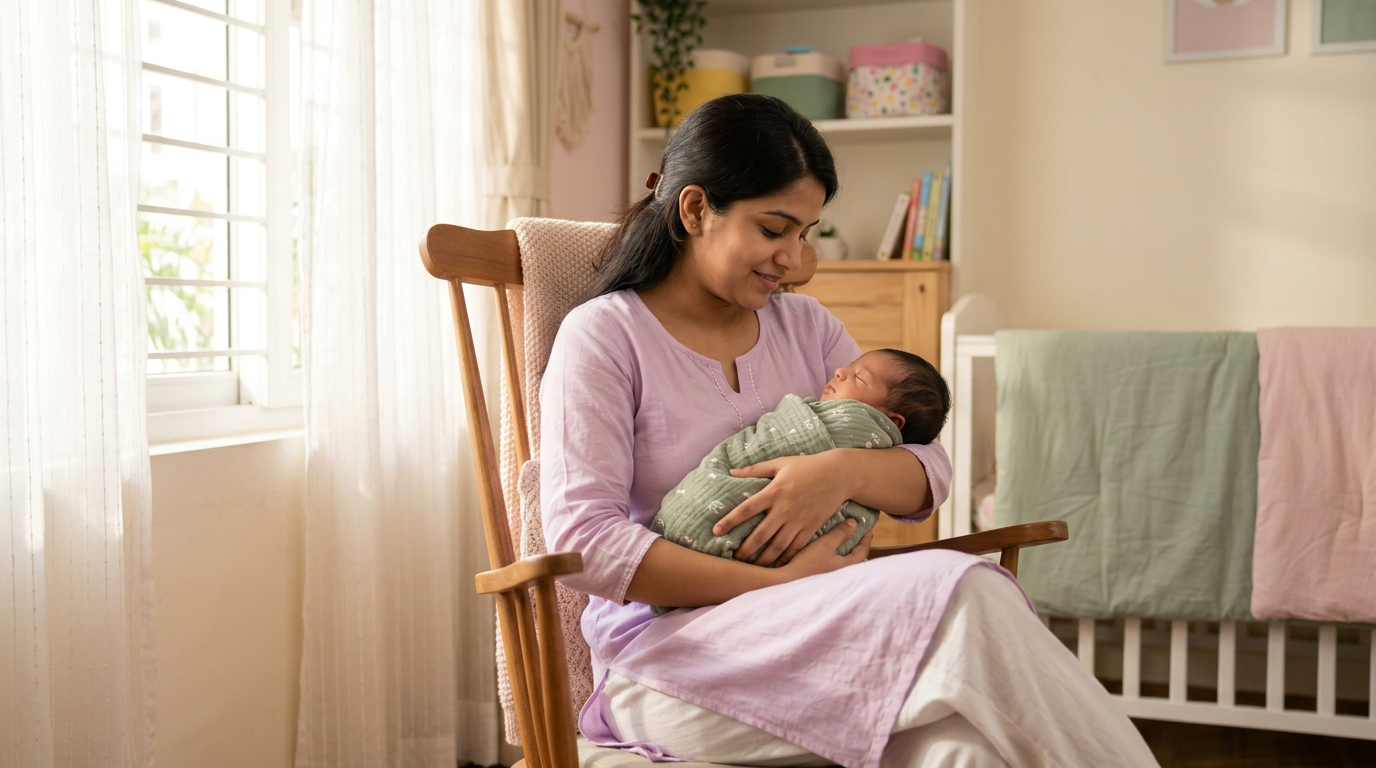
Postnatal lochia discharge (also called postnatal lochia discharge) is the vaginal flow you experience after giving birth, consisting of blood, mucus, and uterine tissue. While it looks like a heavy period, it is actually your body shedding the lining of the uterus (garbh) and healing the site where the placenta was attached. Whether you had a vaginal delivery or a C-section, every mother experiences this discharge as the uterus shrinks back to its pre-pregnancy size.
What is Postnatal Lochia Discharge and Why Does It Happen?
After your baby is born, your body begins a process called involution. This is the six-week period where your uterus contracts to its original size. During this time, the extra blood and tissue that supported your baby for nine months must be expelled. Understanding postnatal lochia discharge is vital because it serves as a visual indicator of how well your internal healing is progressing.
Unlike a regular period, this discharge changes in color and consistency over several weeks. In India, this phase is often referred to as the sootak or prasutika period, where traditional practices like pathyam (a strict diet) and rest are encouraged to support this physical transition.
The Three Stages of Postnatal Bleeding
It helps to think of lochia as a sunset; it starts bright and intense, then fades into softer hues before disappearing. According to FOGSI (Federation of Obstetric and Gynaecological Societies of India) guidelines, a typical recovery follows these phases:
1. Lochia Rubra (Days 1 to 4)
* Appearance: Bright red, much like a heavy menstrual period.
* Consistency: May contain small clots (no larger than a 5-rupee coin).
* India-Specific Tip: During this stage, avoid using traditional cloth rags. Use high-absorbency maternity pads (brands like Friends or Whisper Koala are common) to track the flow accurately and prevent infection.
2. Lochia Serosa (Days 5 to 10)
* Appearance: Pinkish-brown or watery discharge.
* Consistency: Thinner than rubra, with fewer or no clots.
* Body Change: This shift indicates the initial wound at the placental site is healing.
3. Lochia Alba (Day 10 to 6 Weeks)
* Appearance: Yellowish-white or cream-colored.
* Consistency: Mostly mucus and white blood cells.
* End Goal: By the end of the sixth week, the discharge should taper off completely.
Managing Postnatal Body Changes During Recovery
Your body is going through an immense overhaul. While managing the discharge, you might notice other postnatal body changes like night sweats, breast engorgement, or uterine cramping (afterpains). These cramps are actually helpful; they are the uterus contracting to stop the bleeding.
Dealing with Hair Fall and Skin
Around the same time your lochia transitions to the Alba stage, you might notice the dreaded "shower floor full of hair." This is postnatal hair fall caused by the sudden drop in oestrogen. While your dadi might suggest heavy oils, the best postnatal hair loss treatment involves a protein-rich Indian diet including moong dal, anda (eggs), and leafy greens, as recommended by ICMR (Indian Council of Medical Research).
Hygiene and Self-Care for Indian Moms
In many Indian households, the jaapa (postnatal care) period involves specific rituals. While some are great for rest, others need a modern update for safety:
* Avoid Internal Products: Do not use tampons or menstrual cups for postnatal lochia discharge. Your cervix is still closing, and introducing anything internally significantly increases the risk of infection.
* Perineal Care: If you have stitches from an episiotomy or tear, use a peri-bottle (a simple squeeze bottle) with warm water after every bathroom visit. Pat dry gently; never rub. You can use our lochia analyzer to check if your flow matches the typical timeline.
* Clothing: Stick to breathable cotton underwear. This isn't the time for your fancy synthetics. The humidity in many parts of India can lead to fungal infections if the area isn't kept dry.
Nutrition: Traditional Gond ke Laddoo and Ajwain halwa aren't just for calories; ajwain* (carom seeds) is traditionally believed to help with uterine cleansing, though scientific evidence focuses more on its digestive benefits.
Real talk from Indian moms
> "I was terrified when I saw a large clot on day 3. My sasu maa told me it was normal, but I called my doctor anyway. Turns out, as long as they aren't bigger than a lemon, you're usually okay. But the transition from red to pink was such a relief!" — Priya S., Bengaluru (Baby is 4 months old)
> "Nobody told me that every time I stood up after breastfeeding, I'd feel a 'gush' of lochia. It's because the oxytocin released during stanpaan (breastfeeding) makes the uterus contract. I went through three packets of heavy-duty pads in the first week!" — Ananya M., Delhi (Baby is 8 weeks old)
When to call your paediatrician (and your OB-GYN)
While this guide focuses on your body, your recovery directly impacts your baby. You must seek medical attention if you experience:
* Postpartum Haemorrhage (PPH) signs: Soaking through a large maternity pad in less than one hour.
* Large Clots: Passing clots larger than a golf ball or a large lemon.
* Foul Odour: Lochia should smell like a normal period. A "fishy" or putrid smell indicates an infection.
* Fever and Chills: A temperature over 100.4°F (38°C) could signal postpartum sepsis or endometritis.
* Severe Pain: Intense abdominal pain that doesn't improve with basic paracetamol.
* Baby's Health: If you are too unwell to care for the baby, or if the baby shows signs of poor feeding or lethargy, contact your paediatrician immediately. You can track your baby's progress using a baby milestones tracker.
Frequently Asked Questions
Is postnatal hair loss linked to lochia?
No, they are caused by different mechanisms. Postnatal hair loss is hormonal (dropping oestrogen), while lochia is the physical shedding of the uterine lining. However, both typically occur within the first few months after birth.
How long does postnatal lochia discharge last?
For most women, it lasts between 4 to 6 weeks. It starts heavy and red, turns pink/brown, and finally becomes a creamy white before stopping. If it lasts longer than 8 weeks, consult your doctor.
Can I use a C-section scar cream while bleeding?
Yes, you can treat your postnatal stretch marks and C-section scars while still experiencing lochia. Just ensure you wash your hands thoroughly between handling your pads and touching your surgical site. You can use our scar analyzer to monitor your healing.
Does breastfeeding make lochia heavier?
Breastfeeding triggers the release of oxytocin, which causes uterine contractions. This might result in a temporary "gush" or increased flow during or immediately after nursing, but it actually helps the uterus shrink faster in the long run.
When will my period return after lochia stops?
If you are exclusively breastfeeding, your period might not return for several months (Lactational Amenorrhea). If you are formula feeding, it could return as early as 6-8 weeks after birth, often shortly after the lochia has finished.
Recovering from childbirth is not a race. Your body took nine months to grow a human; give it at least six weeks to find its new normal. Keep your maternity pads handy, your water bottle full, and your heart patient.
You are healing exactly as you should be.
Sources & further reading
- FOGSI General Postpartum Care Guidelines
- Ministry of Health and Family Welfare - Postnatal Care
- WHO Recommendations on Postnatal Care of the Mother and Newborn
Written by Dr. Ritu Sharma, MD (Obstetrics & Gynaecology)
Reviewed by TheMamaCircle Editorial Team
Last updated: 31 August 2026
This article is for general information only and is not a substitute for personalised medical advice. Always consult your paediatrician or obstetrician for your specific situation.