Postnatal Skin Care: India Guide to Postnatal Glow & Rituals
Dealing with postnatal acne or melasma? Our guide to postnatal skin care covers Indian rituals, Ayurvedic oils, and expert tips for a healthy glow.
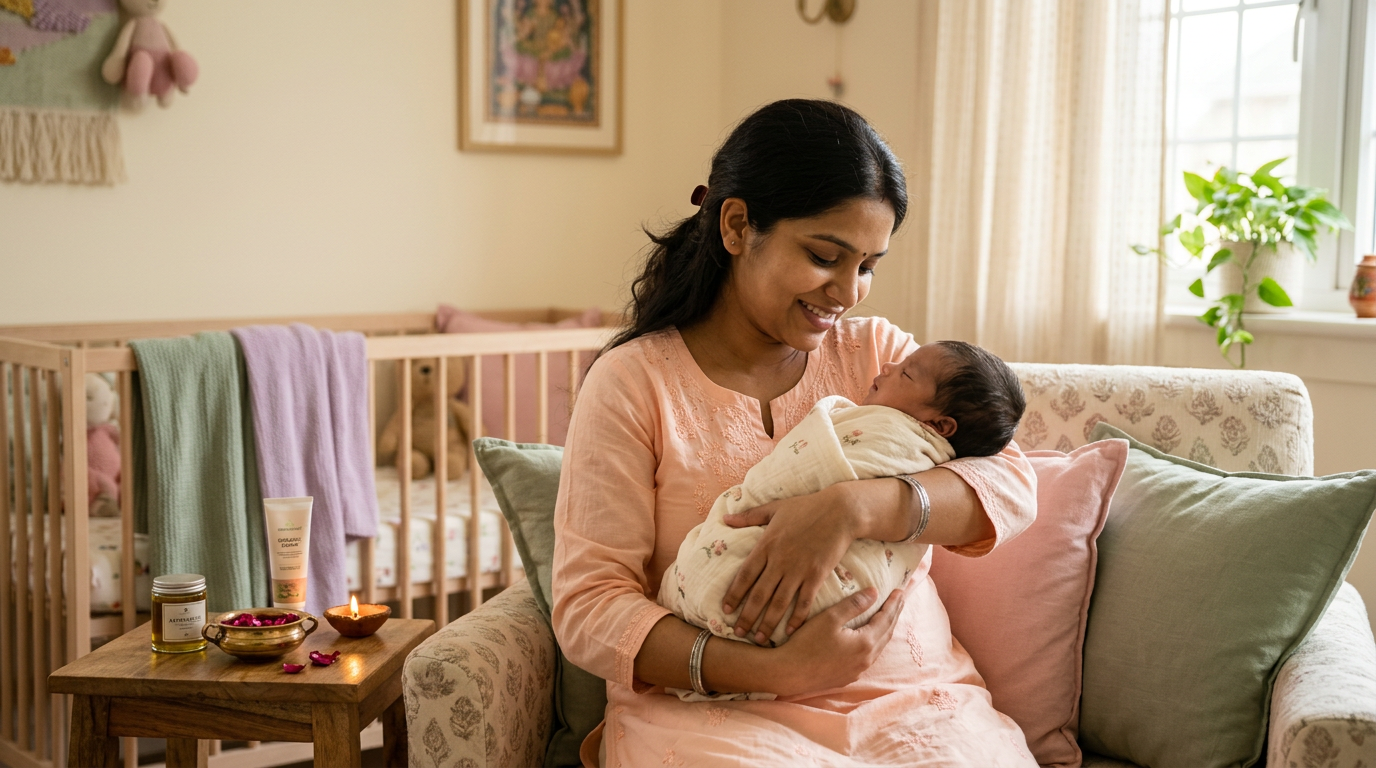
Between the sleepless nights, the constant feeds, and the sheer whirlwind of bringing a new human home, looking in the mirror can feel like a shock. One day you have that "pregnancy glow" (thanks, oestrogen!), and the next, you’re dealing with postnatal skin care struggles like hormonal acne, melasma (the "mask of pregnancy"), and dryness. This postnatal phase, often called the Prasava Kaalam in the south or Sava mahina in the north, requires a dedicated approach to healing your skin from the inside out using both modern science and time-tested Indian rituals.
Why is your skin behaving this way postnatal?
The moment the placenta leaves your body, your hormone levels—specifically oestrogen and progesterone—plummet. This hormonal crash, combined with the rise in prolactin for breastfeeding (stanpaan), triggers a variety of skin changes.
In India, we also have to contend with varying humidity levels and the heat from traditional confinement practices. Whether it’s the chilla period or the strict pathyam diet, your skin reflects your internal recovery. The good news? Most of these issues are temporary, provided you don't ignore them while focusing entirely on the baby.
Core Pillars of Postnatal Skin Care in India
1. The Power of the Maalish
In Indian households, the jaapa-maid or dai is the queen of the house for the first 40 days. While her primary job is the postnatal massage for the mother’s physical recovery, the oils used have a profound effect on the skin. A traditional postnatal massage oil like Dhanwantharam Thailam or Nalpamaradi Thailam doesn't just soothe sore muscles; it treats hyperpigmentation and improves skin elasticity. If you are in the capital, finding a specialist for a postnatal massage delhi service can ensure you get the traditional technique that focuses on lymphatic drainage, which reduces postnatal swelling or oedema.
2. Managing Melasma and Dark Spots
Hyper-pigmentation, often appearing as dark patches on the cheeks or the linea nigra on the belly, is incredibly common.
* Avoid Harsh Acids: While you might want to reach for high-strength Retinol, hold off if you are breastfeeding. Stick to Vitamin C or Niacinamide.
The Ubtan Tradition: A gentle, homemade ubtan of chickpea flour (besan), a pinch of turmeric (haldi*), and raw milk can help exfoliate dead skin cells without the chemicals found in store-bought scrubs.
Sunscreen is Non-Negotiable: Even if you are staying indoors for the sawa mahina*, UV rays through windows can darken melasma. Use a mineral sunscreen with at least SPF 30, as recommended by the Indian Association of Dermatologists.
3. Hydration and the "Inside-Out" Glow
Indian postnatal traditions place heavy emphasis on what you eat. To keep your skin supple, focus on:
* Gondh Ke Ladoo: These are packed with healthy fats that help restore the skin’s lipid barrier.
* Hydrating Liquids: Warm water infused with ajwain or cumin helps digestion and keeps the skin hydrated.
* Collagen-Rich Foods: Lean meats or bone broth (for non-vegetarians) or Vitamin C-rich Amla (Indian gooseberry) for vegetarians.
How to handle the "Postnatal Pooch" and Stretch Marks
Your skin has stretched significantly over nine months. While "bouncing back" is a myth we don't subscribe to at TheMamaCircle, you can support your skin's healing. Many moms find that a postnatal massage at home helps in firming the skin around the abdomen.
If you had a C-section, skin care involves managing the incision site once it has healed. You can use our scar analyzer to check if your healing is on track. Once your obstetrician gives the go-ahead (usually after 6 weeks), gentle abdominal massage with Vitamin E oil can help soften the scar tissue.
Establishing a Realistic Postnatal Skin Care Routine
Let’s be honest: you barely have time to shower, let alone do a 10-step Korean skincare routine. You need a "Mummy-friendly" 3-step process:
If you are worried about your core strength alongside your skin, you can also perform a free diastasis recti self-check at home to see how your abdominal muscles are realigning.
Real talk from Indian moms
> "My skin was so dry it felt like paper after my daughter was born. My mother-in-law insisted on a daily mustard oil maalish. I smelled like an achaar (pickle), but my skin never felt better." — Ananya, Bengaluru, baby aged 4 months.
> "I got terrible acne on my jawline three weeks after delivery. I panicked and tried everything, but my doctor told me it was just the hormones settling. Switching to a simple Neem face wash and drinking more water worked wonders." — Preeti, Mumbai, baby aged 6 months.
> "I used a traditional Nalapamaradi oil for my postnatal massage. It’s messy and stains everything yellow, but it’s the only thing that faded my pregnancy mask." — Deepika, Chennai, baby aged 1 year.
When to call your paediatrician or GP
While most postnatal skin changes are cosmetic, some require medical attention:
* Sudden Rashes: If you develop itchy bumps (PUPPP) that spread rapidly.
* Signs of Infection: If your C-section scar or perineal stitches become red, hot, swollen, or ooze pus.
* Yellowing Skin: If you or the baby show signs of jaundice (yellowing of the eyes and skin).
* Severe Hair Loss: While some shedding is normal, bald patches could indicate a thyroid issue or severe nutritional deficiency (Postpartum thyroiditis).
* High Fever: Accompanied by a skin rash, which could indicate a systemic infection like postpartum sepsis.
Frequently Asked Questions
Can I get a postnatal massage after a C-section?
Yes, but timing is key. Most Indian OB-GYNs recommend waiting at least 2 to 3 weeks for a gentle limb massage and at least 6 to 8 weeks before any pressure is applied to the abdominal area. Always consult your doctor before starting a postnatal massage routine post-surgery.
What is the best postnatal massage oil for Indian skin?
Traditional choices include Dhanwantharam Thailam for Vata balance, Maha Narayan Oil for joint pain, or simply high-quality Virgin Coconut Oil. For brightening the skin, Nalpamaradi Thailam is a gold standard in Ayurvedic postnatal skin care.
How do I manage a postnatal massage at home safely?
Ensure your jaapa maid or massage therapist uses clean towels and washed hands. The room should be warm and free of drafts (loo). Avoid vigorous massage on the breasts if you are experiencing engorgement or mastitis. You can book professional postnatal massage at home services that follow strict hygiene protocols.
Is it safe to use skin lightening creams for melasma while breastfeeding?
Most dermatologists recommend avoiding Hydroquinone while breastfeeding. Instead, look for safer alternatives like Kojic acid, Azelaic acid, or Vitamin C. Always check the labels for the BIS (Bureau of Indian Standards) mark to ensure product safety.
Where can I find a specialist for postnatal massage Delhi?
Delhi has several dedicated postnatal care centers and agencies that provide trained dais who understand both the traditional maalish and modern hygiene needs. Look for services that offer Ayurvedic consultations alongside the massage.
Does postnatal skin care include treating stretch marks?
While you cannot completely erase stretch marks (they are tears in the deeper dermis), keeping the skin hydrated with cocoa butter, shea butter, or traditional oils can improve their appearance and reduce itchiness.
Your skin has done the incredible work of stretching to accommodate life; be patient as it finds its new normal. You are glowing because of the love you give, not just the products you use.
Sources & further reading
- FOGSI Postpartum Care Guidelines
- Ayush Ministry - Postnatal Care (Sutika Paricharya)
- Indian Association of Dermatologists (IADVL) Skincare Basics
Written by Dr. Ritu Sharma, MD (Obstetrics & Gynaecology)
Reviewed by TheMamaCircle Editorial Team
Last updated: 21 August 2026
This article is for general information only and is not a substitute for personalised medical advice. Always consult your paediatrician or obstetrician for your specific situation.