Postnatal Tummy Exercises: Safe India Guide to Recovery
Looking for safe postnatal tummy exercises? Learn how to heal diastasis recti, lose weight safely in India, and rebuild core strength after birth.
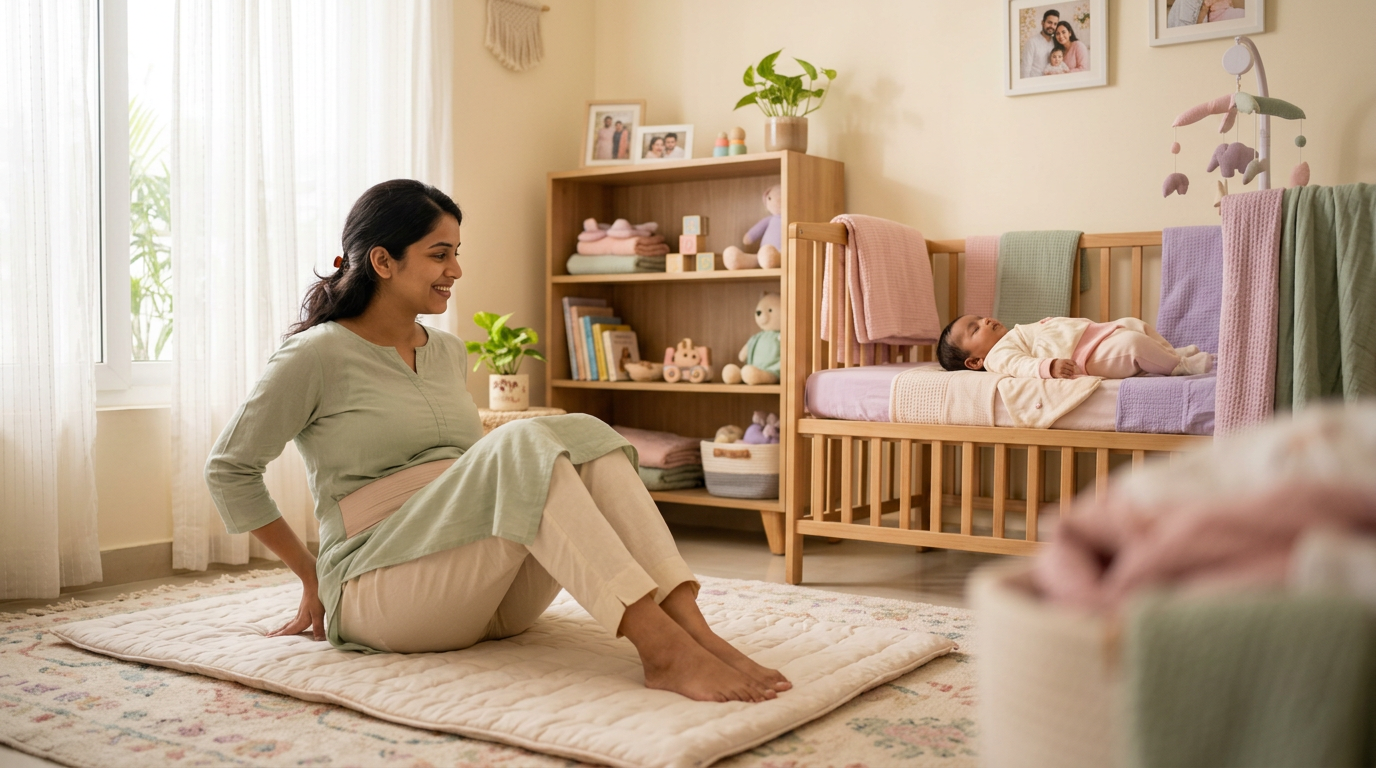
You’ve spent nine months growing a whole human, and now your belly feels like a bowl of soft halwa. It’s completely normal, but the pressure to "bounce back" in India is real, especially with sasu maa mentioning how she was back in her silk sarees within a month. Let’s get one thing straight: postnatal tummy exercises (often called postnatal tummy exercises) aren’t about getting a bikini body for Goa; they are about functional strength, closing that abdominal gap, and supporting your spine so you don’t throw your back out while lifting a heavy diaper bag.
Safe recovery starts with understanding your body’s timeline. Whether you had a vaginal birth or a C-section, your core needs rehabilitation, not a punishment.
When can you safely start postnatal tummy exercises?
The golden rule in Indian obstetrics, supported by FOGSI (Federation of Obstetric and Gynaecological Societies of India), is to wait for your 6-week check-up. However, the postnatal weight loss timeline varies for everyone.
* Vaginal Birth: You can usually start gentle pelvic floor activations (Kegels) and deep belly breathing within days, provided there are no severe tears.
C-Section: This is major abdominal surgery. You must wait at least 6 to 8 weeks before doing anything more than walking. Your internal sutures need time to heal before you put pressure on the tanka* (stiches).
If you are eager to begin your postnatal weight loss journey, start with walking. A 10-minute stroll around your society garden is better than 50 ill-advised crunches that could worsen a diastasis recti.
The Diastasis Recti Check: The "Pooch" That Won’t Go Away
Before you search for "abs workout" on YouTube, you must check for Diastasis Recti (DR). This is the separation of the left and right abdominal muscles. If you have DR, traditional sit-ups will actually make your belly bulge more.
How to do a self-check:
We highly recommend using our free diastasis recti self-check guide to track your progress. If the gap is wide, skip the heavy lifting and focus on deep transverse abdominis (TVA) engagement.
Top 5 Postnatal Tummy Exercises for Indian Moms
These exercises focus on the deep core—the muscles that act like a natural belan (rolling pin) to flatten and support your midsection.
1. Pelvic Tilts (The Foundation)
This is the safest way to re-engage your core after birth.
* Lie on your back, knees bent.
* Exhale and flatten your lower back against the floor by tilting your pelvis toward your face.
* Hold for 3 seconds and release.
* Repetitions: 10 times, twice a day.
2. Heel Slides
This targets the lower abdominals without straining a C-section scar.
* Lie on your back.
* Slowly slide one heel away from you until the leg is straight, keeping your lower back pressed to the floor.
* Slide it back.
* Pro-tip: If your back arches, you’ve gone too far.
3. Modified Bird-Dog
* Get on all fours (tabletop position).
* Extend one arm forward and the opposite leg back, keeping your hips square to the mat.
* If this feels too hard, just slide the leg back without lifting it.
* This is excellent for the "mummy back" pain caused by breastfeeding posture.
4. Glute Bridges
Strong glutes take the pressure off your tummy.
* Lift your hips off the floor until your body forms a straight line from shoulders to knees.
* Squeeze your buttocks at the top.
* Ensure you aren't pushing with your neck.
5. Diaphragmatic Breathing
Believe it or not, breathing is the best postnatal tummy exercise.
* Inhale, letting your belly expand like a balloon.
* Exhale, pulling your navel toward your spine and lifting your pelvic floor (like you’re trying to stop the flow of urine).
Postnatal Weight Loss India: Diet and Tradition
In India, we have a rich tradition of Jaapa or Pathyam (postnatal care). While the Gond Ke Laddoos and Panjiri are great for lactation, they are incredibly calorie-dense. To balance postnatal weight loss india, focus on:
* Ajwain Water: Traditionally believed to help with bloating and uterine involution.
* Protein: Dals, sprouts, paneer, and eggs.
* Fiber: Lauki, tori, and leafy greens to prevent constipation (which strains your pelvic floor).
A typical postnatal meal plan shouldn't cost a fortune. A balanced plate of brown rice, dal, and seasonal sabzi fits within a monthly grocery budget of ₹3,000–₹5,000 per person. If you are struggling with bleeding patterns while exercising, check our lochia analyzer to see if you are overexerting yourself.
Real Talk from Indian Moms
> "I thought I could start gymming at 4 weeks because I felt 'fine'. Big mistake. My C-section scar started throbbing. I switched to slow walks and pelvic tilts, and by 6 months, my tummy felt much tighter."
— Ananya, 29, Bengaluru (Baby is 8 months)
> "In my house, I wasn't allowed to move for 40 days (Sawa Mahina). I used that time to just do deep breathing and Kegels. It helped me reconnect with my core before I started actual postnatal weight loss exercise."
— Meher, 32, Delhi (Baby is 1 year)
When to call your paediatrician (or OB-GYN)
While this guide focuses on you, your recovery affects the baby. You should consult your doctor immediately if:
* You experience a sudden increase in bright red vaginal bleeding after exercise.
* Your C-section incision looks red, swollen, or starts oozing.
* You feel a "bulge" or heaviness in your vagina (sign of prolapse).
* You have severe pain in your calves or chest (risk of DVT).
* You feel overwhelmed, hopeless, or unable to bond with the baby—please use our postnatal wellness assessment to check your mental health status.
Frequently Asked Questions
Can I do postnatal tummy exercises after a C-section?
Yes, but timing is everything. You must wait for your doctor's clearance (usually 6-8 weeks). Focus initially on walking and deep breathing to help the layers of tissue heal without forming excessive scar tissue. You can use our scar analyzer to monitor your healing progress.
How long does postnatal weight loss take in India?
There is no fixed number. Most experts suggest a 6 to 12-month window for sustainable weight loss. Factors like breastfeeding, sleep deprivation, and Indian dietary habits play a huge role. Don't rush; your body took 40 weeks to change, give it at least that long to recover.
What is the best postnatal weight loss exercise for beginners?
Walking is the gold standard. Once cleared, move to "transverse abdominis" activations like pelvic tilts and cat-cow stretches. Avoid crunches, planks, and heavy lifting until your core stability is restored.
Will breastfeeding help with my postnatal tummy?
Yes, breastfeeding burns about 500 calories a day and triggers the release of oxytocin, which helps the uterus contract back to its pre-pregnancy size. However, it also makes you very hungry—so watch the laddoo portions!
Do postnatal belts really flatten the tummy?
Belts provide external support and can help you feel "held in," especially after a C-section. However, they do not strengthen your muscles. You still need to do core exercises to rebuild internal strength.
Recovery is a marathon, not a sprint. Some days you will have the energy for a workout, and other days, a nap will be your best form of "wellness." Be kind to the body that grew a miracle.
Repeat after me: My body is strong, my progress is valid, and I am more than a number on the scale.
Sources & further reading
- FOGSI - Postpartum Care Guidelines
- ICMR - Dietary Guidelines for Indians
- WHO - Postnatal Care for Mothers and Newborns
Written by Priya Raman, Certified Prenatal Yoga Instructor & Mama of two
Reviewed by TheMamaCircle Editorial Team
Last updated: 19 August 2026
This article is for general information only and is not a substitute for personalised medical advice. Always consult your paediatrician or obstetrician for your specific situation.