Postpartum Complications: Indian Mom's Red-Flag Guide & Tips
Learn about postpartum complications like PPH, sepsis, and preeclampsia. Our guide covers red flags, 4 Ts of hemorrhage, and when to call your Indian doctor immediately.
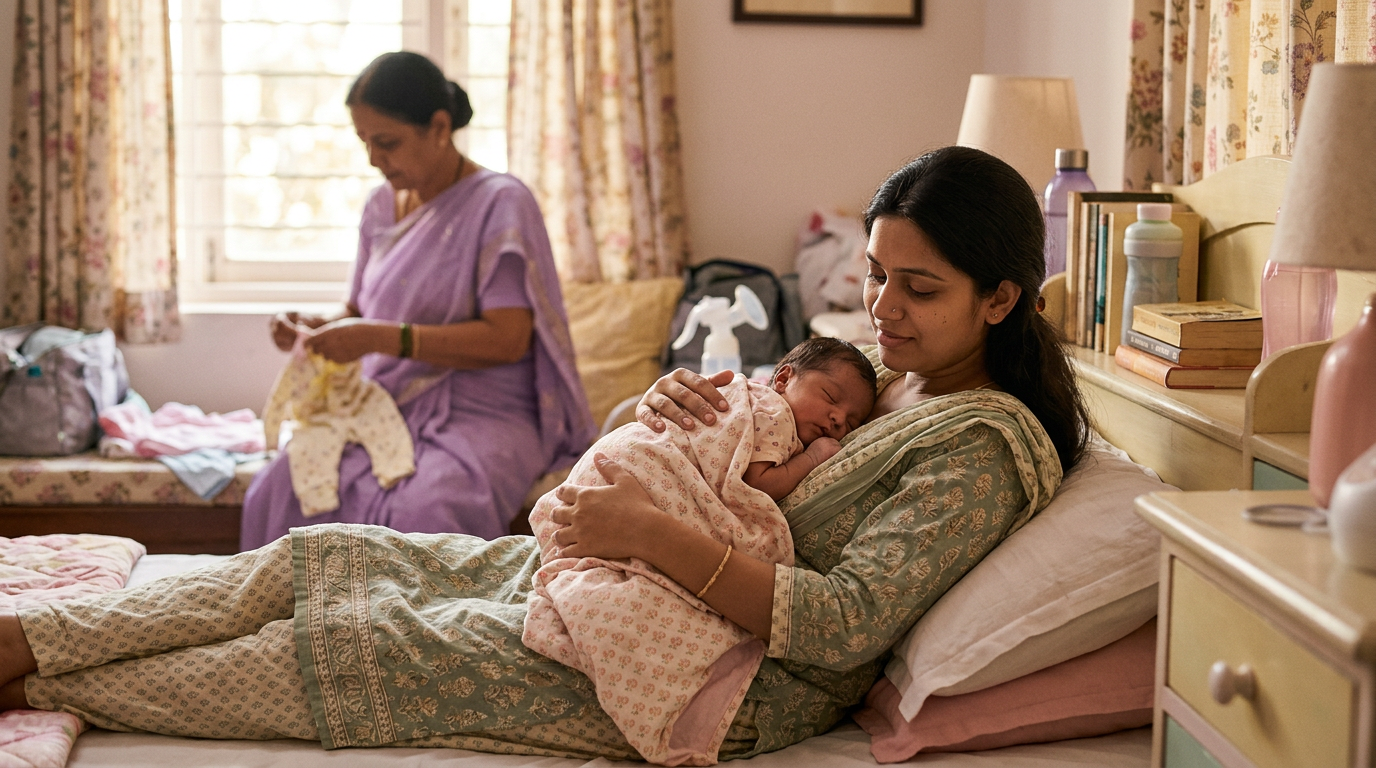
The "fourth trimester" is often a whirlwind of diaper changes, maalish sessions, and late-night feeds, but it is also the most critical window for a mother’s health. While most births in India go smoothly, being aware of postpartum complications is essential for any modern family. If you experience heavy bleeding, severe headaches, or a fever higher than 100.4°F, do not wait for your sasu maa’s home remedy—call your doctor immediately.
In India, we often focus entirely on the baby once they arrive, but the mother’s body has just undergone the equivalent of running a marathon while repairing a major wound. From AIIMS guidelines to FOGSI (Federation of Obstetric and Gynaecological Societies of India) protocols, the medical consensus is clear: the first six weeks post-delivery require hawk-like vigilance.
What are the most common postpartum complications?
Postpartum health isn’t just about "recovering" from birth; it’s about monitoring how your organs return to their pre-pregnancy state. In many Indian households, the focus is on Gondh ke Ladoo and Ajwain water for healing. While these are great for lactation and digestion, they cannot fix clinical issues like secondary hypertension or infections.
1. Postpartum Hemorrhage (PPH)
This is the leading cause of maternal morbidity in India. While most PPH occurs within 24 hours of birth, "delayed PPH" can happen up to six weeks later. You should be familiar with postpartum hemorrhage signs: soaking more than one sanitary pad in an hour or passing clots larger than a lemon.
2. Postpartum Infections (Sepsis)
Infections can occur in the uterus, the site of a C-section incision, or the perineum (if you had an episiotomy).
* Signs: Foul-smelling vaginal discharge, lower abdominal pain, or a high-grade fever.
Prevention: Ensure the dai* or massage woman washing your clothes or helping with your bath uses clean, boiled water and maintains hand hygiene.
3. Postpartum Preeclampsia
You might think high blood pressure ends once the baby is out, but it can strike days or even weeks later. If you have a pounding headache that doesn't go away with paracetamol, or sudden swelling in your face and hands, check your BP immediately.
Why does heavy bleeding happen? Understanding postpartum hemorrhage causes
Understanding postpartum hemorrhage causes can help you communicate better with your medical team. In Indian clinical settings, the "4 Ts" are the primary culprits:
* Tone: The most common cause. The uterus fails to contract back (Uterine Atony) after the baby is born. This is why doctors often massage your stomach aggressively right after delivery—it’s to keep the uterus firm like a cricket ball.
* Trauma: Tears in the birth canal or cervix.
* Tissue: A small piece of the placenta stays stuck inside.
* Thrombin: Blood clotting disorders.
If you are at a private hospital in a metro like Delhi or Mumbai, the postpartum hemorrhage treatment usually involves uterotonic drugs like Oxytocin or Misoprostol, or in severe cases, a balloon tamponade.
The "Silent" Red Flags: Thyroid and Heart Health
India has a high prevalence of thyroid issues. Postpartum Thyroiditis often mimics the "tired mom" vibe. You might feel hyperactive or anxious (Hyperthyroid phase) followed by extreme fatigue, dry skin, and constipation (Hypothyroid phase). If your "baby blues" feel like they are coupled with a racing heart, ask your GP for a TSH test (usually costing between ₹400–₹800).
Another rare but serious condition is Peripartum Cardiomyopathy (heart failure). If you find it hard to breathe while lying flat or have a persistent cough that isn't a cold, it needs an immediate Echo scan.
Postpartum complications list for Indian Families
To make it easy for your husband or caregiver to track, here is a quick postpartum complications list of things that require a hospital visit:
* Heavy Bleeding: Saturating a pad in an hour or bright red bleeding that restarts after it had turned pink/brown.
* Vision Changes: Seeing spots or "stars" (can indicate post-delivery Eclampsia).
* Chest Pain: Or shortness of breath (Red flag for Pulmonary Embolism).
* Leg Swelling: Especially if one leg is more swollen, red, or painful than the other (Deep Vein Thrombosis).
* Suicidal Thoughts: This isn't just "blues"; postpartum psychosis or severe depression is a medical emergency.
Real talk from Indian moms
"I thought the shivering and fever were just because I was tired after a 16-hour labour. My mother-in-law gave me extra blankets, but it turned out to be a uterine infection. Always trust your gut over tradition if you feel truly 'unwell' versus just 'tired'."
— Ananya S., Bengaluru (Mom to a 4-month-old)
"After my C-section, I noticed my left calf was throbbing. I mentioned it to my doctor during the 2-week checkup, and it was a small clot. I'm glad I didn't just ask for a maalish to fix the leg pain."
— Meher P., Pune (Mom to a 6-week-old)
When to call your paediatrician
While you monitor your own postpartum complications, keep an eye on your little one. Call the paediatrician if you notice:
* Jaundice: Golden-yellow colour in the eyes or skin (Common, but needs monitoring).
* Dehydration: Fewer than 6 wet diapers in 24 hours.
* Fever: Any temperature above 100.4°F in a newborn is an emergency.
* Lethargy: The baby is too sleepy to wake up for feeds.
* Umbilical Stumps: Foul smell, pus, or redness around the navel.
Frequently Asked Questions
What are the most common postpartum complications?
The most frequent issues include infection (endometritis), postpartum depression, mastitis (breast infection), and delayed heavy bleeding. According to ICMR data, anemia also complicates recovery for nearly 50% of Indian women.
What is the primary cause of postpartum hemorrhage?
Uterine atony is the leading postpartum hemorrhage causes factor, where the uterus remains "soft" and doesn't compress the blood vessels where the placenta was attached.
How is postpartum hemorrhage treatment managed in India?
postpartum hemorrhage treatment usually begins with fundal massage and IV fluids. Doctors may use medications like Oxytocin, Carboprost, or Misoprostol. In government hospitals, the "Active Management of Third Stage of Labour" (AMTSL) is a standard protocol to prevent this.Can I get high blood pressure after a normal delivery?
Yes. Postpartum preeclampsia can happen even if you had perfect blood pressure during pregnancy. It usually occurs within 48 hours of delivery but can surface up to 6 weeks later.
When should I worry about a postpartum complications list symptom?
If a symptom prevents you from functioning—like a headache that doesn't disappear, pain that makes walking impossible, or a feeling of complete detachment from your baby—it is a red flag on any postpartum complications list.
Why do I have pain while urinating after birth?
This is often a Urinary Tract Infection (UTI) or urinary retention. It is common after a catheter has been used during a C-section or if there was significant swelling during a vaginal birth. Drink plenty of water and see your doctor for a urine culture.
Healing takes time, and your health is the foundation of your baby's well-being. Don't let anyone "brave-face" you into ignoring pain or discomfort. Listen to your body, honour the sutika (postpartum) period with rest, and never hesitate to seek professional help.
I am a strong, healing mother, and my health matters.
Sources & further reading
- FOGSI - Postpartum Hemorrhage Guidelines
- AIIMS - Postpartum Care Protocols
- WHO - Maternal health in India
- NHP India - Postpartum Care Guide
Written by Dr. Ritu Sharma, MD (Obstetrics & Gynaecology)
Reviewed by TheMamaCircle Editorial Team
Last updated: 6 July 2026
This article is for general information only and is not a substitute for personalised medical advice. Always consult your paediatrician or obstetrician for your specific situation.