Postpartum Food Guide India: Traditional Meals for New Moms
Confused about what postpartum food to eat? Balance Indian traditions like Panjiri with modern nutrition for a faster recovery. Heal your body today!
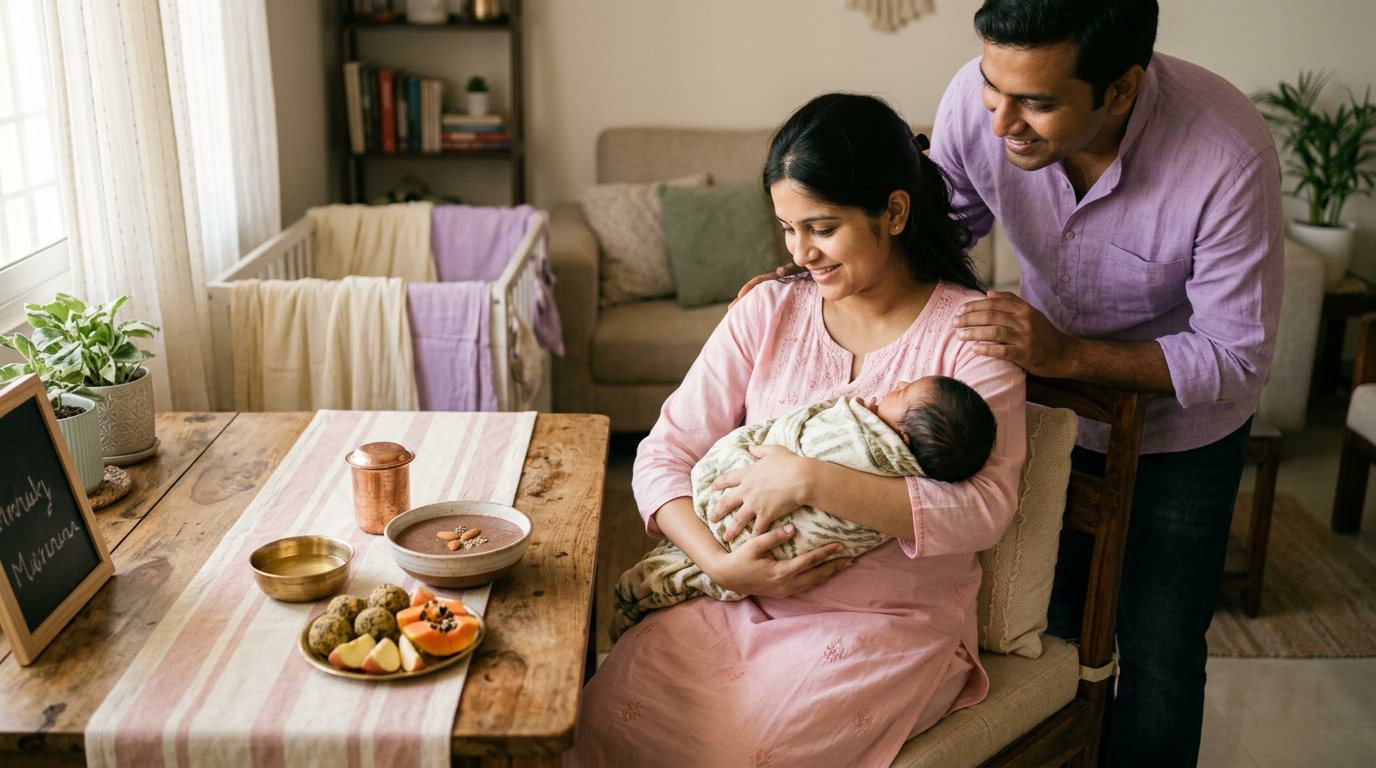
The best postpartum food is a bridge between centuries of Indian wisdom and modern nutritional science. After delivery, your body needs to heal from a major physiological marathon, replenish iron stores, and fuel breastfeeding. In India, this transition is Traditionally called the Jaapa period, where a specific postpartum food for mother is prioritised to ensure the uterus shrinks back and lactation is established without depleting the mother’s health.
Why Your Body Craves Specific Postpartum Food
During the first six weeks, your body is in a state of 'Agni Mandya' according to Ayurveda—your digestive fire is low. This is why Sasu Maa insists on warm, soft, and ghee-rich foods. Scientifically, this makes sense: your organs are shifting back to their original positions, and your hormones are in a massive flux.
A high-quality postpartum diet isn't about losing weight in two weeks; it is about anti-inflammatory healing. You need roughly 500-600 extra calories a day if you are breastfeeding, but those calories must come from nutrient-dense sources like ragi, nuts, and lentils, not just sugar-laden sweets.
Essential Indian Postpartum Foods for Recovery
The Indian kitchen is a pharmacy. Every spice added to your khichdi or kadha serves a purpose beyond flavour.
1. The Power of Gond and Ajwain
Gond (Edible Gum): These crystalline lumps are fried in ghee to make Gond ke Laddu*. They are incredibly rich in calcium and protein, helping to strengthen the spine after the strain of pregnancy.
Ajwain (Carom Seeds): Used in Ajwain Halwa* or infused in water, it aids digestion and prevents colic in the baby through breastmilk.
* Jeera (Cumin): A natural galactagogue (milk booster) that also helps the uterus contract.
2. Regional Stars: From Methi to Pathyam
North India: Panjiri* made with whole wheat flour, makhana, and dry fruits. It provides sustained energy and helps in 'cleaning' the system.
South India: Pathyam Samayal focuses on garlic-infused Poondu Kuzhambu and Kootu* made with bottle gourd (lauki/surakai) which is hydrating and easy to digest.
West India: Dink Ladoo (Maharashtra) and Katlu Pak* (Gujarat) follow similar principles of using warming spices and healthy fats.
3. Protein and Iron Fixes
The ICMR (Indian Council of Medical Research) recommends increased protein for lactating mothers.
* Green Moong Dal: The 'gold standard' for early postpartum recovery. It is the easiest lentil for the body to break down.
* Makhana (Fox Nuts): A great source of calcium and fibre. Roasting a bowl of makhana costs about ₹40-60 and provides more satiety than a packet of biscuits.
Designing Your Postpartum Diet Chart Indian Style
A balanced postpartum diet chart indian should focus on three big meals and two "milk-boosting" snacks.
* Early Morning: A glass of warm milk with a pinch of turmeric or a handful of soaked almonds and walnuts.
Breakfast: Lapsi (broken wheat) with jaggery, or Ragi Manni* (finger millet porridge).
Lunch: One bowl of mushy* rice or two ghee-smeared rotis, a large bowl of dal (moong or masoor), and a gourd-based vegetable like ridge gourd (turai).
Evening Snack: One Gond or Methi Laddu* with a cup of fennel (saunf) tea.
* Dinner: Similar to lunch but lighter. Think Moong Dal Khichdi with a teaspoon of ghee.
The Role of Fats: Why Ghee is Your Best Friend
In modern fitness culture, ghee is often vilified. However, for a new mother, A2 cow ghee provides the necessary lubrication for joints and contains butyric acid, which supports gut health. It also helps in the absorption of fat-soluble vitamins (A, D, E, K). Don't go overboard, but 2-3 teaspoons a day is medicinal.
Real Talk from Indian Moms
> "I was terrified of the 'Methi Laddu' because they are bitter, but my mother-in-law insisted. Honestly, by day 10, my backache significantly reduced. It’s not just an old wives' tale; it actually works." — Megha R., Bengaluru (Mother to a 4-month-old)
> "Living in a nuclear setup in Noida, I couldn't make Panjiri. I ordered traditional postpartum meal kits online. It cost me around ₹3000 for a month's supply of laddus and herb mixes, and it saved my energy for the baby." — Simran K., Noida (Mother to a 2-month-old)
When to Call Your Paediatrician
While you focus on postpartum food, keep an eye on how your diet affects the baby. Consult your doctor if:
* The baby develops an extreme skin rash or hives (could indicate a dairy or nut sensitivity).
* The baby is excessively fussy or gassy for more than 3 hours a day.
* The baby’s stool contains blood or mucus.
* The baby shows signs of dehydration (fewer than 6 wet nappies).
* You suspect the baby is not gaining weight despite frequent feeding.
Frequently Asked Questions
Which postpartum food to eat immediately after a C-section?
Start with clear liquids like coconut water or strained dal water once your doctor allows. Gradually move to soft, non-gassy foods like Moong Dal Khichdi. Avoid heavy beans (Rajma/Chole) for the first two weeks as the abdominal incision heals and bowel movements regulate.
What is the best postpartum food for mother to increase breast milk?
Galactagogues such as fenugreek (methi) seeds, fennel (saunf), garlic, and garden cress seeds (halim/aliv) are excellent. A bowl of oatmeal or daliya with milk is also a proven milk booster in many Indian households.
Can I follow a postpartum diet chart indian for weight loss immediately?
No. The first 40 days should be for healing. Restricting calories too early can lead to postpartum depression, fatigue, and low milk supply. Focus on "clean" traditional foods and avoid processed sugar; the weight often starts dropping naturally around the 3-month mark with breastfeeding.
How much water should I drink?
Hydration is as vital as the postpartum food you eat. Aim for 3-4 litres a day. Many Indian families prefer boiled drinking water with ajwain or jeera (piping hot or warm) to help with digestion and hydration simultaneously.
Are dry fruits safe to eat?
Yes, in moderation. Dry fruits like dates, figs (anjeer), and almonds are energy-dense and help prevent postpartum constipation. However, limit excessive cashews or pistas if you are prone to heat-related issues like boils or acidity.
Eating well during this phase is an act of self-love that benefits both you and your little one. Traditional Indian meals aren't just about calories; they are about comfort, culture, and the chemical building blocks of a healthy future.
Listen to your body, eat warm, and remember: healthy moms raise healthy babies.
Sources & further reading
- ICMR-NIN Dietary Guidelines for Indians
- NHP India: Postnatal Care
- FOGSI: Postpartum Nutrition and Health
Written by Neha Kapoor, RD (Registered Dietitian, Maternal & Child Nutrition)
Reviewed by TheMamaCircle Editorial Team
Last updated: 7 July 2026
This article is for general information only and is not a substitute for personalised medical advice. Always consult your paediatrician or obstetrician for your specific situation.