Postpartum Food to Eat: Best Indian Diet Chart & Meals
Discover the best postpartum food to eat in India. Gain energy with Gond laddus and Methi while following our expert-backed Indian postpartum diet chart. Enjoy!
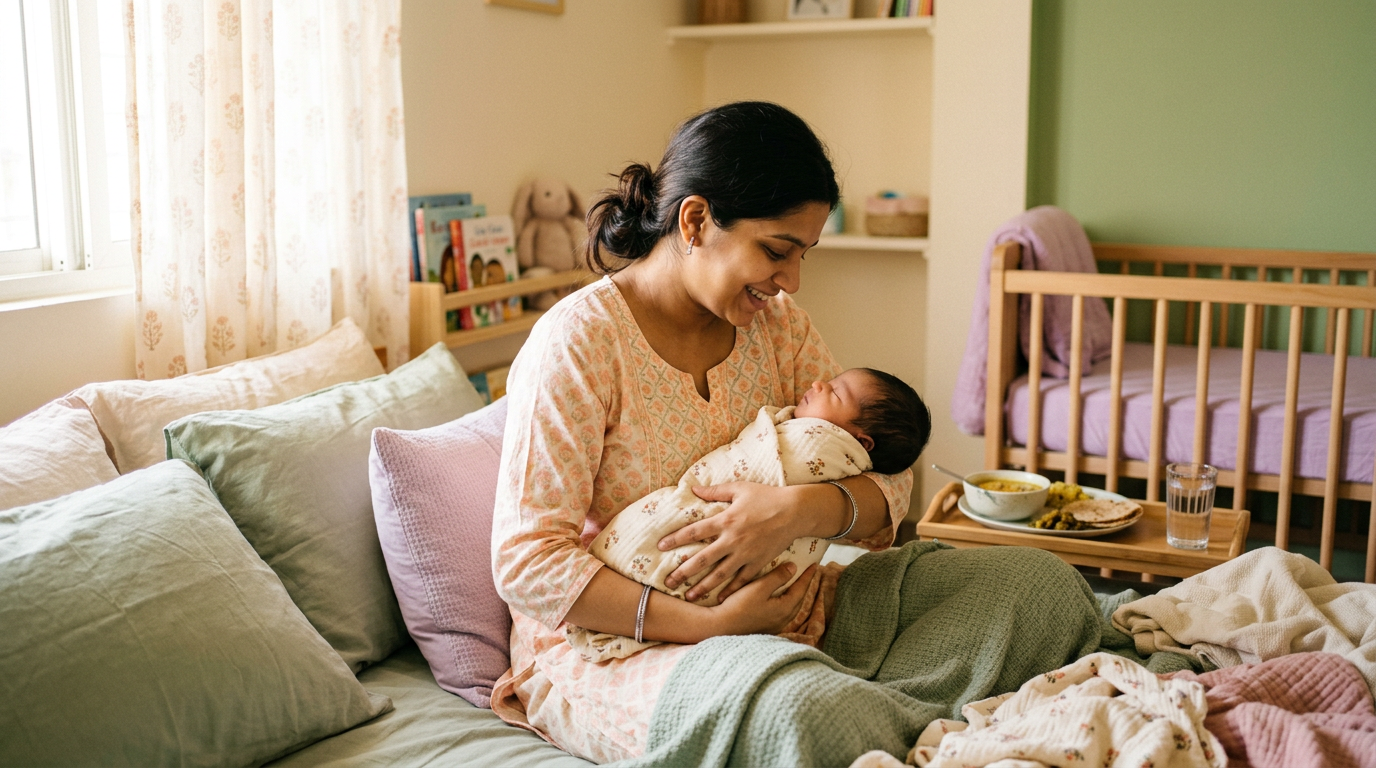
Choosing the right postpartum food to eat is less about "shedding baby weight" and more about repairing the tissues that grew a human being. In India, the first 40 days (the Sawa Mahina) are traditionally focused on "garam" (warming) foods that kickstart digestion and lactation. To heal, your body needs a high-protein, calorie-rich postpartum diet that balances ancient Ayurvedic wisdom with modern nutritional science.
Why Your Postpartum Food Choices Matter More Than Your Pregnancy Cravings
During pregnancy, everyone feeds the bump. But once the baby is out, focus often shifts entirely to the newborn. Your body, however, has just gone through a major physical event—whether it was a vaginal delivery or a C-section. You have a "wound" the size of a dinner plate inside your uterus where the placenta was attached.
In India, we call this period the Jaapa. The goal of your postpartum food to eat should be three-fold:
According to the ICMR (Indian Council of Medical Research), a breastfeeding mother needs roughly 600 additional calories per day compared to a non-pregnant woman. This isn't the time for a crash diet; it’s the time for nutrient density.
Top Indian Postpartum Food to Eat for Healing and Milk Supply
In an Indian kitchen, the pharmacy is in the spice box (masala daani). Here are the non-negotiables for your postpartum food plan:
1. The Power of Gond and Ajwain
* Gond ke Laddu: Edible gum (Gond) is a powerhouse of energy. It helps in strengthening the spine—which takes a beating during pregnancy and breastfeeding.
* Ajwain Water: Boiling carom seeds in water and sipping it throughout the day helps in uterine contraction and eases the "gas" issues that many Indian moms face post-delivery.
Methi (Fenugreek): Whether in methi ladoos* or sprouted in salads, fenugreek is the gold standard for boosting milk supply.
2. Regional Superfoods
Dink Ladoo (Maharashtra): Similar to Gond, these are packed with nuts, dry ginger (sunth*), and coconut.
* Pathrado or Maravante (South India): Colocasia leaves or specific rice-based steamed dishes often contain ingredients meant to "cleanse" the system.
* Haldi Doodh: Turmeric is nature’s best anti-inflammatory. A cup of warm milk with organic haldi and a drop of ghee helps internal healing.
3. Proteins and Dal
* Moong Dal Khichdi: Easy on the stomach, high in protein. Add a dollop of A2 Ghee (approx. ₹1,200–₹2,800 per kg) to make it more nutrient-dense.
* Haleem or Chicken Shorba: For non-vegetarian moms, slow-cooked meat broths provide collagen and amino acids essential for skin and muscle repair.
How to Build a Postpartum Diet Chart Indian Style
A structured postpartum diet chart indian should move away from raw salads (which can be hard to digest) towards cooked, warm, and lubricated foods.
| Time | Food Item | Benefit |
| :--- | :--- | :--- |
| Early Morning | 5 Soaked Almonds + 1 Gond Laddu | Sustained energy for morning feeds |
| Breakfast | Vegetable Dalia or Ragi Porridge | High fiber to prevent postpartum constipation |
| Mid-Morning | Coconut Water or Ajwain Water | Electrolytes and hydration |
| Lunch | Brown Rice/Rotis + Legumes + Seasonal Sabzi | Complex carbs and iron |
| Teatime | Makhana (Fox Nuts) roasted in Ghee | Calcium for bone health |
| Dinner | Moong Dal Soup or Light Khichdi | Easy digestion for better sleep |
The Role of Ghee: Not Just an "Old Wives' Tale"
In many Desi households, the sasu maa might insist on putting ghee in everything. While you don't need to drink it by the litre, fats are crucial for vitamin absorption (A, D, E, K). Modern Indian nutritionists suggest 2-3 teaspoons of pure cow ghee daily to help lubricate the joints and support the nervous system.
Real Talk from Indian Moms
> "My mother-in-law made me eat Harira (a mix of dry fruits, ghee, and sugar) for 40 days. In Gurgaon, it felt heavy, but I never felt that 'exhaustion to the bone' my friends complained about."
— Aradhana S., Delhi (Mom to a 4-month-old)
> "I focused on Sua (Dill) seeds and Methi water. As a working mom in Bengaluru, I didn't have time for elaborate 2-hour meals, but these small additions kept my supply steady."
— Deepika R., Bengaluru (Mom to an 8-month-old)
When to Call Your Paediatrician
While your diet supports you, it affects the baby too. Seek medical advice if:
* The baby develops an extreme skin rash (potential allergy to something in your diet, like dairy or nuts).
* The baby is excessively colicky or crying for more than 3 hours a day.
* The baby has green, frothy stools or blood in the stool.
* The baby shows signs of dehydration (fewer than 6 wet nappies).
* You notice a sudden drop in milk supply despite frequent nursing.
Frequently Asked Questions
What is the best postpartum food to eat immediately after a C-section?
Focus on soft, easily digestible foods like moong dal khichdi or soups. Avoid gas-producing foods like chhole, rajma, or cabbage for the first week to prevent pressure on your stitches.
Does a postpartum diet help with hair fall?
Yes! Postpartum hair fall is hormonal, but a diet rich in Iron (spinach, poha), Protein (eggs, lentils), and Zinc can help the new hair grow back healthier once the shedding phase ends.
Can I include spices in my postpartum food for mother?
Yes, but keep it mild. Turmeric, cumin (jeera), and carom (ajwain) are excellent. Avoid excessive red chilli powder or "hot" garam masala as it might cause acidity for you or irritate the baby’s tummy via breastmilk.
Is coffee allowed in a postpartum diet chart indian?
You can have 1-2 small cups of coffee (caffeine <200mg), but monitor your baby. Some babies are sensitive to caffeine and might become restless or struggle to nap.
Why is papaya often recommended as a postpartum food?
Green papaya is considered a powerful galactagogue in Indian tradition. It contains enzymes like papain that may help boost oxytocin, the hormone responsible for milk let-down.
How long should I follow a strict postpartum diet?
The first 40 days are critical for physical recovery. However, if you are breastfeeding, your body continues to need extra nutrients for as long as you nurse. Most Indian mothers continue modified versions of these traditions for 3-6 months.
The journey of motherhood is a marathon, not a sprint. Your body has performed a miracle; the least you can do is fuel it with dignity and warmth. Remember: A well-fed mama is a well-rested mama.
Sources & further reading
- ICMR-NIN Dietary Guidelines for Indians, 2024
- Indian Academy of Pediatrics (IAP) - Postpartum Care
- National Health Portal (NHP) India - Maternal Nutrition
Written by Neha Kapoor, RD (Registered Dietitian, Maternal & Child Nutrition)
Reviewed by TheMamaCircle Editorial Team
Last updated: 21 July 2026
This article is for general information only and is not a substitute for personalised medical advice. Always consult your paediatrician or obstetrician for your specific situation.