Postpartum Massage Kerala: 40-Day Ayurvedic Recovery Guide
Looking for a postpartum massage Kerala style? Learn about Ayurvedic oils, C-section safety, and traditional Maalish rituals to heal your body at home.
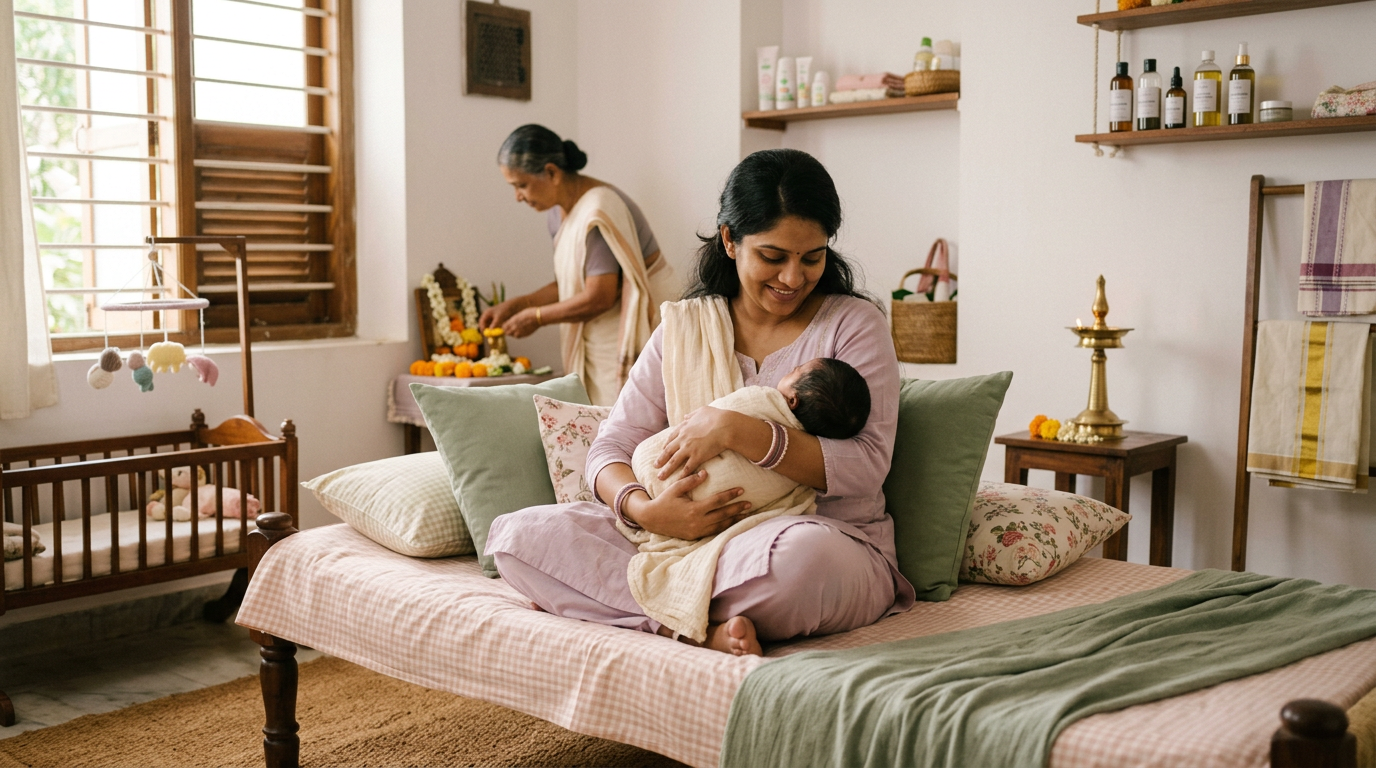
If you are looking for the ultimate gold standard in recovery after birth, postpartum massage Kerala style (traditionally known as Sutika Paricharya) is essentially the "reset button" your body is screaming for. Unlike a standard spa rub-down, this is a therapeutic Ayurvedic ritual designed to expel ‘Vata’ (wind/gas), shrink the uterus, and soothe the overextended joints of a new mother. In India, we don’t just "bounce back"; we oil up, wrap up, and rest deep.
What Makes a Postpartum Massage Kerala-Style Different?
In Kerala’s Ayurvedic tradition, the 40-day confinement period (the Sutika Kal) is sacred. While a postpartum massage at home in North India might focus on mustard oil and vigorous rubbing by a local daai or jaapa-maid, the Kerala method is highly systematic. It often involves Abhyangam, where medicated oils are applied in rhythmic strokes toward the heart to improve lymphatic drainage.
The focus isn’t just on relaxation. It’s about involution—the process of the uterus returning to its pre-pregnancy size. Practitioners often use their feet (in specific Chavitti techniques) or heavy hand pressure to realign the hips that shifted during delivery. If you are tracking your physical recovery, checking your lochia analyzer results alongside these massages can help you see how the increased circulation helps the body clear out postpartum discharge efficiently.
The Secret Sauce: Which Postpartum Massage Oil Should You Use?
You can’t just grab a bottle of generic mineral oil and call it a day. The efficacy of a Kerala massage lies in the Thailam (oil). Depending on your body type and whether you had a vaginal birth or a C-section, the oils vary:
* Dhanwantharam Thailam: The "holy grail" for most new moms. It’s an Ayurvedic powerhouse often used for postpartum massage because it strengthens the nerves and reduces inflammation.
* Ksheerabala Thailam: Excellent if you are dealing with extreme exhaustion or insomnia (the classic "mombie" state).
* Murivenna: If you have significant joint pain or a C-section scar that is fully healed but still feels "tight," this oil is a miracle worker for tissue repair.
* Nalpamaradi Thailam: Often used if you have pregnancy-induced skin darkening (linea nigra) or just want that "glow" back.
When choosing a postpartum massage oil, always ensure it is heated slightly. Cold oil on a postpartum body is a big "no-no" in Ayurveda as it increases Vata.
Can I Get a Kerala Massage After a C-Section?
This is the most common question I get in my yoga sessions. The short answer: Yes, but wait for the green light.
While a vaginal delivery mama can usually start her maalish within 5–7 days, a C-section mama must wait at least 3 weeks, or until her OB-GYN confirms the internal stitches are healing well. You can use our scar analyzer to see how your incision is progressing. Once you start, the technician will avoid the abdominal area initially, focusing on the legs, back, and arms to relieve the "epidural backache" many of us face.
The Kerala "Vethu Kulí" (Medicated Bath)
A true postpartum massage Kerala experience isn't complete without the Vethu Kuli. After the oil rub, the mother is bathed in water boiled with medicinal leaves like Plavu (Jackfruit), Puli (Tamarind), and Vadha (Vata-reducing herbs). The steam opens the pores, allowing the medicated oils to penetrate deeper into the dhatus (tissues).
Benefits of Postpartum Massage for Modern Indian Moms
Real Talk from Indian Moms
> "I hired a lady for a postpartum massage in Delhi who specialized in Kerala techniques. For 28 days, she used Dhanwantharam oil. My back pain from the epidural literally vanished by day 10. It was the only one hour of the day I felt like a human and not just a milk machine." — Tanvi S., Delhi (Baby 4 months)
> "In Kerala, my grandmother insisted on the 'Ubtan' after the massage. I hated the smell of the herbs initially, but my skin changed completely. No more pregnancy itchiness or dry patches." — Meera K., Kochi (Baby 6 months)
> "I thought massage was a luxury I didn't have time for. But after a week of being hunched over my baby, my neck locked up. Postpartum massage was my medicine." — Ananya R., Bengaluru (Baby 3 months)
How to Prepare for Your Home Massage
If you are arranging a postpartum massage at home, here is your checklist to ensure it stays a "spa" and doesn't become a "stress":
The Room: Ensure the room is warm with no direct AC or fan breeze (to prevent Sanni* or catching a chill).
* Timing: Feed the baby right before the massage. You want the baby in a deep sleep or with your husband/mother-in-law so you aren't listening for cries.
The Belly Wrap: In Kerala, they use a long cotton cloth called a Mundu* to bind the stomach (Belly Binding) after the massage. This provides support to the weakened abdominal wall.
Nutrition: Follow your massage with a warm glass of Jeera water or Dashamularishta* as recommended by your Ayurvedic doctor. Do not eat a heavy meal like Biryani or oily parathas immediately after. Stick to light, nutrient-dense foods suggested in our pregnancy nutrition guide.
Costs and Sourcing Talent
The cost of a specialized Kerala massage therapist in metros like Mumbai, Bangalore, or postpartum massage delhi ranges from ₹800 to ₹1,500 per session, plus the cost of oils. Many agencies now offer 28-day or 40-day packages ranging from ₹25,000 to ₹45,000. While it seems steep, consider it an investment in your long-term health. According to the Federation of Obstetric and Gynaecological Societies of India (FOGSI), maternal mental and physical health in the "fourth trimester" is critical for preventing postpartum depression.
When to Call Your Paediatrician (or Doctor)
While the massage is for you, your physical state affects the baby. Stop the massage and call your doctor if:
* You develop a high fever (above 100.4°F/38°C) – this could be a sign of infection.
* You notice increased redness, pus, or a foul smell from your C-section or episiotomy site.
* You experience a sudden increase in bright red vaginal bleeding (heavier than your usual period).
* Your legs have localized swelling, redness, and are hot to the touch (signs of DVT).
* The baby develops a rash after being in contact with your massage oils (always wash your breasts thoroughly before feeding).
Frequently Asked Questions
Can I start a postpartum massage Kerala style immediately after birth?
If it was a normal vaginal delivery without complications, you can start as early as day 5. For C-sections, wait for the 3-week mark and seek your doctor’s permission.
Is postpartum massage at home safe for the baby?
Yes, provided the therapist follows hygiene protocols. Ensure you wash off any medicated postpartum massage oil from your nipples and areola before breastfeeding to avoid the baby ingesting the herbs.
Why is postpartum massage Kerala famous compared to other regions?
Kerala incorporates specific Ayurvedic pharmacology. The oils used are not just lubricants; they are decoctions of over 40 herbs like Ashwagandha and Bala that are scientifically proven to reduce inflammation and strengthen muscle tissue.
Can I get a postpartum massage in Delhi that is authentically Kerala?
Absolutely. Many specialized Ayurvedic centers in Delhi (like those in Safdarjung or GK) employ therapists trained in Kerala. Always ask if they use traditional Dhanwantharam oil and follow the Abhyangam stroke pattern.
Will massage help with my postpartum weight loss?
Massage helps reduce water retention and bloating, which can make you look and feel slimmer. However, it isn't a substitute for diet and movement. It’s about recovery, not just vanity.
Does the massage help with breastfeeding?
Indirectly, yes! By reducing your stress levels and improving blood circulation to the chest area, it can help the flow of milk. Just be careful not to have the therapist put too much pressure on engorged breasts.
Healing is not a race, especially in the Indian context where the first 40 days are meant for you to be "born" as a mother. Treat your body with the reverence it deserves; you just grew a whole human being. If you find yourself overwhelmed, take a moment to look at your little one and say: “I am nourishing myself so I can nourish you.”
Sources & further reading
- Ayurveda for Postnatal Care - National Health Portal (India)
- FOGSI Postpartum Care Guidelines
- ICMR Dietary Guidelines for Lactating Mothers
Written by Priya Raman, Certified Prenatal Yoga Instructor & Mama of two
Reviewed by TheMamaCircle Editorial Team
Last updated: 29 July 2026
This article is for general information only and is not a substitute for personalised medical advice. Always consult your paediatrician or obstetrician for your specific situation.