Pregnancy Yoga Third Trimester: Safe Poses & India Guide
Master pregnancy yoga third trimester poses to relieve back pain and prep for birth. Learn safe prenatal yoga poses and pranayama for Indian moms-to-be.
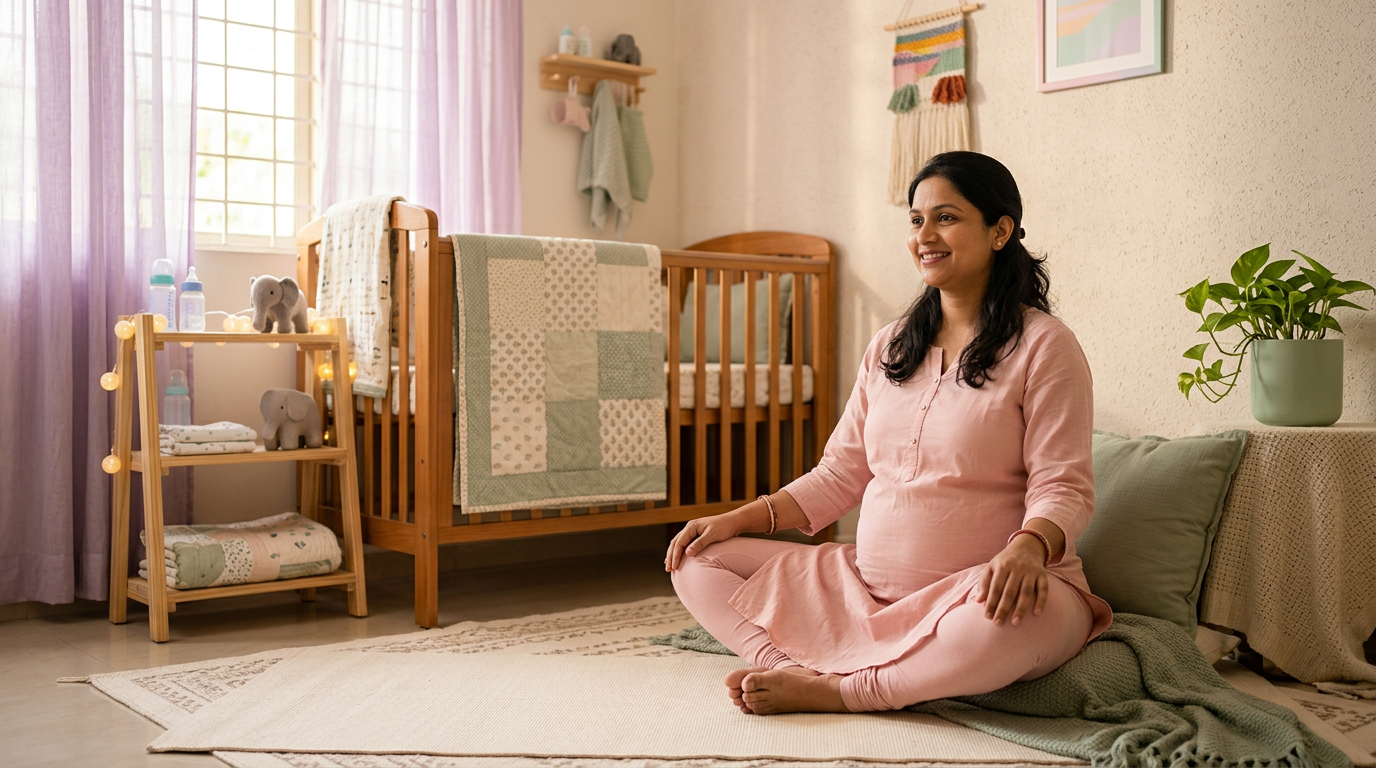
The final stretch of your pregnancy is less of a sprint and more of a heavy-breathing waddle toward the finish line. Practising pregnancy yoga third trimester poses isn't about achieving a perfect natarajasana; it is about creating space for the baby (who is now the size of a large papaya or kaddu), managing that constant backache, and mentally prepping for labour. By focusing on pelvic floor toning and gentle hip openers, you can find significant relief from the physical heaviness of months seven, eight, and nine.
Why Yoga is Your Best Friend in the Final Months
As you enter the home stretch, your body is flooded with relaxin, a hormone that loosens your joints in preparation for birth. This makes it easier to overstretch, which is why a structured routine for pregnancy yoga third trimester is vital. Unlike the pregnancy yoga first trimester phase where you fight nausea, or the pregnancy yoga second trimester where you feel a burst of energy, the third trimester is about surrendering to the weight and finding stability.
According to the Federation of Obstetric and Gynaecological Societies of India (FOGSI), moderate physical activity like yoga helps prevent gestational diabetes and manages excessive weight gain. In the Indian context, where our sasu maas often tell us to just "eat and rest," yoga provides the necessary movement to keep the pelvic floor functional.
Is Pregnancy Yoga Third Trimester Safe?
Yes, but the rules change. Your centre of gravity has shifted forward, and your garbh (womb) is putting pressure on your vena cava.
Key Safety Guidelines for the Third Trimester:
* Avoid Lying Flat: Never lie flat on your back after 20 weeks. Use bolsters or pillows to stay at a 45-degree angle.
* No Deep Twists: Don't compress the belly. Only twist from the upper back and shoulders.
* Use Props: Wall support, chairs, and bricks are your best friends. Don't be "brave"; be stable.
* Keep the Feet Wide: Always take a wide stance to accommodate the bump and prevent trips.
Must-Do Poses for Your Third Trimester Routine
If you have been practicing pregnancy yoga throughout your journey, you'll find these modifications easy to adapt.
1. Marjaryasana-Bitilasana (Cat-Cow Stretch)
This is the gold standard for relieving lower back pain. It helps move the baby into an optimal position for birth (hugging the spine).
* How: Get on all fours. As you inhale, look slightly up (don't over-arch). As you exhale, round your back and look at your bump.
* Benefit: Relieves pressure on the spine caused by the baby's weight.
2. Malasana (Yoga Squat)
In India, we are culturally lucky—many of us grew up using Indian-style toilets, which is essentially a daily Malasana practice.
How: Stand with feet wider than hip-width. Slowly lower your hips. If your heels lift, place a folded cotton dhurrie* or yoga mat under them.
* Modification: Use a low stool or a stack of firm pillows if your knees feel too much pressure.
* Benefit: Opens the birth canal and strengthens the thighs.
3. Baddha Konasana (Bound Angle/Butterfly Pose)
This is exactly what your nani meant when she said to sit on the floor while cleaning dal.
* How: Sit on a firm cushion to tilt your pelvis forward. Bring your feet together and let your knees fall out.
* Benefit: Improves blood circulation in the pelvic region.
4. Modified Trikonasana (Triangle Pose)
* How: Use a chair or the wall for balance. Do not try to reach the floor.
* Benefit: Helps open the side body, giving your lungs more "breathing room" amidst all that internal crowding.
Breathing and Mindfulness: Beyond the Asana
In the third trimester, pranayama during pregnancy becomes the most important part of your practice. You aren't just breathing for two; you are training your nervous system to stay calm during contractions.
* Bhramari Pranayama (Bee Breath): Making a low-pitched humming sound helps soothe anxiety. It is particularly helpful if you are feeling overwhelmed by the upcoming "delivery date" talk from relatives.
* Ujjayi Breath: This ocean breath helps you stay focused and grounded when the Braxton Hicks (practice contractions) kick in.
Setting Up Your Space in India
You don't need a fancy studio. Most Indian homes have everything you need.
Real Talk from Indian Moms
> "I did Cat-Cow every single night before bed in my ninth month. It was the only thing that stopped my sciatica pain so I could actually sleep." — Ananya, Mumbai (Mom to 4-month-old)
> "My yoga teacher focused on Malasana. While I ended up having a C-section, the strength in my legs helped me get out of bed and walk within 24 hours of surgery." — Megha, Bengaluru (Mom to 1-year-old)
> "I used Bhramari pranayama during my early labour at home. It kept me from panicking when the pains got intense." — Sunita, Delhi (Mom to 6-month-old)
Warning Signs: When to Stop Immediately
Yoga is meant to heal, not hurt. Stop your practice and call your obstetrician if you experience:
* Any vaginal bleeding or "leaking" of fluid (amniotic fluid).
* A sudden decrease in baby's movement.
* Sharp abdominal pain or cramping that doesn't go away.
* Dizziness, blurred vision, or a racing heart.
* Severe swelling in the hands or face (could be a sign of pre-eclampsia).
Frequently Asked Questions
Can I start pregnancy yoga third trimester if I’ve never done yoga before?
Yes, but you must join a specific prenatal class and inform the instructor you are a beginner. Avoid "regular" yoga videos online. Focus on pelvic floor work and breathing rather than complex poses.
What are the best prenatal yoga poses for back pain?
The best prenatal yoga poses for back pain are Cat-Cow, supported Child’s Pose (with knees wide), and pelvic tilts against a wall.
Is pranayama during pregnancy safe in the 9th month?
Most pranayama like Anulom Vilom and Bhramari are very safe. However, avoid Kumbhaka (breath retention) and Kapalbhati (forceful exhalation), as these can increase intra-abdominal pressure.
How often should I practice pregnancy yoga third trimester?
Consistency over intensity! 20–30 minutes of gentle stretching 4–5 times a week is better than a 90-minute session once a week. Listen to your body; if you're exhausted, Shavasana (side-lying) is a valid practice too!
Can yoga help turn a breech baby?
Certain poses like downward-facing dog or kitten stretch can encourage a baby to turn, but this should only be done under the guidance of a certified prenatal expert and after consulting your doctor.
Remember, your body is currently performing the greatest marathon of all time—growing a human. Treat yourself with the same kindness you would show a guest in your home. Some days yoga will be a 30-minute flow, and other days it will just be sitting on a cushion, breathing, and eating an extra laddu. Both are perfectly okay.
I am strong, I am capable, and my body knows how to bring this baby into the world.
Sources & further reading
- FOGSI: Physical Activity during Pregnancy
- ICMR Guidelines for Maternal Nutrition and Health
- NHP India: Yoga in Pregnancy
Written by Priya Raman, Certified Prenatal Yoga Instructor & Mama of two
Reviewed by TheMamaCircle Editorial Team
Last updated: 15 June 2026
This article is for general information only and is not a substitute for personalised medical advice. Always consult your paediatrician or obstetrician for your specific situation.