Teething Chart India: Eruption Order & Dadi Remedies
Track your baby's milestones with our expert teething chart. Learn the teething order, remedies for babies, and when to call your Indian paediatrician today!
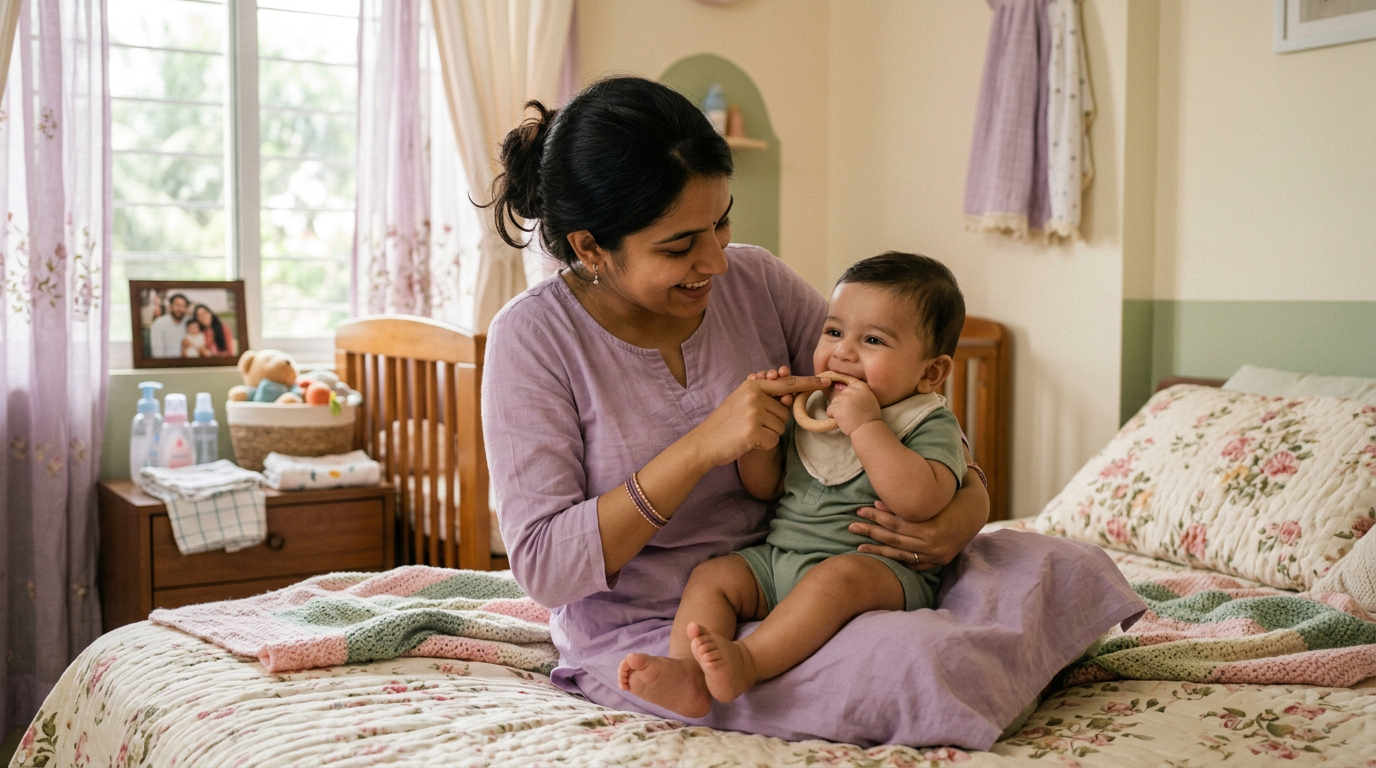
Most Indian babies get their first tooth around 6 months, but a teething chart shows it is perfectly normal for the "rice grain" to pop up anywhere between 4 and 10 months. Usually, the lower central incisors (the bottom front two) make the first appearance, followed by the upper ones. While every baccha is different, a predictable teething order helps you anticipate when those sleepless nights might peak.
Understanding the Indian Teething Chart: When to Expect Each Tooth
While we often focus on the "first tooth" ceremony (the Annaprashan or Chore often coincides with this phase), the process continues until your toddler is nearly three. According to the Indian Academy of Pediatrics (IAP), a delay is only concerning if there are no teeth by 15-18 months.
The Typical Order of Eruption
By the time your child is 3 years old, they should have a full set of 20 primary teeth. You can track these milestones alongside their physical growth using our baby growth chart.
When do babies start teething in India?
A common question in Indian clinics is whether our climate or diet changes when do babies start teething. While genetics play the biggest role, nutrition during the postnatal period—specifically Vitamin D and Calcium—is vital. If you are in the postnatal (also called postnatal) recovery phase, ensuring your own diet is rich in ragi and dairy helps if you are breastfeeding, as the baby’s tooth buds are actually formed while they are still in the garbh (womb).
Factors Affecting the Teething Chart
* Birth Weight: Preterm babies may follow a corrected age for their teething chart milestones.
* Gender: Girls often (but not always) teeth slightly earlier than boys.
* Family History: If you or your husband were early teethers, your baby likely will be too.
Dadi’s Remedies: What to Keep and What to Skip
In Indian households, the moment a baby drools, out come the suggestions. As a paediatrician, I’ve seen it all—from Jaiphal (nutmeg) pastes to silver hanslis. Let’s look at what is safe and what is risky.
1. The "Ghutti" and Herbal Pastes
Many elders suggest rubbing Jaiphal or Janma Ghunti on the gums. The Verdict: Skip the honey-based ones (risk of botulism under 1 year) and be very careful with Jaiphal. Large amounts of nutmeg can be toxic. A better alternative is a cold, damp muslin cloth.
2. Silver Teethers and Jewellery
Traditional silver teethers are popular. The Verdict: While silver has antibacterial properties, the shape matters. Ensure it has no sharp edges and complies with IS 9873 (Indian Standard for toy safety). Avoid the "teething necklaces" (amber or beads) as they are major choking and strangulation hazards.
3. Food-Based Teethers
Giving a cold carrot or a slice of kakdi (cucumber). The Verdict: Keep. This is a great natural remedy. However, never leave the baby alone with a hard vegetable piece to avoid choking. Cold makhana (fox nuts) are too small; stick to larger, easy-to-grip wedges.
Managing the "Teething Crankiness"
The teething chart isn't just about dates; it's about managing the symptoms that come with each tooth. You might notice your baby grabbing their ears or having "teething rashes" on their chin from the excess drool.
* Gum Massage: Use a clean finger to gently firm up the gums.
Cold Compress: Refrigerated (not frozen) silicone teethers. Brands like LuvLap or MeeMee* are widely available in India for ₹150–₹400.
* Extra Cuddles: Sometimes, the best teething remedies for babies are simply more skin-to-skin contact and nursing.
Real Talk from Indian Moms
> "My daughter didn't follow the teething chart at all. She got her top teeth first! My sasu maa was convinced it was a bad omen, but my doctor laughed and said she just wanted to be different. She’s fine now!" — Priyanka, Mumbai (Mom to 14-month-old)
> "The drool was everywhere! We went through five bibs a day. The only thing that worked was frozen watermelon rinds (with the red part mostly gone). It calmed her down instantly." — Ananya, Bengaluru (Mom to 9-month-old)
> "I was worried because my son had no teeth at 10 months. Then suddenly, four popped out in one week. It was a nightmare for sleep, but the teething order finally caught up." — Megha, Delhi (Mom to 2-year-old)
When to Call Your Paediatrician
Teething causes discomfort, not illness. If your baby is truly sick, don't blame the teething chart. Call your doctor if:
* Fever over 101°F (38.3°C): Teething usually only causes a mild "body warmth."
* Diarrhea: This is usually from babies putting dirty objects in their mouths, not the teeth themselves.
* Extreme Lethargy: If the baby isn't playing or reacting normally.
* Prolonged Refusal to Eat: A little fussiness is okay, but skipping multiple meals is not.
* Bleeding Gums: Or any large purple blisters (eruption cysts) that don't go away.
Dental Hygiene Starts Now
The moment that first tooth on the teething chart appears, it’s time for a toothbrush.
* 0-6 Months: Wipe gums with a clean, damp cotton cloth after feeds.
* 6-12 Months: Use a soft finger brush.
1 Year+: Use a pea-sized amount of fluoride-free toothpaste. In India, brands like Mamaearth or Chicco* offer baby-safe options.
As your baby grows, don't forget to track other milestones, such as their baby vision simulator progress or their Montessori baby toys engagement.
Frequently Asked Questions
What is the normal teething order for babies?
The teething order usually starts with the bottom front teeth, followed by the top front teeth, lateral incisors, first molars, canines, and finally the second molars. However, variations are common and usually not a cause for concern.
Which teething remedies for babies are safest in India?
The safest teething remedies for babies include cold washcloths, silicone teethers (BPA-free), and chilled solid foods like carrots (under supervision). Avoid homeopathic teething tablets containing belladonna or any gels with benzocaine.
When do babies start teething and drooling?
Most when do babies start teething questions arise around 3-4 months when drooling increases, but the actual tooth might not erupt until 6 months. Drooling is often just a sign of the salivary glands maturing.
Can teething cause a baby teething fever?
A baby teething fever is usually just a slight rise in body temperature. If the temperature exceeds 100.4°F (38°C), it is likely an infection or a virus, and you should consult your paediatrician rather than assuming it is just a tooth.
Does the teething chart include the 2-year-old molars?
Yes, the teething chart concludes with the second molars, which typically erupt between 23 and 33 months. These are often the most painful because they are the largest teeth to break through the gums.
Why is my baby's teething order out of sync?
While the teething chart provides a general guide, some babies may get their teeth in a different sequence. This is rarely a medical issue. As long as the teeth are healthy and appearing eventually, the sequence does not impact their long-term dental health.
Teething is a long marathon, not a sprint. Take it one tooth at a time, and remember: this fussiness is just a sign of your baby growing stronger.
Ek ek karke sab theek ho jayega. (One by one, everything will be alright.)
Sources & further reading
- Indian Academy of Pediatrics (IAP) - Teething Guidelines
- National Health Portal of India - Infant Oral Health
- WHO - Oral Health Fact Sheets
Written by Dr. Anjali Mehta, MBBS, DCH (Paediatrics)
Reviewed by TheMamaCircle Editorial Team
Last updated: 1 August 2026
This article is for general information only and is not a substitute for personalised medical advice. Always consult your paediatrician or obstetrician for your specific situation.