Baby Care India: Paediatrician-Approved Newborn Skin Guide
Essential baby care guide for Indian moms: paediatrician-backed tips on maalish, soaps, and monsoon skin safety. Give your little one the best start!
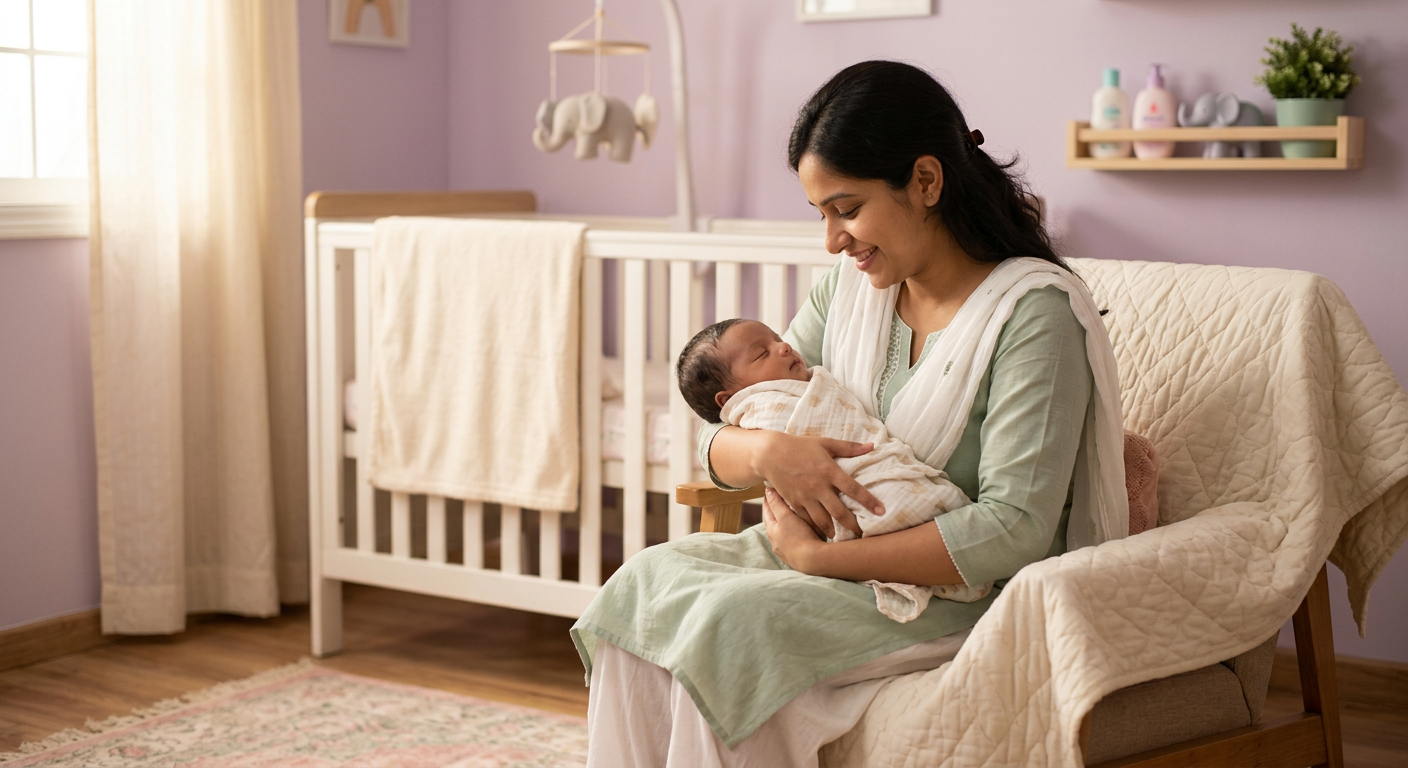
The moment you bring your little one home from the hospital, the shift from hospital-grade safety to the reality of Indian households begins. Baby care in India is a unique blend of ancient dadi-nani wisdom and modern clinical guidelines from the Indian Academy of Paediatrics (IAP). While your sasu maa might insist on a heavy besan scrub to remove body hair, your doctor likely wants you to focus on the skin's pH balance and barrier protection.
Managing a newborn’s skin requires a "less is more" philosophy. The Indian climate—ranging from the bone-dry winters of Delhi to the humid monsoons of Mumbai—dictates how you should approach daily routines like maalish (massage) and bathing. Here is your definitive guide to evidence-based baby care that respects our cultural roots while protecting your baby's delicate skin.
Is traditional Indian baby care safe for newborn skin?
Many of us grew up with the scent of Ubtan and mustard oil, but neonatal dermatology has evolved. The Indian newborn’s skin is 30% thinner than an adult's, making it highly absorbent and prone to moisture loss.
The Maalish (Massage) Debate
Massage is the cornerstone of Indian baby care, proven to improve weight gain and sleep patterns. However, the choice of oil is critical.
* Virgin Coconut Oil: Excellent for coastal climates and summer months. It is antimicrobial and light.
* Sunflower Oil: High in linoleic acid, which helps repair the skin barrier.
* Avoid Mustard Oil & Olive Oil: Research suggests these can disrupt the skin barrier in newborns, potentially leading to contact dermatitis or redness.
The "Ubtan" Warning: Traditional scrubs made of besan (gram flour) and haldi* (turmeric) are often too abrasive. They can cause micro-tears in the skin. If you must use them for ritual purposes, ensure the paste is extremely runny and wash it off immediately without scrubbing.
Bathing Standards in India
With the dust and heat in India, it is tempting to bathe the baby daily. However, for a newborn, 2-3 times a week is sufficient if you are doing regular "top and tail" cleaning. Over-bathing can lead to baby skin care issues like eczema, especially during dry North Indian winters.
Choosing the best soap for newborns and skincare products
Walk into any pharmacy in Bangalore or a supermarket in Gurgaon, and the "baby aisle" is overwhelming. In India, skincare products fall under the Bureau of Indian Standards (BIS) and must comply with IS 4707 (Part 1 & 2) regarding permitted ingredients.
What to look for on the label:
Managing the Face
Newborns often develop "milk spots" (milia) or baby acne. You do not need a heavy face cream for infants for these conditions; they usually resolve on their own as the mother’s hormones leave the baby’s system. If the skin looks dry or flaky, a thin layer of a paraffin-based emollient is safer than heavy traditional creams.
Climate-Specific Baby Care: From Loo to Monsoon
Our geography dictates our baby care challenges. A baby in Rajasthan faces different skin stressors than a baby in Kerala.
* Dry Heat & Winters: In Northern India, the "Loo" (hot summer winds) and harsh winters can strip moisture. Use a thick moisturiser within three minutes of bathing to "lock in" hydration. Use a baby growth chart to ensure your baby is hydrated; a well-hydrated baby has better skin elasticity.
* Monsoon Humidity: This is the season of "Ghamori" (prickly heat). Avoid thick oils. Stick to water-based lotions and ensure the baby wears loose, breathable Mulmul cotton.
* Sun Protection: While we value "Vitamin D" from sunlight, direct exposure should be avoided between 10 AM and 4 PM. For babies under six months, the IAP recommends physical shade over chemical products. If you must be out, a mineral-based sunscreen for newborn containing Zinc Oxide is the safest choice for exposed areas like the face and hands.
Diapers, Rashes, and the "Nappy-Free" Rule
Diaper dermatitis is common in India due to high heat and humidity. While many Indian households prefer langot (cloth nappies), modern disposable diapers are often more effective at keeping moisture away from the skin if changed frequently.
The Golden Rules of Diapering:
* Frequent Changes: Every 2-3 hours or immediately after a bowel movement.
* The Barrier Layer: Use a thick newborn face rash cream (often containing Zinc Oxide) on the diaper area—it works for the bum too! This creates a physical shield between the skin and the acidic waste.
* Nappy-Free Time: Give your baby at least 30 minutes of "air time" daily on a waterproof mat.
If you are worried about your baby's comfort or frequent crying during changes, using an AI cry analyzer can sometimes help distinguish between hunger and "diaper discomfort" cries.
Real talk from Indian moms
> "I thought I had to use Lal Tail because my mother-in-law insisted. But my baby got tiny red bumps all over. My paediatrician told me to switch to plain coconut oil, and it cleared up in three days. Sometimes old school isn't the only school!"
— Ananya R., Chennai (Mom to 4-month-old)
> "Living in Delhi, the pollution and the dry air made my son’s cheeks so crusty. I stopped using soap every day and switched to a soap-free wash. It made a world of difference. Also, Mulmul is a lifesaver!"
— Meher V., New Delhi (Mom to 6-month-old)
When to call your paediatrician
While most skin issues are cosmetic, some require urgent medical attention. Contact your doctor if you notice:
* Pustules or Blisters: Any yellow, fluid-filled bumps (could be Impetigo).
* Widespread Redness: If a rash covers more than 50% of the body.
* Fever + Rash: This is an immediate red flag.
* Oozing or Bleeding: Especially around the umbilical cord stump or in skin folds.
* Persistent Diaper Rash: If it doesn't improve after 3 days of cream and air-time (could be a yeast infection).
Frequently Asked Questions
What is the best soap for newborns in India?
The best soap for newborns is actually not a "soap" but a syndet bar or liquid wash with a pH of 5.5. Look for brands that are dermatologically tested and free of Sodium Lauryl Sulfate (SLS), which can be too harsh for Indian infants. Prices for quality baby washes in India typically range from ₹250 to ₹600 for a 200ml bottle.
Which face cream for infants is safest for dry skin?
When choosing a face cream for infants, look for hypoallergenic formulas containing ceramides or squalene. Avoid ingredients like "fragrance," "essential oils," or "phthalates." In India, simple pharmacy brands recommended by doctors are often more effective than expensive "luxury" organic brands.
Can I use newborn face rash cream on other parts of the body?
Yes, most newborn face rash cream products contain Zinc Oxide, which is a soothing skin protectant. It is safe for the face (for minor drool rash) and the diaper area. However, avoid getting it too close to the baby’s eyes or mouth.
Does my baby need a sunscreen for newborn use?
The IAP suggests that for babies under 6 months, physical protection (hats, umbrellas, full-sleeved cotton clothes) is preferred over sunscreen for newborn use. If you are in a high-UV area like Ladakh or coastal Goa, use a mineral sunscreen containing only Zinc Oxide or Titanium Dioxide on small areas.
Is it safe to use talcum powder on babies?
Modern paediatric guidelines recommend avoiding talcum powder. The fine particles can be inhaled, leading to respiratory issues. If you want to keep skin folds dry, use a cornstarch-based powder and apply it to your hands first, away from the baby, before dabbing it onto the skin.
How do I treat cradle cap at home?
Cradle cap (yellowish, oily scales on the scalp) is common. Apply a little coconut oil to the scalp, leave it for 20 minutes, then gently brush with a soft baby brush before washing with a mild shampoo. Never pick at the scales.
Proper baby care in the first few months sets the foundation for healthy skin for years to come. Trust your maternal instincts, keep your paediatrician on speed dial, and remember that your baby's skin is perfect just the way it is—it doesn't need a ten-step routine.
You are doing a great job, and your touch is the best medicine your baby can receive.
Sources & further reading
- Indian Academy of Paediatrics (IAP) Guidelines on Newborn Care
- AIIMS Guide to Neonatal Skin Care
- Bureau of Indian Standards (BIS) - IS 4707 Cosmetics Standards
Written by Dr. Anjali Mehta, MBBS, DCH (Paediatrics)
Reviewed by TheMamaCircle Editorial Team
Last updated: 14 August 2026
This article is for general information only and is not a substitute for personalised medical advice. Always consult your paediatrician or obstetrician for your specific situation.