Baby Care Products: Indian Newborn Skin Guide & Safety Chart
Confused by baby care products? Our paediatrician-led guide audits Indian traditions like maalish and brands for our unique climate. Click for a safe skin ritual!
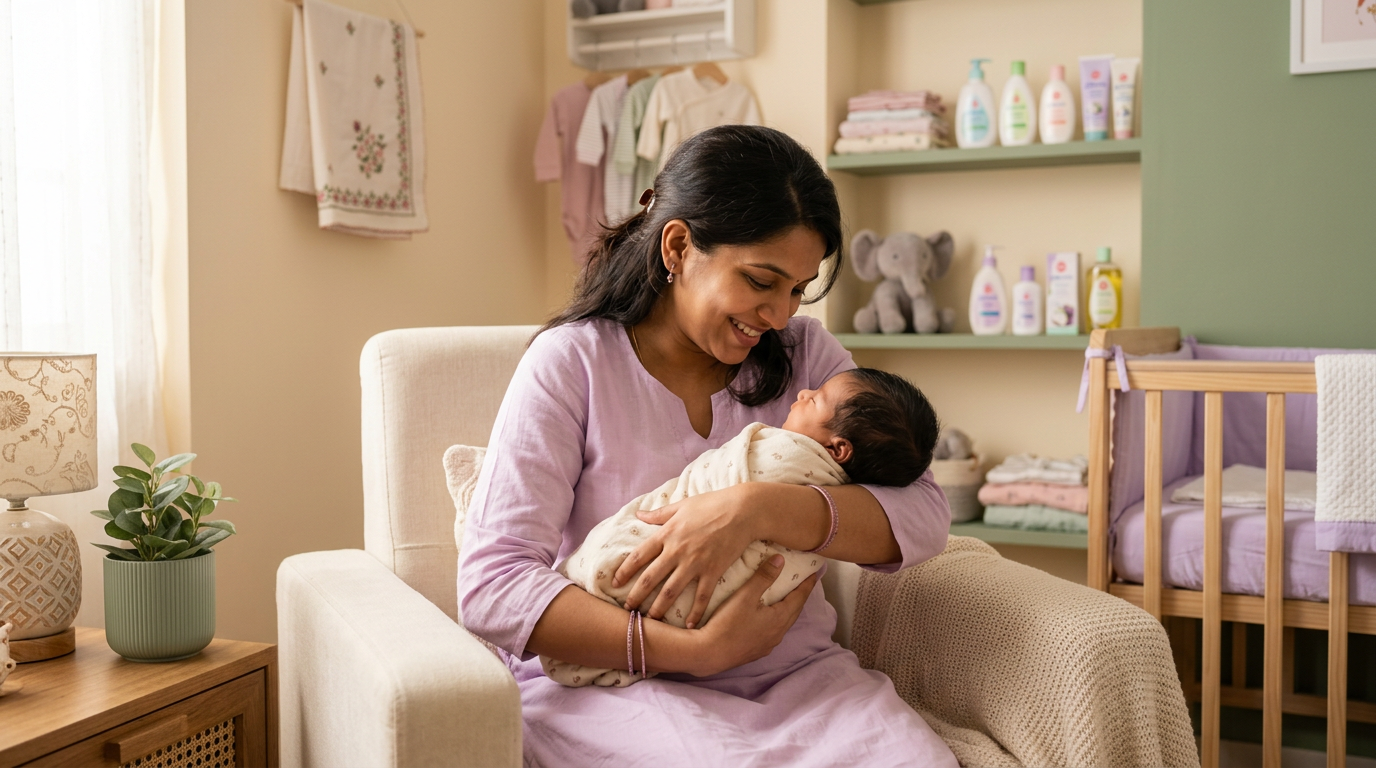
Choosing the right baby care products in India is less about following Instagram trends and more about understanding our unique climate and the Indian Academy of Pediatrics (IAP) guidelines. Your newborn’s skin is 30% thinner than yours, making it a sponge for whatever you apply. In a country where humidity varies from the sticky Mumbai monsoon to the bone-dry Delhi winter, a one-size-fits-all approach to baby skin care simply doesn't work.
What should you look for in baby care products?
The Indian market is flooded with "natural" and "organic" labels, but "natural" isn't always safe (looking at you, irritating essential oils). When shopping, look for the IS 4707 standard, which regulates cosmetic ingredients in India. Your priority list should be short: a pH-balanced cleanser, a barrier-repairing moisturiser, and a zinc-based diaper cream.
Decoding the labels: What to avoid
* Parabens and Phthalates: Often used as preservatives or fragrance-carriers, these are known endocrine disruptors.
* Synthetic Fragrance: The "new baby smell" shouldn't come from a bottle. Fragrances are the #1 cause of contact dermatitis in infants.
* Sodium Lauryl Sulfate (SLS): This creates a big lather but strips the skin of natural oils, leading to "dry-skin eczema."
* Talc: Modern paediatric advice (and the IAP) suggests avoiding talcum powder entirely due to inhalation risks. Use a cornstarch-based powder or, better yet, a lotion-to-powder formulation if you must.
The Postnatal "Maalish" Ritual: Traditional vs. Modern
In the postnatal period (also called postnatal), the tradition of maalish (massage) is sacred in Indian households. While your daai or sasu maa might insist on heavy mustard oil (sarson ka tel) or besan scrubs, modern science asks us to pivot slightly.
Mustard oil can be too pungent and alkaline, potentially damaging the skin barrier. Instead, opt for virgin coconut oil or sunflower oil, which are rich in linoleic acid. If you are tracking your little one's growth during these sessions, our baby growth chart can help you see how they are progressing alongside their skin health.
The Dadi-Nani Audit
Seasonal Baby Care Products Strategy for India
India isn't a monolith, and your diaper bag shouldn't be either.
The Dry North Indian Winter
When the Loo winds stop and the chill sets in, you need a heavy-duty face cream for infants. Look for ingredients like ceramides and shea butter. Apply within three minutes of bathing to lock in moisture. This is also the time when many moms notice "milk spots" or cradle cap; don't pick at them!
The Humid Coastal Summer
In Chennai, Kolkata, or Mumbai, sweat is the enemy. Use light, water-based lotions rather than heavy creams. Prickly heat (miliaria) is common here. Keep the baby in loose cotton clothes and use a very light dusting of cornstarch in the folds (neck, armpits, groin) only if the skin is dry.
The Monsoon Rash Season
Humidity plus wet diapers equals a recipe for fungal infections. A thick barrier cream with at least 10-15% Zinc Oxide is non-negotiable. If you are worried about the frequency of wet diapers, keep an eye on your baby's output; for older babies, you might even start noticing baby milestones tracker related to their comfort and movement.
Essential Checklist of Baby Care Products
If you are building your registry or sending a list to your NRI cousins, here is what actually matters for the Indian context:
* Syndet Bars or Liquid Cleansers: "Syndet" stands for synthetic detergent, but don't let the name scare you. These are pH-neutral (around 5.5) and far better than traditional "alkaline" soaps.
* Moisturising Lotion: A daily necessity, especially if you live in an air-conditioned environment which strips skin moisture.
* Nappy Rash Cream: Look for "Zinc Oxide" on the label. This creates a physical wall between the skin and the pee/poop.
Coconut Oil: For the daily maalish*. Choose cold-pressed versions.
* Sun Protection: While we advocate for shade, for babies over 6 months, a mineral-based sunscreen for newborn (containing zinc or titanium) is essential for the harsh Indian sun.
Real talk from Indian moms
"I spent ₹3,000 on a French organic kit, but my son got the worst rash. My paediatrician told me to stick to a basic ₹200 Indian pharmacy brand (Tedibar). It worked in two days. Expensive doesn't mean better."
— Priya S., Bengaluru, Mom to 4-month-old Arlo
"In my house, we had a huge fight about 'Ghutti' and 'Kajal'. I stood my ground using the IAP handbook. It was hard, but my baby's skin is clear and she never had an eye infection."
— Meher V., Delhi, Mom to 6-month-old Zoya
"I didn't realize that the postnatal bath water was too hot. My baby's skin started peeling. Once I switched to lukewarm water and a soap-free wash, it cleared up immediately."
— Ananya R., Hyderabad, Mom to 2-month-old Ishaan
When to call your paediatrician
Sometimes, even the best baby care products can't fix an underlying issue. Contact your doctor if you see:
* Pustules or yellow crusting: This could indicate a bacterial infection (impetigo).
* Rashes that bleed: If a diaper rash is broken or bleeding, it needs a prescription ointment.
* Eczema flare-ups: If skin is red, weeping, and the baby is unable to sleep due to itching.
* Fever with a rash: This is an immediate red flag and requires an urgent check-up.
* Hives: Raised red welts that appear suddenly after a new product or food.
If your baby is particularly fussy or crying due to skin discomfort, you can try our AI cry analyzer to see if the distress is related to pain or something else, though a physical exam by a doctor is always best for rashes.
Frequently Asked Questions
Which are the safest baby care products for newborns in India?
The safest products are those that are fragrance-free, dye-free, and pH-balanced (around 5.5). Look for brands that adhere to Bureau of Indian Standards (BIS) and avoid those with high "botanical" counts if your baby has sensitive skin. Pharmacy-grade brands like Cetaphil Baby, Sebamed, or Indian brands like Mamaearth (selected products) and Curatio are often recommended by dermatologists.
What is the best soap for newborns with dry skin?
For newborns with dry skin, "soap" is actually a misnomer. You should use a syndet bar or a soap-free creamy wash. These do not contain the harsh lye found in regular soaps and help preserve the "acid mantle" of the baby's skin.
Can I use a regular face cream for infants?
No, you should never use adult face creams on infants as they contain active ingredients like AHAs, BHAs, or heavy fragrances that can cause chemical burns on thin baby skin. Always use a dedicated infant face cream that specifically targets the cheek area, which is prone to dryness from drool and wind.
When should I start using a newborn face rash cream?
You should use a newborn face rash cream the moment you see "drool rash" (redness around the mouth) or dry patches. However, if the rash looks like small white bumps (milia) or baby acne, usually no cream is needed—it's just maternal hormones leaving the baby's system.
Is sunscreen for newborn babies necessary in India?
According to the IAP, babies under 6 months should be kept out of direct sunlight. For babies older than 6 months, a physical/mineral sunscreen is highly recommended for the Indian climate. If you must take a younger baby out, use hats and umbrellas rather than slathering on cream.
How much should I expect to spend on a basic kit?
A basic, high-quality kit including a wash, lotion, and rash cream usually costs between ₹800 to ₹1,500 in India. You don't need 15 different bottles; three or four well-chosen products are plenty.
Building your baby’s skincare routine is an act of love, not an expensive chore. Keep it simple, keep it fragrance-free, and always patch-test a new product on a tiny area of the leg before a full application. You are doing a great job, Ma—trust your gut and your paediatrician.
My baby's skin is a barrier I protect with care and simplicity.
Sources & further reading
- Indian Academy of Pediatrics (IAP) Guidelines on Newborn Care
- Bureau of Indian Standards (BIS) - IS 4707 (Part 1 & 2): Classification for Cosmetics Raw Materials
- AIIMS Guidelines on Neonatal Skin Care
- WHO: Postnatal care for mothers and newborns
Written by Dr. Anjali Mehta, MBBS, DCH (Paediatrics)
Reviewed by TheMamaCircle Editorial Team
Last updated: 2 August 2026
This article is for general information only and is not a substitute for personalised medical advice. Always consult your paediatrician or obstetrician for your specific situation.