Postpartum Hemorrhage Guide: Red Flags & Care in India
Concerned about postpartum hemorrhage? Learn the red flags, causes, and treatment in India. Stay safe while recovering from birth—your health matters!
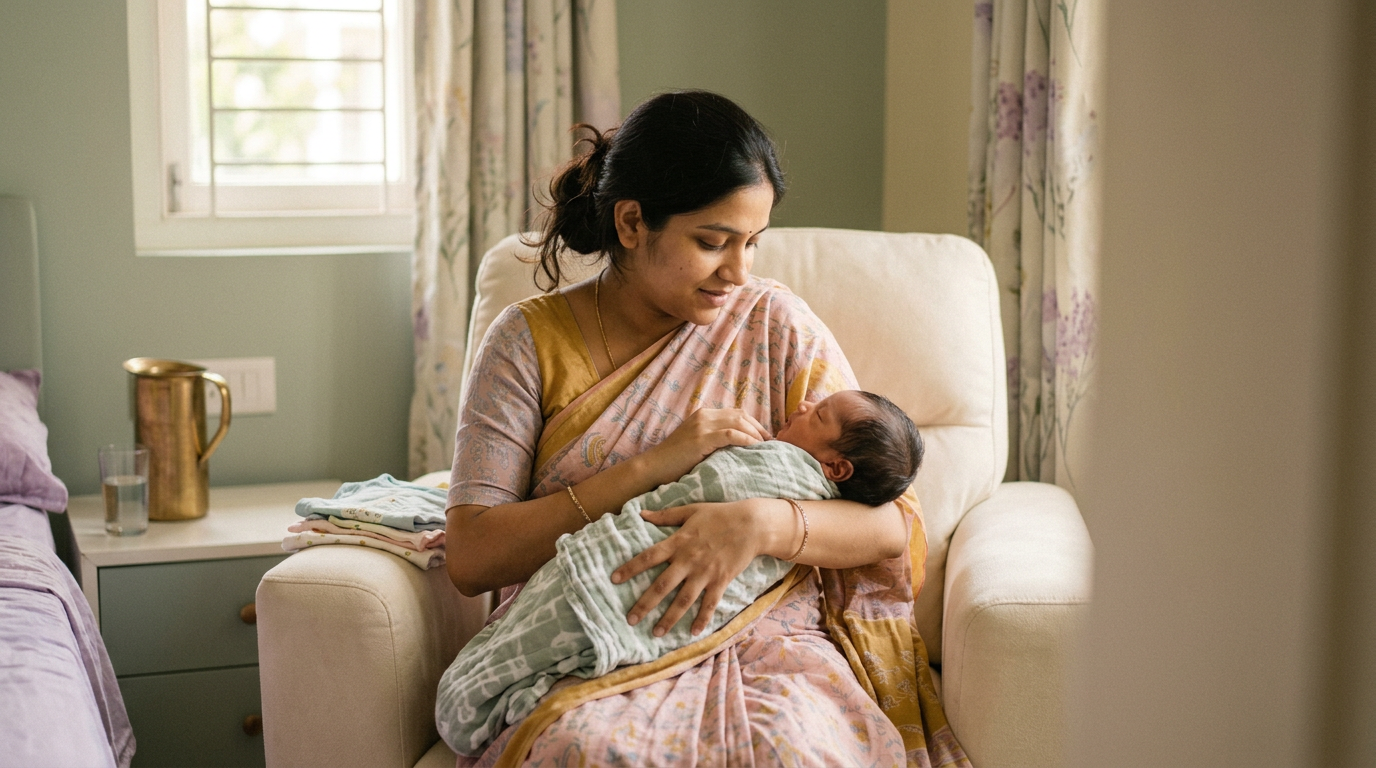
Postpartum hemorrhage (PPH) is defined as losing more than 500 ml of blood after a vaginal birth or 1,000 ml after a C-section within the first 24 hours. In the Indian context, where many mothers start their pregnancy journey with borderline anaemia (low haemoglobin), even smaller amounts of blood loss can feel physically draining. While most bleeding after birth is normal lochia, PPH is a medical emergency that requires immediate intervention by your obstetrician to ensure you can recover safely and get back to holding your little one.
Often, Indian families focus purely on the Sava Mahina (the first 40 days) of confinement and Panjiri, but we must prioritize clinical vigilance alongside traditional care. Recognizing the difference between normal lochia and a dangerous bleed is the most critical skill for a new mother and her caregivers.
What is a Postpartum Hemorrhage exactly?
In simple terms, after the placenta detaches from the uterus, the blood vessels where it was attached are left open. Usually, the uterus contracts tightly—like a natural clenching fist—to squeeze these vessels shut. If the uterus doesn't contract effectively (uterine atony), or if there are tears in the birth canal, heavy bleeding occurs.
According to FOGSI (Federation of Obstetric and Gynaecological Societies of India) guidelines, active management of the third stage of labour is the gold standard used in Indian hospitals to prevent this. This usually involves an injection of oxytocin right after the baby is born. However, "delayed" PPH can still happen between 24 hours and six weeks after delivery.
Real Postpartum Hemorrhage Causes Every Family Should Know
Understanding postpartum hemorrhage causes helps you and your Sasu Maa or Maids know if you are at a higher risk. While it can happen to anyone, certain factors make the uterus "tired" or more likely to bleed.
1. Uterine Atony (The most common cause)
This is when the uterus stays soft and "boggy" instead of firm. This happens more often if:
* You had a very long or very fast labour.
* You are carrying twins or a "large for gestational age" baby (Macrosomia).
* You have had many previous pregnancies.
* You had too much amniotic fluid (Polyhydramnios).
2. Trauma and Tears
Tears in the cervix, vagina, or perineum during a forceful delivery can lead to significant blood loss. In many private hospitals in India, an episiotomy (a planned cut) is performed; if this doesn't heal correctly or a vessel is missed, it can bleed.
3. Retained Placenta
If small pieces of the placenta or membranes stay stuck inside the garbh (uterus), the uterus cannot contract fully. This is a primary driver for postpartum complications that appear a week or two after you’ve gone home.
4. Coagulation Disorders
Rarely, a mother’s blood might not clot properly due to pre-existing conditions or pregnancy-induced complications like HELLP syndrome.
Recognizing the Red Flags: When to Panic vs. When to Rest
In India, we often dismiss postpartum fatigue as "just part of the process." But there is a line between the exhaustion of breastfeeding and the weakness caused by blood loss.
Call your doctor immediately if:
* The Pad Test: You are soaking through one large maternity pad (like those from brands like Friends or Romsons) every hour for two consecutive hours.
Large Clots: You are passing blood clots larger than a lemon* or a golf ball. Small grape-sized clots are normal; big ones are not.
* The Faintness Factor: You feel dizzy, lightheaded, or like you will faint when you stand up to go to the washroom.
* Heart Rate: Your pulse feels very fast (palpitations) even when you are lying down.
* Blurry Vision: This can signal PPH or a sudden spike in blood pressure (postpartum preeclampsia).
Postpartum Hemorrhage Treatment in Indian Hospitals
If you are diagnosed with PPH, the medical team at a facility like AIIMS or a private nursing home will move very quickly. Do not be alarmed by the sudden rush of nurses; speed is your friend here.
* Uterine Massage: The doctor will firmly massage your abdomen to encourage the uterus to contract. This can be painful but is necessary.
* Uterotonic Drugs: You will likely be given Misoprostol (often administered rectally for fast absorption), Oxytocin, or Carboprost. These medications cost anywhere from ₹100 to ₹1,500 depending on the brand and hospital.
* Manual Removal: If the placenta is retained, the doctor may need to manually check the uterus under sedation or anaesthesia.
* IV Fluids and Blood Transfusion: If the blood loss is significant (Class II or III hemorrhage), a transfusion may be required to stabilize your blood pressure.
After stabilization, it is vital to discuss a postpartum hemorrhage treatment recovery plan that includes high-iron foods like Palak, Beetroot, and Jaggery (Gur) to rebuild your iron stores.
Real Talk from Indian Moms
> "I thought the heavy bleeding was normal because it was my second C-section. But when I tried to walk to the bathroom and the world started spinning, my husband called the hospital. It turned out a small piece of placenta was still inside. Don't 'adjust' with dizziness!"
> — Ananya S., Bengaluru (Baby 3 months old)
> "During my maalish, my dai maa noticed I was passing very large clots and told my mother to take me to the clinic. I’m glad she spoke up. In our culture, we sometimes hide these things, but your dai or nani can be your first line of defense."
> — Preeti K., Ludhiana (Baby 6 weeks old)
When to Call Your Paediatrician
While PPH is a maternal emergency, your health directly impacts your baby’s wellbeing, especially during stanpaan (breastfeeding). Call the paediatrician if:
* Baby is extremely lethargic: If you are too weak to feed, the baby may become dehydrated.
* Poor Latch/Feeding: If your milk supply seems to have dropped suddenly (severe PPH can sometimes delay milk "coming in").
* Jaundice: If the baby looks yellowish, which is unrelated to your bleeding but requires a separate check-up.
* Fever in Baby: If you have an infection (sepsis) that caused your bleeding, we must ensure the baby is also monitored.
Frequently Asked Questions
What are the most common postpartum complications?
Beyond bleeding, the postpartum complications list includes postpartum depression, mastitis (breast infection), urinary tract infections (UTI), and deep vein thrombosis (blood clots in the legs). Always monitor your temperature; anything above 100.4°F (38°C) needs a doctor’s visit.
Why does postpartum hemorrhage happen?
As mentioned, the primary postpartum hemorrhage causes include uterine atony, tears in the birth canal, or retained placental fragments. Chronic anaemia, quite common in India, doesn't cause the bleed but makes the woman much less able to handle the blood loss.
How is a heavy bleed managed at home?
It cannot be managed at home. If you are soaking a pad an hour, do not try home remedies like drinking haldi doodh or resting. Go to the Emergency Room. At-home care is only for recovery after the medical team has stopped the bleeding.
Can I still breastfeed after a hemorrhage?
Yes, in most cases. However, severe blood loss can cause a temporary delay in milk production or extreme fatigue. Focus on hydration and iron-rich foods. If you received a massive transfusion, talk to your doctor, but the act of breastfeeding actually releases oxytocin, which helps the uterus stay contracted!
Does a previous PPH mean it will happen again?
There is a slightly higher risk in subsequent pregnancies. Ensure your next delivery is in a "Level 3" hospital facility (with a blood bank and ICU) and inform your OB-GYN about your history during the first trimester.
Your body has done something miraculous. While we hope for a smooth recovery filled with Gond ke Ladoo and baby snuggles, being aware of these red flags is the best way to protect yourself.
Repeat after me: My health is the foundation of my baby’s health, and seeking help is a sign of strength, not weakness.
Sources & further reading
- FOGSI (Federation of Obstetric and Gynaecological Societies of India) - Postpartum Hemorrhage Guidelines
- WHO Recommendations for the Prevention and Treatment of Postpartum Haemorrhage
- National Health Portal (NHP) India - Postpartum Care
Written by Dr. Ritu Sharma, MD (Obstetrics & Gynaecology)
Reviewed by TheMamaCircle Editorial Team
Last updated: 8 July 2026
This article is for general information only and is not a substitute for personalised medical advice. Always consult your paediatrician or obstetrician for your specific situation.