Postpartum Laddu Guide: Best Indian Recipes for Recovery
Discover the secret of the postpartum laddu! Learn how Gond and Methi laddus boost breast milk and recovery in an Indian postpartum diet. Healthy mama, happy baby!
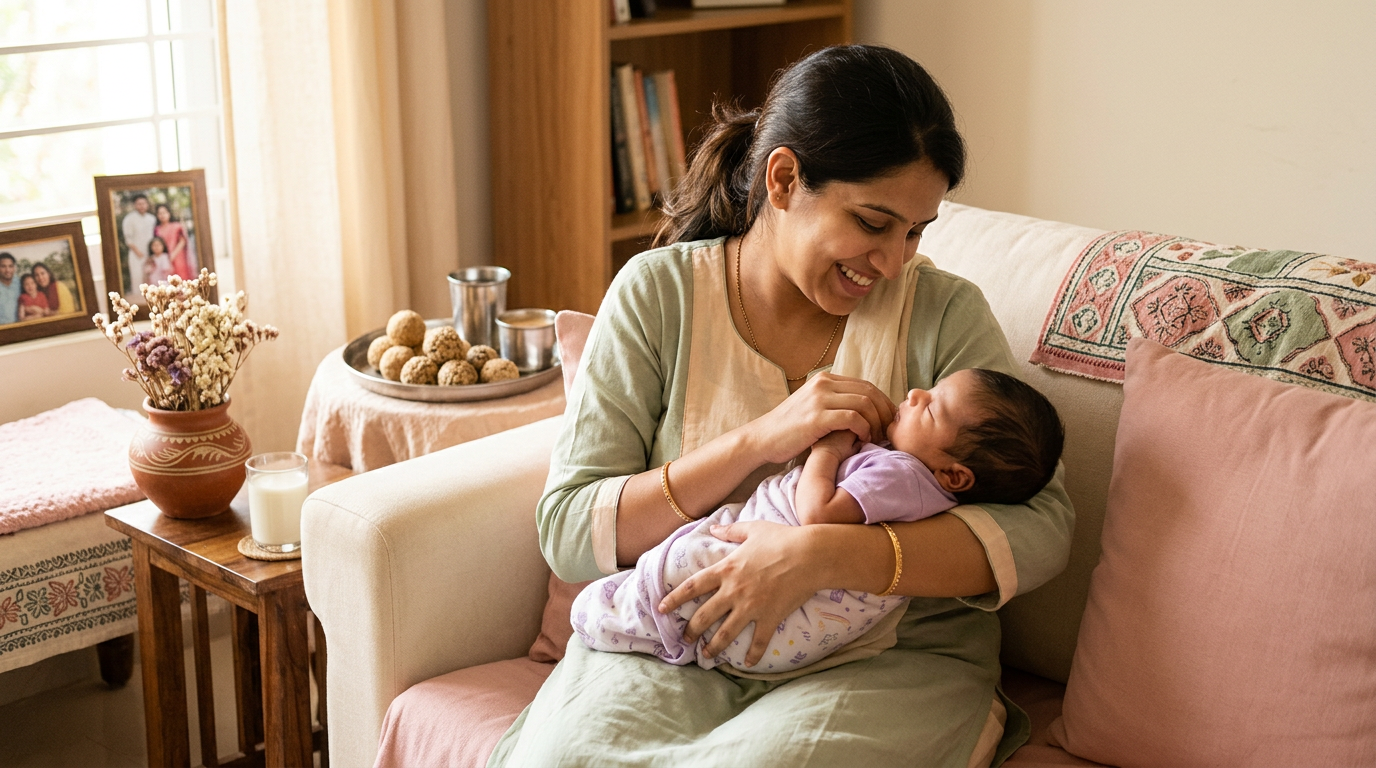
Passed down through generations of dadi-maas and nani-maas, the postpartum laddu is more than just a sweet treat; it is a dense, nutrient-packed medical "pill" in food form. In India, the first 40 days (the Sawa Mahina) are dedicated to maternal recovery, and these laddus—whether they are Gond, Methi, or Dink—serve as the cornerstone of the postpartum diet. They are designed to heal the uterus, replenish lost calcium, and boost breast milk supply for the new mama.
Why the Postpartum Laddu is an Indian Superfood
In the Indian traditional system of Ayurveda, the postpartum period is seen as a time of Vata imbalance. The body is "empty" and cold after birth. A classic postpartum laddu is formulated with warming ingredients like dry ginger (sonth), ghee, and edible gum (gond) to bring the body back into balance.
Beyond tradition, modern science agrees that a recovering mother needs roughly 500 extra calories a day if she is breastfeeding. These laddus provide:
* Healthy Fats: Ghee contains butyric acid which aids gut health and provides the energy density needed for healing.
* Complex Carbs: Ingredients like wheat flour or ragi provide sustained energy.
* Anti-inflammatory Spices: Haldi and ajwain help reduce internal swelling and aid digestion.
Types of Postpartum Ladoos Across India
India’s diversity shines in its postpartum food for mother traditions. Depending on your state, your "healing ball" might look and taste very different.
1. Gond/Dink Ladoo (The North & West Special)
Common in Punjab, Haryana, and Maharashtra, these are made from edible gum resin. Gond is famous for strengthening bones and providing a massive energy boost. When fried in ghee, it puffs up like popcorn and adds a crunch to the laddu.
2. Methi Ladoo (The Bitter Healer)
Fenugreek (methi) is the gold standard galactagogue in India. While slightly bitter, these laddus are essential for uterine contraction and cleaning out lochia (post-birth bleeding). If you are tracking your recovery, you can use our lochia analyzer to ensure your bleeding is progressing normally alongside your medicinal diet.
3. Ahiv/Aliv Ladoo (The Iron Bomb)
In Maharashtra, Garden Cress seeds (Aliv) are soaked in coconut water or milk and made into laddus with jaggery. These are incredible for hair loss prevention and boosting iron levels.
4. Panjiri Laddus
While Panjiri is often eaten as a loose crumble, many households roll them into laddus for portion control. Packed with makhana (fox nuts) and kamarkas (sage herb), they specifically target back pain—a common complaint after nine months of carrying a baby.
Postpartum Diet Chart Indian: Integration of Laddus
You shouldn't just survive on laddus. A balanced postpartum diet chart indian must balance these heavy fats with easy-to-digest "Kachcha" foods.
* Early Morning (6:00 AM): 1 postpartum laddu with a glass of warm ajwain water.
* Breakfast (9:00 AM): Oats porridge or a Moong Dal Chilla.
* Mid-Morning (11:30 AM): A bowl of papaya (to aid bowel movements).
* Lunch (1:30 PM): Loosely cooked Khichdi with a generous dollop of ghee and seasonal saag.
* Teatime (4:30 PM): Roasted makhana or a second small laddu if feeling fatigued.
* Dinner (7:30 PM): Dalia or 1 Phulka with Lauki sabzi.
The ICMR (Indian Council of Medical Research) recommends an intake of about 600mg of calcium daily for lactating mothers. Adding sesame seeds (til) to your laddus is a great way to hit this target naturally.
Ingredients to Watch Out For
While these laddus are miraculous, the quality of ingredients matters. In India, you can find premade organic postpartum laddus ranging from ₹800 to ₹2,500 per kilo. If making them at home, ensure:
* A2 Ghee: Better for digestion and heart health.
* Jaggery (Gur): Use dark, unbleached jaggery to avoid chemical additives and get more iron.
* Nuts and Seeds: Almonds, walnuts, and cashews should be lightly roasted to remove moisture and increase shelf life.
If you are recovering from a C-section, you might wonder if the heavy ghee in these laddus affects your stitches. While moderate fat is fine, always keep an eye on your incision. Our scar analyzer can help you determine if your healing is on track or if that redness is something to worry about.
Real Talk from Indian Moms
> "My sasu maa made me eat two Gond laddus every morning. I hated the stickiness at first, but honestly, my back pain vanished within two weeks. It's like magic for your joints." — Ananya S., Bengaluru (Mom to 3-month-old)
> "I insisted on adding chocolate chips to my Methi laddus to mask the bitterness. My mom-in-law was horrified, but hey, it worked! I've been exclusively breastfeeding for six months now." — Meher V., Chandigarh (Mom to 6-month-old)
> "After my C-section, I was scared of constipation. My nani added extra ajwain and saunf to my postpartum laddus, and it really helped keep things moving without pain." — Ritu P., Pune (Mom to 2-month-old)
Balancing Weight Loss and Tradition
Many modern Indian mamas worry about the "ghee load" and postpartum weight. While a postpartum laddu is calorie-dense, this is not the time for a restrictive diet. Your body is in a state of 'Garbha-avastha' recovery. Focus on nutrient density first. Once you hit the 6-week mark and get the green light from your OB-GYN, you can start gentle movements. Check out our pregnancy yoga guide—most of the gentle breathing and pelvic tilts are safe for early postnatal recovery too.
When to Call Your Paediatrician
While your diet affects you, it also affects your baby via breast milk. Watch for these signs in your little one after you consume heavy postpartum food:
* Extreme Colic: If the baby cries inconsolably for 3+ hours (use our AI cry analyzer to check the pattern).
* Excessive Gas: If the baby's tummy feels hard and they are pulling their legs up constantly.
* Skin Rashes: Any sudden hives or "milk spots" that look angry and red.
* Changes in Stool: If the baby passes very watery or green frothy stools suddenly.
* Dehydration: If the baby has fewer than 6 wet diapers in 24 hours.
Frequently Asked Questions
Can I eat a postpartum laddu after a C-section?
Yes, but wait until your doctor confirms your bowel movements have returned to normal and you have passed gas. Start with a small piece to ensure the heavy ghee doesn’t cause nausea. Focus on "Dink" or "Gond" laddus as they help in internal tissue repair.
What should a typical postpartum diet chart indian include?
A balanced chart should include galactagogues (like methi and garlic), high protein (dals and sprouts), healthy fats (ghee and nuts), and plenty of hydrating fluids like warm water or coconut water. The postpartum laddu fits in as a high-calorie snack.
Is it okay to eat spice-heavy postpartum food for mother during breastfeeding?
Moderate spices like cumin (jeera), fennel (saunf), and ginger are actually beneficial as they aid digestion for both mom and baby. However, avoid "hot" spices like excessive red chilli, which might cause acidity or make the baby fussy.
How many laddus can I eat in a day?
Ideally, stick to 1-2 laddus per day. Because they are dense in sugar (jaggery) and fats, overeating them can lead to excessive weight gain that is hard to shed later. Think of them as a supplement, not a meal replacement.
Can I skip the Gond in my postpartum laddu?
If you find Gond too heavy or sticky, you can make laddus with ragi, oats, and dry fruits. However, you will miss out on the specific bone-strengthening benefits that edible gum provides according to Ayurvedic tradition.
Healing takes time, mama. Whether you are enjoying a dadi-made postpartum laddu or a modern store-bought version, remember that you are nourishing the woman who just did the hardest job in the world. Feed your soul as much as your body.
I am a strong, healing mother, and I nourish myself and my baby with love.
Sources & further reading
- ICMR - Nutrient Requirements for Indians
- National Health Portal - Postnatal Care (India)
- IAP Guide on Infant and Young Child Feeding
Written by Neha Kapoor, RD (Registered Dietitian, Maternal & Child Nutrition)
Reviewed by TheMamaCircle Editorial Team
Last updated: 28 July 2026
This article is for general information only and is not a substitute for personalised medical advice. Always consult your paediatrician or obstetrician for your specific situation.