When Do Babies Roll Over? India Milestone Guide & Chart
Wondering when do babies roll over? Learn the month-by-month milestones, Indian-specific tips for tummy time, and red flags to watch for in your little one.
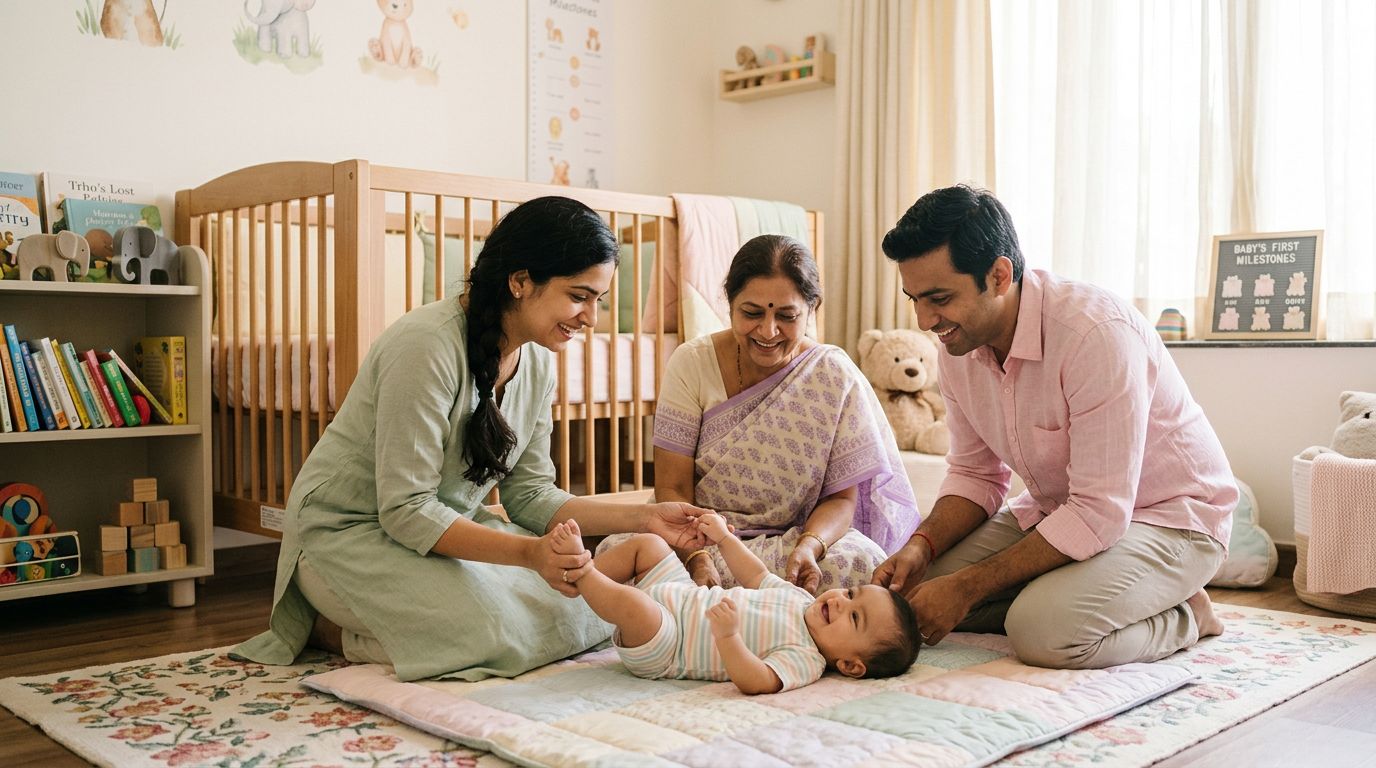
So, when do babies roll over? Most Indian babies start mastering this wiggle-and-flip move between 4 and 6 months of age. While some early achievers might surprise you at 3 months, others take their sweet time until the 7-month mark. This first big move is your little one’s way of saying they are ready to explore the world beyond your lap. It is a core-strength milestone that sets the stage for sitting up, crawling, and eventually, that heart-stopping moment when do babies start walking.
The Rolling Timeline: When Do Babies Roll Over in India?
In our clinics, we see a wide range of "normal." According to the Indian Academy of Pediatrics (IAP) and WHO standards, rolling is a gross motor skill that develops in two stages.
From Tummy to Back (Front to Back)
This usually happens first, often by accident! Around 4 months, your baby might be doing their daily maalish (massage) on their tummy, get frustrated, push up with their arms, and plop—they’ve flipped over.
* 3-4 Months: Babies develop enough neck and shoulder strength to lift their head 90 degrees.
* The Pivot: You might notice them "swimming" on their bellies before the actual flip.
From Back to Tummy (Back to Front)
This is the "pro" version of rolling and usually happens around 5 to 6 months. It requires more coordination and oblique muscle strength. If your baby is wearing heavy traditional silver kadas or thick cloth nappies, they might find the extra weight a bit challenging at first, but they’ll get there! You can track these subtle shifts using a baby milestones tracker to stay ahead of the curve.
4 Signs Your Baby Is Getting Ready to Roll
Before the actual flip happens, your baby will give you "trailer" performances. Keep an eye out for these signs during their 0-6 month developmental milestones 0-12 months phase:
Helping Your Baby Reach the Milestone
In Indian households, we often worry about "cold floor" or "dust," which leads to babies spending too much time in jhulas (swings) or laps. While the nani-dadi love is great, babies need floor time to develop.
* Prioritise Tummy Time: Start with 2-3 minutes after every diaper change. By 4 months, aim for at least 20-30 minutes of total tummy time daily.
The Toy Bait: Place a bright chhan-chhan* rattle or a colourful Montessori baby toy just out of reach. Encourage them to reach across their body.
Massage Magic: Use lukewarm mustard or coconut oil for a gentle maalish*. Focus on the legs and back to improve muscle tone.
Ditch the Swaddle: Once they show signs of rolling, stop swaddling immediately to prevent SIDS (Sudden Infant Death Syndrome) risks. Transition to a sleep sack or a light mulmul* sheet.
Safety Changes for the Rolling Phase
Once your baby knows when do babies roll over, your life changes. The "I put him here and he stayed here" days are over.
The Bed Rule: Never leave your baby unattended on a palang* (high bed) or changing table. Use a firm floor mat (like an EVA foam mat, usually ₹800–₹1,500) for playtime.
* Diaper Changes: Keep one hand on the baby at all times. If the doorbell rings, take the baby with you or put them in a safe crib.
Cloth Nappy Check: If you use traditional langots*, ensure they aren't tied so tightly that they restrict hip movement.
Rolling and the Postnatal Journey
As your baby gets active, you might find yourself bending and lifting more frequently. This is a critical time for your own postnatal recovery (also called postnatal). Many Indian moms experience back pain or notice a "pooch" that won't go away. If you feel a gap in your stomach muscles while lifting your rolling baby, you should try a free diastasis recti self-check to ensure your core is healing correctly.
If you are struggling with the physical demands of a mobile baby or feeling overwhelmed, looking into a Postnatal Wellness Package can provide the physiotherapy and nutritional support needed for this high-energy phase.
Real Talk from Indian Moms
> "My son Kabir didn't roll until he was nearly 7 months. I was so worried because my neighbor’s daughter did it at 4! My pediatrician told me he was just 'bottom heavy' because of all the ghee I was eating (passing through milk). Once we gave him more floor time without his heavy winter layers, he flipped in two days!" — Ananya, Delhi (Baby 8 months)
> "I thought something was wrong because she only rolled from back to tummy and stayed there crying like a turtle on its shell. It took her three weeks to figure out how to get back! Don't panic if they get 'stuck' at first." — Meera, Bengaluru (Baby 6 months)
When to Call Your Paediatrician
Every baby follows a unique baby development month by month schedule. However, keep an eye out for these "Red Flags":
* Baby is 7 months old and has not attempted to roll in either direction.
* Baby seems "floppy" (low muscle tone) or excessively stiff.
* Baby only rolls to one side and never the other (asymmetry).
* Baby cannot sit with support by 7-8 months.
* Baby was hitting milestones but has suddenly stopped or lost skills.
If you notice these, consult your doctor. Early intervention with a paediatric physiotherapist can work wonders.
Frequently Asked Questions
When do babies roll over from back to tummy?
Most babies master the back-to-tummy roll between 5 and 6 months. It requires more coordination and strength than the tummy-to-back roll. If your baby is close to this stage, ensure they have plenty of unrestricted floor time on a firm surface.
What is the typical baby development month by month for motor skills?
In the first year, babies usually lift their heads (2-3 months), roll (4-6 months), sit without support (6-8 months), crawl (8-10 months), and stand (10-12 months). You can see a detailed breakdown in our baby milestone chart.
Why is my baby not rolling at 6 months?
Don't worry just yet. Factors like birth weight, temperament, and even the amount of "lap time" versus "floor time" play a role. However, if they aren't even trying to push up or rock by 6 months, mention it at your next vaccination visit.
Can I use a baby milestone chart to track my baby's progress?
Yes, a baby milestone chart is a fantastic tool to keep track of gross motor, fine motor, and social skills. It helps you prepare for what’s coming next and provides peace of mind during those "Is this normal?" moments.
How does rolling relate to developmental milestones 0-12 months?
Rolling is the first major "locomotion" milestone in the developmental milestones 0-12 months sequence. It strengthens the neck, shoulders, and core, which are essential for every milestone that follows, including sitting and crawling.
Does swaddling delay rolling?
Swaddling doesn't necessarily delay the ability to roll, but it makes it dangerous. Once a baby starts attempting to roll, a swaddle prevents them from using their arms to clear their airway if they flip onto their face. Switch to a transition bag or arms-out sleep sack immediately.
Your baby’s first roll is a messy, shaky, and absolutely wonderful milestone. Don't spend your days comparing your little one to the "super-babies" on WhatsApp groups; instead, focus on the joy of watching them discover what their body can do. You are doing a great job, Mumma—one wiggle at a time.
Repeat after me: My baby is growing at their own perfect pace.
Sources & further reading
- Indian Academy of Pediatrics - Growth and Development
- WHO Multicentre Growth Reference Study Group
- AIIMS - Child Development & Early Intervention
Written by Dr. Anjali Mehta, MBBS, DCH (Paediatrics)
Reviewed by TheMamaCircle Editorial Team
Last updated: 12 September 2026
This article is for general information only and is not a substitute for personalised medical advice. Always consult your paediatrician or obstetrician for your specific situation.