When Do Babies Start Talking? India Milestone Guide
When do babies start talking? Learn the IAP milestones for first words, from babbling to 'Mama,' plus red flags every Indian mom needs to know. Read more!
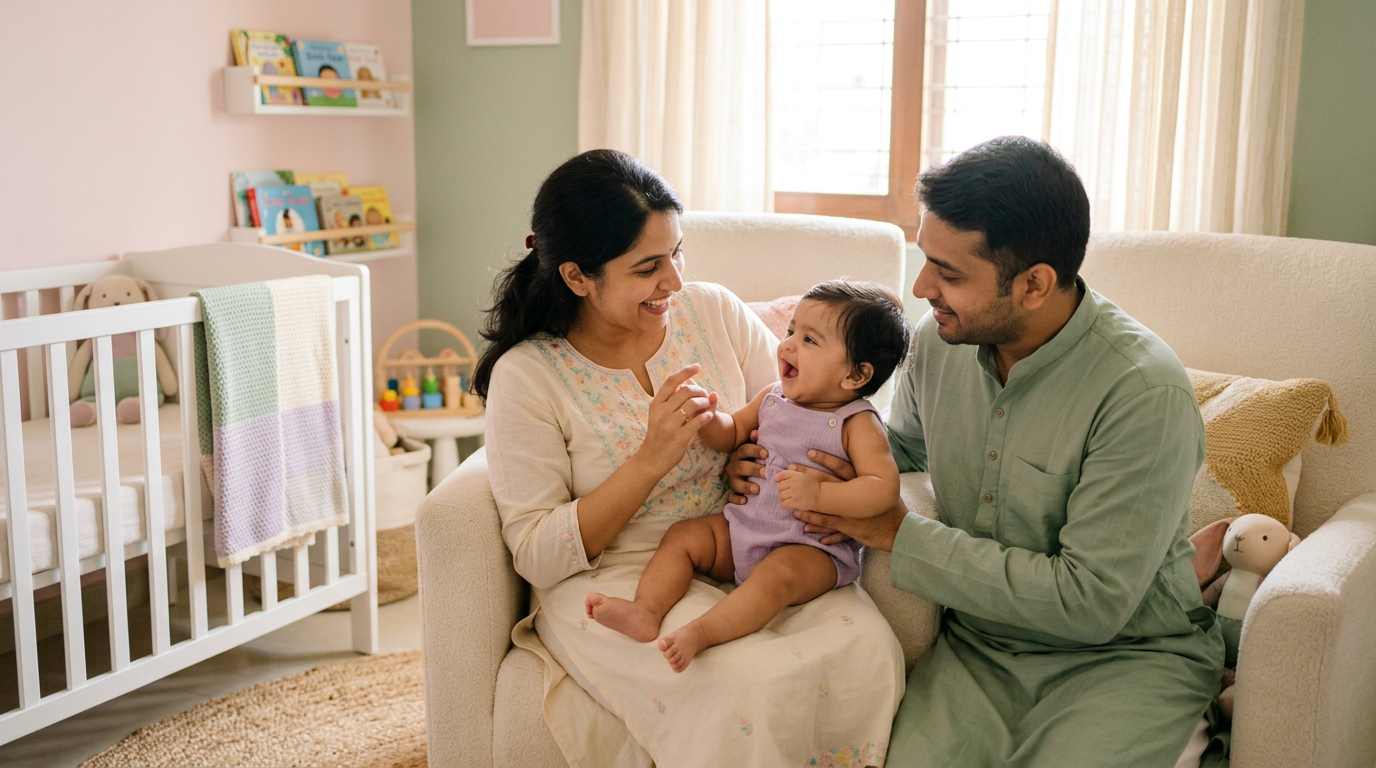
Waiting for those first words is like waiting for the monsoon after a long Delhi summer—anticipatory and slightly anxious. Most babies start saying their first meaningful words like 'Mama' or 'Dada' between 10 to 14 months. However, the foundation of speech begins much earlier with cooing and babbling. While every child follows their own timeline, Indian paediatricians look for specific communicative milestones by the first birthday to ensure development is on track.
When Do Babies Start Talking? The Speech Timeline
Speech isn't just about words; it is a complex coordination of hearing, understanding, and motor skills. In India, where most households are multilingual (Hinglish, anyone?), you might wonder if your baby is confused by hearing three different languages. Research shows that bilingualism doesn't cause delays, though babies might mix words initially.
The 0 to 6 Month Pre-Speech Phase
During the early postnatal period (also called postnatal), your baby is already communicating. Before they use words, they use their 'cry vocabulary.'
* 0-3 Months: They make 'cooing' sounds—mostly vowels like 'oo' and 'ah.' They should start startling at loud noises (pressure cooker whistles are the ultimate Indian hearing test!).
* 4-6 Months: This is the 'babbling' stage. You will hear strings of consonants like 'ba-ba' or 'ma-ma.' While it sounds like 'Mama,' at this stage, it is usually just vocal play without meaning.
The 7 to 12 Month Meaningful Sound Phase
This is a critical window in the baby development month by month journey.
9 Months: They start using gestures. They might point at the jhoola or reach for their doodh* bottle.
* 12 Months: The magic happens. Most babies will have 1-2 words with meaning. If they look at you and say 'Mummy,' it counts! They also begin to follow simple commands like 'No' or 'Give it to me.'
Understanding the Difference: Speech vs. Language
Many parents at my clinic use these terms interchangeably, but they are different. Speech is the physical act of producing sounds (articulation). Language is the system of communicating—understanding what is said and expressing thoughts.
If your baby understands when you say "Beta, chappal kahan hai?" (Where are your slippers?) and they point to them, their language skills are developing well, even if their speech hasn't caught up yet. You can track these subtle signs using our baby milestones tracker.
The Role of Multilingualism in Indian Homes
In a typical Indian home, Nani speaks one language, the house help speaks another, and parents might speak English. Don't let your sasu maa tell you this is why the baby isn't talking yet. Exposure to multiple languages actually enhances cognitive flexibility. Just ensure you are consistent—speak to the baby in the language you are most comfortable with.
How to Encourage Your Baby to Talk
You don't need expensive battery-operated toys that shout the alphabet. In fact, simple human interaction is the best way to hit developmental milestones 0-12 months.
* Narrate Your Day: Treat your baby like a tiny roommate. "Ab Mummy dal tadka bana rahi hai" (Now Mummy is making dal). This constant stream of language helps them map sounds to objects.
* Ditch the Screen: The Indian Academy of Paediatrics (IAP) recommends zero screen time for children under two. High screen exposure is a leading cause of 'Virtual Autism' symptoms and significant speech delays.
* Read Indian Picture Books: Use books with vibrant Indian imagery—cows, rickshaws, and mangoes—to make the vocabulary relevant to their environment.
* Wait for a Response: When you ask a question, pause for 10 seconds. Give them the 'processing time' to attempt a sound back.
When Do Babies Roll Over and Other Physical Milestones?
It is important to remember that speech doesn't happen in a vacuum. Often, a baby might pause their speech development because they are focusing all their energy on a physical skill. For instance, you might notice a 'lull' in babbling right when do babies roll over or start crawling. Their little brains prioritize one major milestone at a time. To see how these physical and vocal shifts align, check our baby milestone chart.
Real Talk from Indian Moms
"My son didn't say a word until 18 months. My mother-in-law kept saying he was just 'lazy' like his father. Turns out he had a slight tongue-tie that made certain sounds hard. Once we fixed that, he wouldn't stop talking!" — Pooja R., Bengaluru, Mom to a 3-year-old.
"I was so worried when my daughter was 10 months and only grunting. I started doing 'narrative play' while giving her maalish (massage) every morning. By 13 months, she was saying 'Paani' and 'Nayi' (No)." — Megha S., Lucknow, Mom to a 15-month-old.
When to Call Your Paediatrician: Red Flags
As a doctor, I always tell parents: "Listen to your gut, not the neighbours." If you notice these signs, please consult a developmental paediatrician or a speech-language pathologist (SLP).
* By 6 Months: Does not make eye contact or respond to loud sounds.
* By 9 Months: Does not babble (no 'ba-ba' or 'da-da' sounds).
* By 12 Months: Does not use gestures like waving 'bye-bye' or pointing.
* By 18 Months: Does not have at least 6-10 words or does not understand simple instructions.
* Any Age: If the baby 'loses' a skill they previously had (regression), this is an immediate reason for a check-up.
Early intervention in India is now very accessible. If there is a delay, therapies like Speech Therapy or Occupational Therapy work wonders when started early. You can also monitor their growth metrics using our baby growth chart to ensure overall physical health is supporting their brain development.
Frequently Asked Questions
When do babies start talking clearly?
Most children start speaking clearly enough for strangers to understand about 50% of what they say by age 2, and 75% by age 3. Total clarity usually arrives by age 4 or 5. Don't worry if they say 'tala' instead of 'kala' (black) early on; some consonant sounds take longer to master.
How does a baby milestone chart help with speech?
A baby milestone chart provides a broad range of "normal." It helps you see that speech is just one piece of the puzzle, alongside motor skills and social-emotional growth. It prevents unnecessary panic if your child is hitting all other marks but is a few weeks 'late' on one.
What are the developmental milestones 0-12 months for communication?
By 3 months, they coo. By 6 months, they babble with consonants. By 9 months, they imitate sounds and use gestures. By 12 months, they usually have one clear word with specific meaning and respond to their name.
Does a baby development month by month tracker include speech?
Yes, a comprehensive baby development month by month tracker will list receptive language (understanding) and expressive language (speaking) milestones for every stage of the first year.
Can I use a pacifier/soother for a long time?
Excessive pacifier use (especially after 12-18 months) can sometimes interfere with the development of the tongue and lip muscles needed for speech. In India, we often use 'soothers' to keep babies quiet, but try to limit them to nap times only.
Is my baby a late talker?
A 'late talker' is typically a child between 18-30 months who has a good understanding of language but a limited spoken vocabulary. While many 'catch up,' it is always safer to get a professional evaluation rather than waiting until school age.
Remember, your baby is learning a brand new way to exist in the world. Some are 'observers' who soak everything in before speaking, while others are 'performers' who babble constantly. As long as they are engaging with you, making eye contact, and understanding your words, they are likely just fine.
You are doing a great job, Mumma. Enjoy the quiet now, because soon you'll be wishing for a 'mute' button!
Sources & further reading
- Indian Academy of Pediatrics (IAP) - Growth and Development
- WHO - Developmental Milestones
- AIIMS - Department of Pediatrics Speech Guidelines
Written by Dr. Anjali Mehta, MBBS, DCH (Paediatrics)
Reviewed by TheMamaCircle Editorial Team
Last updated: 20 September 2026
This article is for general information only and is not a substitute for personalised medical advice. Always consult your paediatrician or obstetrician for your specific situation.